
Slow-Release or Quick-Release Fertilizer: Which Saves You Time and Money?
Staring at fertilizer bags in the store, wondering if the extra cost for “slow-release” is worth it or if “quick-release” will burn your lawn, is a common homeowner headache.
We will cover the clear pros and cons of each type, how they affect your lawn and wallet, and the specific situations where slow-release or quick-release is the smarter pick.
I’ve balanced both types for seasons with Max on the mower and Sunny on irrigation to get a thick lawn without wasting cash.
At a Glance: Key Factors for Your Lawn
Choosing a fertilizer isn’t just about the greenest bag on the shelf. It’s about matching the product’s personality to your lawn’s needs and your own schedule. This quick table breaks down the big differences, helping you match it to your lawn’s needs.
| Factor | Slow-Release | Quick-Release |
| How It Feeds | Steady, gentle meals over time. | A big, fast snack all at once. |
| How Long It Lasts | 8 to 12 weeks typically. | 2 to 4 weeks of strong effect. |
| Burn Risk | Very low. Forgiving if you overlap a bit. | High. Requires precise application. |
| Cost | Higher upfront cost per bag. | Lower upfront cost per bag. |
| Best For | Most homeowners. Set-it-and-forget-it seasonal feeding. | Lawn “first aid” for a visible nutrient deficiency. |
Fertilizer 101: What Are We Even Talking About?
Let’s start with the bag itself. Those three big numbers are the NPK ratio. Think of it like a nutrition label for your lawn.
The first number (N) is for Nitrogen. This is the star player for green, leafy growth. The second (P) is Phosphorus, which is great for root development, especially in new grass. The third (K) is Potassium, which helps with overall plant health and stress tolerance, like during a heat wave or cold snap.
The core difference between slow and quick-release comes down to one thing: how fast the nitrogen becomes available to your grass roots.
Imagine you have a headache. A quick-release fertilizer is like taking a regular aspirin-it works fast. A slow-release fertilizer is like a time-release cold medicine-it gives you a smaller, steady dose over many hours. Your lawn feels the same way.
What is Slow-Release Fertilizer?
This is my go-to for about 90% of my lawn feeding. The nutrients are locked inside granules that have a special coating or come from natural organic materials.
They need water and soil warmth to break down gradually. Every time you water or it rains, a little more nutrient is released into the soil. Common types you’ll see are polymer-coated (like little plastic-encased peas) or sulfur-coated urea. Many natural, pet-safe blends are also slow-release by nature.
It works just like my drip irrigation system, Sunny-delivering consistent, small sips of nutrition exactly where it’s needed, with almost no waste. This steady feed encourages thicker, denser turf that naturally crowds out weeds like the ones in my stubborn Patch area. You apply it fewer times per season and sleep easy knowing the burn risk is minimal.
What is Quick-Release Fertilizer?
Quick-release fertilizer is made of water-soluble nutrients. The second it gets wet, it dissolves and floods the soil with food your grass can take up immediately. This principle also underpins how liquid fertilizers for lawns work, delivering nutrients quickly when you water them in. Used as part of a regular regimen, they can promote faster, more uniform green growth.
You’ll often see it called “fast-acting” or “water-soluble” on the bag. It gives you a very dramatic, visible greening-up in just a few days.
Using it is like giving your lawn a strong shot of espresso-a rapid jolt of energy that doesn’t last very long. I keep a little on hand for specific jobs, like giving a boost to a tired-looking area I’m patching, but I’m careful with it. That fast flood of nitrogen can easily burn grass blades if you apply it on a hot day or spread it unevenly. It also washes away more easily with heavy rain, which isn’t great for the local waterways.
The Big Showdown: Slow-Release vs. Quick-Release Fertilizer Pros and Cons
Think of this as choosing between a monthly meal delivery service and a big, single feast. Both feed the lawn, but they work in completely different ways. Getting this choice right saves you money, time, and a whole lot of stress.
Slow-Release Fertilizer Pros and Cons
This is the set-it-and-forget-it option. The nutrients are coated or formulated to break down slowly with moisture and soil microbes.
Its biggest pro is the steady, gentle feed that aligns perfectly with how grass actually grows.
- Feeds for 6-12 weeks: You apply it once and it works all season. I put down a slow-release formula on my front lawn in late spring and it’s still quietly feeding when the July heat hits.
- Very low burn risk: You can almost apply it and walk away. It’s forgiving, which is great for beginners or for applying during unpredictable weather.
- Less mowing: Because the grass grows steadily, not in a frantic burst, you won’t feel like you’re chasing it with the mower every four days. Max gets a more predictable schedule.
- Efficient with less waste: It’s like a timed snack dispenser for your grass roots. More of the nutrients are used by the plant instead of washing through the soil past the root zone. This is better for your wallet and for the local waterways Sunny feeds into.
- Better for soil life: That slow breakdown encourages healthy microbial activity in the soil. It’s building your lawn from the ground up.
But it’s not perfect.
- Results aren’t instant: Don’t expect a dramatic change in a week. The green-up is gradual. You need a little patience.
- Usually more expensive per bag: The upfront cost is higher. You’re paying for the technology and the convenience of fewer applications.
- Less flexible for quick fixes: If you see a problem, you can’t use this to solve it tomorrow. It’s a planner’s tool, not a rescuer’s.
Quick-Release Fertilizer Pros and Cons
This is the fast-acting, soluble stuff. The nutrients are available to the grass roots almost immediately after you water it in.
Its power is its speed, but that speed requires careful handling.
- You see green-up in days: It’s incredibly satisfying. A yellowish lawn can turn a deeper green in under a week. The visual reward is instant.
- Lower upfront cost per bag: The initial purchase is easier on the budget.
- Perfect for a precise “rescue” treatment: This is your tool for a specific, time-sensitive job. Need to green up Patch before a backyard party? This is the ticket.
The cons are significant, and they’re why I don’t use this as my main feed.
- High burn risk if misapplied: This is the big one. If you apply too much, or on wet grass, or don’t water it in right away, it can pull moisture from the grass blades, leaving behind ugly, straw-yellow streaks or patches. I learned this lesson the hard way on a hot afternoon years ago.
- Feeds for only 2-4 weeks: The grass gets a huge rush of food, uses it up fast, and then you’re back to square one. It leads to a boom-and-bust cycle.
- Can lead to fast, weak growth and more mowing: That rapid growth is often soft and succulent, making it more appealing to pests and less resilient to heat or drought. And yes, you’ll be mowing constantly.
- Can pollute if it runs off: Because it’s soluble, a heavy rain right after application can wash it off your lawn and into storm drains. That’s bad news for local ecosystems.
When to Use Quick-Release Fertilizer on Your Lawn
Given its risks, you should use quick-release fertilizer with a clear purpose. It’s a specialist, not a daily driver. For healthy plants, understanding fertilizer requirements is essential. This helps you tailor applications to growth stages and avoid overuse.
Reach for it in these specific situations:
- Early spring “green-up” for cool-season grass: When soil temperatures are consistently above 55°F and your grass is just waking up, a light application can kickstart photosynthesis and recovery from winter. It’s that first cup of coffee for the lawn.
- Correcting a visible nitrogen deficiency: If your grass has an overall pale yellow tint (not just dry), it’s likely hungry for nitrogen. A quick-release feed can correct that deficiency rapidly.
- Before an important event where you need fast results: A family reunion, a graduation party. Apply it about 7-10 days out for peak greenness. Just be prepared to mow twice that week.
If you use quick-release, you must follow the label’s application rate exactly and water it in thoroughly immediately after spreading. This isn’t a suggestion. It’s the rule that prevents burn. I set up Sunny to run right after I’m done spreading.
One common question fits here: Is winterizing fertilizer slow-release or quick-release? The answer is both. The fall “winterizer” focuses on potassium (the “K” in N-P-K) to strengthen roots and improve winter hardiness. That potassium is often in a quick-release form so the grass can take it up fast before going dormant. The nitrogen in a winterizer, if there is any, is usually slow-release to provide a gentle early spring feed. Always check the bag label to know what you’re putting down.
When to Use Slow-Release Fertilizer on Your Lawn

For your main feeding program, slow-release is your reliable partner. Think of it as the steady paycheck for your lawn, not a lottery win. I plan my big seasonal pushes around it. For my cool-season grass, that means a solid feeding in early fall to build strong roots for winter. If you’re tending warm-season grass, it’s your best friend through the summer growth spurt.
This consistent, gentle feeding is the backbone of a thick lawn that crowds out weeds naturally, which is always the goal.
It’s also my first choice in specific situations where control matters most.
- New Lawns: Whether from seed or sod, young grass is tender. A quick-release surge can burn it. Slow-release nurtures it without the shock, encouraging deep roots from the start.
- The Busy Schedule: Life gets busy. If you can only fertilize a few times a year, make them count with slow-release. You’ll get a longer feeding window from each application, so you miss less.
- Sensitive Areas: Got a slope that runs toward a street or a pond? Use slow-release here. It drastically reduces the risk of nutrient runoff into waterways after a rain, which is better for everyone.
I use this exact strategy on the problem spot I call “Patch,” that shady corner where grass struggles. A fast, aggressive feed would just stress it. Instead, a slow-release formula in the spring gives it a constant, low-level boost to build health over time. It teaches patience, but the results are worth it.
Common Fertilizer Mistakes and How to Avoid Them
I’ve made these errors myself. Let’s walk through them so your spreader time isn’t wasted.
Mistake 1: Using the Wrong Type for the Season
This is the big one. Applying a quick-release fertilizer in the peak summer heat is asking for trouble. That sudden nutrient flood forces the grass to grow rapidly when it’s already stressed by heat and drought, often leading to yellow burn marks.
Match the fertilizer to the season’s demands: slow-release for the long hauls of spring, summer, or fall, and quick-release only for specific, quick green-ups in ideal, mild conditions.
Mistake 2: Not Calibrating Your Spreader
You wouldn’t guess a recipe’s cup of flour. Don’t guess with fertilizer. An uncalibrated spreader is the direct cause of two ugly problems: those alternating stripes of dark green and pale yellow, and burned spots where too many granules dumped out.
The fix is simple. Find the calibration settings in your spreader’s manual. Set it over a driveway or sidewalk and walk your normal pace to see how much it throws. Adjust until it matches the product’s recommended rate. It takes five minutes and saves a season of eyesores.
Mistake 3: Fertilizing Without Knowing Your Soil
Throwing fertilizer down without a soil test is like taking medicine for a fever without checking your temperature. You might be treating the wrong thing. Your soil might already have plenty of phosphorus but be starved for potassium.
A simple, inexpensive home test kit from the garden center can tell you exactly what your soil lacks, so you can buy a fertilizer that fixes your actual problems, not just the assumed ones.
Mistake 4: Ignoring the Weather Forecast
Always check the sky. Applying fertilizer right before a heavy, drenching rain is a double loss. First, the water can wash the granules away before they even start to work, sending your money down the drain. Second, that runoff can pollute nearby drains and streams.
I aim for a forecast of clear, mild days after I apply. If the weather looks risky, I just wait. The lawn will still be there tomorrow, and Sunny the irrigation can always give it a light, perfect drink if it needs one.
A Simple Guide to Choosing and Applying

Picking the right fertilizer feels like a big choice at the store. I simplify it by asking myself three quick questions before I even touch a bag. A lawn fertilizer calculator can turn my answers into a tailored product and application rate, making the next steps effortless.
First, do you need to see a green-up in just a few days? If your lawn looks pale and tired before a big event, that’s a job for a quick-release formula. For your main seasonal feeding where you want steady growth for months, a slow-release product is your best friend.
Next, consider your lawn’s personality. Is it prone to burning easily, or is “Patch” in the backyard always a bit stressed? A slow-release fertilizer is the gentler, safer option for temperamental grass.
Finally, be honest about your own schedule. If you want to feed the lawn once and not think about it again until next season, choose a high-quality slow-release. If you don’t mind applying smaller doses more often, you can use quick-release carefully. A seasonal lawn fertilizer treatment schedule can help you map those choices to the calendar year, making planning easier. The next steps will walk you through timing tips for slow-release and quick-release applications.
Decoding the Bag: It’s All in the Words
You don’t need a science degree to read a fertilizer label. You just need to know which words to look for.
The key to identifying a slow-release product is looking for terms like “controlled-release,” “polymer-coated,” “slow-release nitrogen,” or “SRN.” These are the set-it-and-forget-it types. If the bag says “fast-acting,” “quick green-up,” or “immediate results,” you’re holding a quick-release fertilizer.
What’s the Difference Between 30-0-4 and 21-0-0?
Those numbers tell you about the food’s recipe, not how fast it’s served. The first number is always Nitrogen (N), which makes grass green and thick. The second is Phosphorus (P) for root growth, and the third is Potassium (K) for overall health.
A 30-0-4 bag has a higher concentration of nitrogen in every pound compared to a 21-0-0 bag. Think of it like a strong cup of coffee versus a milder one. The 21-0-0 is all nitrogen with nothing else. The ratio matters more than the single number. A 30-0-4 is a balanced summer feed, while 21-0-0 might be a targeted nitrogen boost.
These numbers tell you the nutrient ratio and concentration, but you must read the rest of the label to know if that nitrogen is released quickly or slowly over time.
Applying it Right: A Safe, Simple Routine
Doing the job correctly protects your lawn and the environment. I follow this short list every single time.
- Apply to clean, dry grass. This helps the granules fall to the soil and prevents them from sticking to wet blades, which can cause burns.
- Use a spreader. Always. Set it to the rate listed on your fertilizer bag. Walk at a steady pace and slightly overlap your passes to avoid ugly stripes of overfed and underfed grass.
- Water it in. This is the most important step. For quick-release fertilizer, water immediately and deeply to wash the nutrients into the soil and prevent volatile nitrogen from harming the air or nearby plants. For slow-release, a good watering helps activate the product and settles the granules.
Following these steps gives your lawn the food it needs without wasting product or risking damage.
Recommended Product Types for Your Shed

You don’t need a garage full of products. Having these two or three categories on hand covers every situation your lawn will throw at you.
For the Set-and-Forget Homeowner
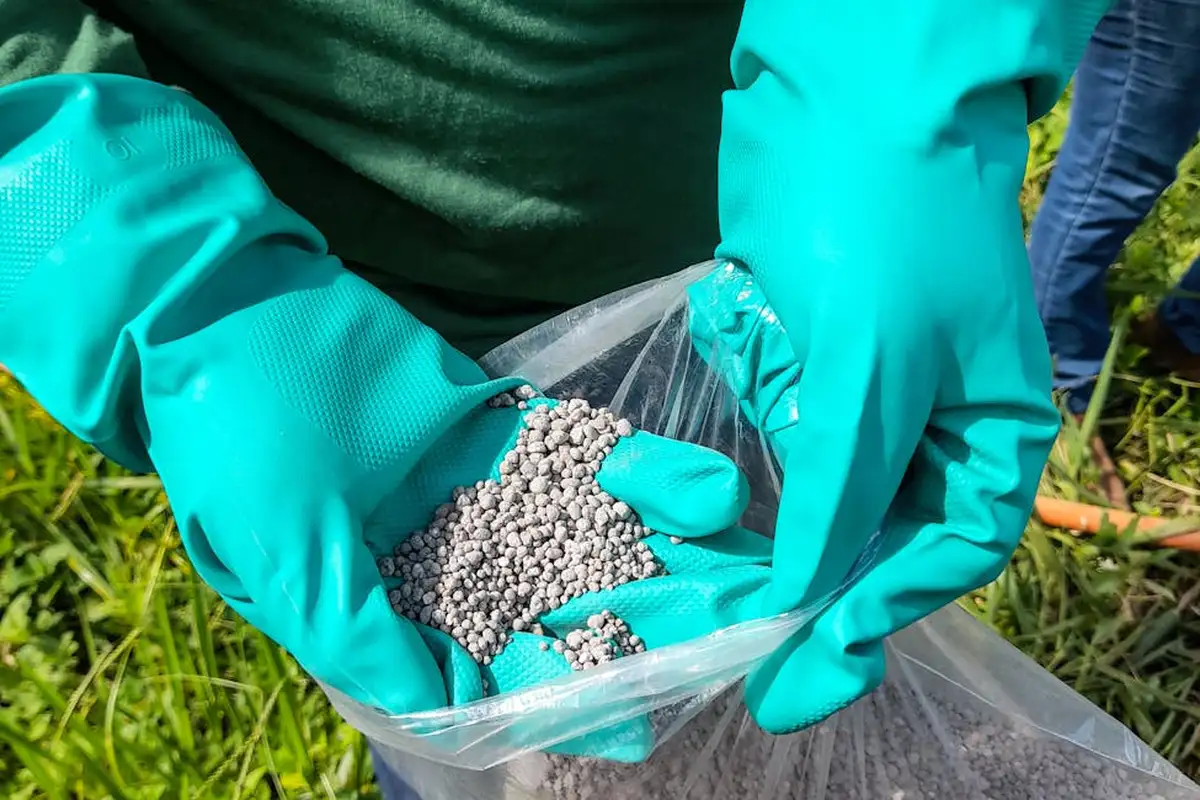
This is my go-to for the big seasonal feeds. I look for a high-quality granular fertilizer that uses polymer-coated prills. You can actually see the tiny coating on each granule.
This type feeds your lawn consistently through heat and rain, massively reducing the risk of burn and cutting your total number of yearly feedings in half. It’s the definition of working smarter, not harder.
For the Organic-Minded Gardener
If you’re focused on building soil health and supporting pollinators, natural organic blends are the way. These are made from things like feather meal, bone meal, or soybean meal.
They are inherently slow-release, as soil microbes need to break them down. They feed the grass and improve the soil’s texture and life over many years. The results aren’t overnight, but the long-term benefits for your lawn’s ecosystem are huge.
For the “Quick Fix” Kit
Every shed should have a small bag of fast-acting, high-nitrogen fertilizer. I keep one for emergencies, like when a patch gets torn up and needs a rapid green-up or before a family reunion.
Use this type sparingly and precisely, only when you need immediate visual results, and always follow the safe application steps to the letter. It’s a powerful tool, not your everyday meal.
Your Trusty Tool: The Broadcast Spreader
Don’t spread fertilizer by hand. It’s never even. I use a simple broadcast spreader for everything. It gets the job done fast and right. To dial in the amount, I calculate spread fertilizer for lawns. This keeps coverage even and waste minimal.
It also gives Max, my zero-turn mower, a break. His job is to cut grass, not haul around a bag of fertilizer while I try to toss it evenly. The right tool for the right job makes every weekend task simpler.
Your Top Fertilizer Questions, Answered
Is slow-release fertilizer really cheaper in the long run?
Yes, because you feed your lawn only 2-3 times per season instead of 5-6. You’re paying more per bag but buying far fewer bags, saving you time, fuel, and money.
Can I mix slow and quick-release fertilizers together?
You can, but I recommend using a pre-mixed “hybrid” product from the store. It gives you a quick green-up from the fast nitrogen and a long tail of feeding from the slow, which is perfect for kicking off a season.
Which type is better when I’m overseeding my lawn?
Always use a slow-release starter fertilizer. Quick-release can burn and kill your delicate new seedlings, while slow-release gently nourishes them as they establish those deep, greedy roots.
Do I need to water my lawn more with one type over the other?
Quick-release needs immediate, deep watering to prevent burn. Slow-release just needs its normal drink to get started; after that, your regular watering schedule is perfect to keep it steadily feeding.
When should I absolutely avoid using quick-release fertilizer?
Avoid it during summer heat stress or drought. Forcing a frantic growth spurt when your grass is already struggling is a surefire way to cause burn and weaken your lawn for the rest of the season.
Feeding Your Lawn with Purpose
For a thick, resilient lawn, make slow-release fertilizer your regular pick to feed grass steadily and safely. Keep a bag of quick-release on hand only for those times you need fast green-up, like before a backyard party or to revive a tired spot. Understanding when and how to fertilize is key to a beautiful yard.
Choose pet-safe and pollinator-friendly products every time to protect your family and local wildlife. Your lawn care journey is always learning; watch how your grass responds and tweak your approach for even better results next season.
Sources and Additional Information
- Slow-Release vs. Quick-Release Fertilizer | Milorganite
- Slow-Release vs. Quick-Release Fertilizer: Which Is Best for Your Lawn?
- Slow-release vs. Quick-release Fertilizer: Which One is Best for Your Lawn?
Written by Ria Carrington. Ria is an avid lawn care enthusiast and advisor. No lawn is unsalvagable when Ria is at work. She has helped countless homeowners breath new life into their dying lawns. She has a B.Sc in Agriculture and brings practical advice combined with knowledge of plant science and her decade worth of hands on experience.