
How Do You Mow Around Trees and Garden Beds Without Messing Everything Up?
You want a thick carpet of green right up to your garden edges and tree trunks, but your mower feels like a clumsy bull in a china shop. I get it, and I’ve been there.
We will cover the right tools for clean edges, smart mowing patterns that save time, simple trimming strategies for after you cut, and how to protect your precious plants and trees from damage.
I’ve spent the last five seasons finding the most efficient ways to get a crisp, professional look with my mower Max, learning patience from the stubborn Patch in my yard.
At a Glance: Key Takeaways
Mowing around your trees and garden beds can feel like a tricky obstacle course. Shift your thinking for a second. You are not just cutting grass, you are guiding your mower through a living space that needs protection. Try a few lawn mowing techniques, like maintaining even blade height and steady passes. They help protect your beds and shape the lawn more reliably.
The goal is a clean look without damaging your landscape or your equipment, and these quick tips will get you there.
- Always walk the area first. Kick aside pine cones, sticks, and garden hoses before you even start the engine. A hidden rock or toy can send a nasty shock up your mower’s deck or become a dangerous projectile.
- Give everything room to breathe. For trees, keep the mower deck at least 6-12 inches away from the trunk. This prevents nasty gashes in the bark that can invite disease and insects. For gardens and flower beds, leave a clean buffer zone.
- Finish the job with a string trimmer. Your riding mower or wide push mower (like my Max) is for the open field. A trimmer is your detail artist for those final inches. Use it to clean up the edges you left around obstacles for a sharp, manicured finish.
- Mow in a pattern that herds clippings away from obstacles, not into them. Blow grass clippings back onto the lawn, not into your flower beds where they can smother plants or create a thatch mat.
- Protect the good guys. Be extra careful around pollinator-friendly plants and the quiet corners where toads or beneficial insects might live. A little awareness preserves that healthy backyard ecosystem.
Gear Up: The Right Tools Make All the Difference
The right tool turns a frustrating chore into a satisfying, efficient task. Trying to force a big mower into a tiny space is a battle you and your mower will lose.
You need a small, precise team to handle what the big machine cannot.
Your Detail Crew: Trimmers and Edgers
This is your essential follow-up team. I never fire up Max without my string trimmer on standby.
- String Trimmer (Weed Wacker): Your most versatile tool. The spinning nylon string is forgiving and perfect for cutting grass right up against delicate tree bark, garden borders, and fence lines. For most residential jobs, a cordless electric model is plenty powerful and much quieter.
- Hand Edger or Half-Moon Edger: For a truly crisp, defined border between your lawn and a garden bed, nothing beats a sharp hand edger. You press it down with your foot to slice a clean vertical edge. It’s a bit more work, but the results last for weeks and look professional.
- Small Push Mower: If you have a large area with many scattered trees or a winding path, a lightweight, narrow push mower can be a time-saver. It lets you mow closer than a riding mower safely, reducing the amount of trimming you have to do later.
Safety Gear: Non-Negotiable
This isn’t just a suggestion. Trimmers and mowers throw debris-dirt, sand, small stones-at high speed.
Sturdy, closed-toe shoes and wrap-around safety glasses are an absolute must every single time. I keep my glasses hanging right on the trimmer’s handle so I never forget them. Hearing protection is also a smart idea, especially with louder gas equipment.
Choosing Your Trimmer String
Not all trimmer line is the same. The shape and thickness matter for the job.
| Line Type | Best For | Why It Works |
|---|---|---|
| .080 -.095 inch Round Line | General grass trimming around obstacles. | It’s durable, readily available, and cuts cleanly without being too aggressive on plant stems. |
| Multi-Sided Line (Square, Star, etc.) | Tough, overgrown weeds or very thick grass. | The edges create a more aggressive cutting action. Use this carefully near garden beds as it can more easily damage desirable plants. |
| Blade Attachment (Metal/Plastic) | Clearing heavy brush or saplings-NOT for detail work. | This is for major clearing projects. I never use one near my valued trees or gardens; it’s far too dangerous to the plants and to you. |
Start with a simple round line for your routine trimming. The sound of it cleanly slicing through grass blades is the sound of a job done right. If it doesn’t cut cleanly, it’s time to sharpen or replace the blade. Having the proper gear ready transforms the task from a clumsy dance with your mower into a smooth, two-step process: mow the field, then detail the edges.
Your Game Plan: Mowing Techniques for Every Obstacle

Start with a simple rule. Knock out the big, open middle of your lawn first. Get those easy passes done. This gives you a clean, trimmed base to work from and lets you focus all your attention on the tricky spots.
Before you touch the trimmer, take a “lap” with your mower. Drive slowly around each tree, bed, or fence line, keeping your outside mower wheel just on the lawn side. This cuts a clean, wide swath that defines the edge. Now you have a clear line to follow up to with your trimmer or push mower.
This is where you shift gears, both mentally and with your machine. Slow down to a crawl. A deliberate pace is your best tool for avoiding nicks, scrapes, and uneven cuts. I treat my mower Max with respect here, letting him creep along so I can steer with precision.
How to Mow Around Trees Without Harming the Bark
Tree bark is not armor. A mower or trimmer string hitting it is like sandpaper, wearing away its protective layer. This can “girdle” and seriously hurt a tree.
First, if you have mulch, pull it back from the trunk to create a clear, mulch-free ring. You need to see the ground and any surface roots. Start mowing in a wide circle around the tree, keeping the mower deck a good foot away from the trunk. Then make another, slightly tighter circle.
Watch for surface roots that look like thick, woody snakes on the ground. Mowing over them “scalps” the grass and can damage the roots. If you see a root, lift your mower deck to clear it or just mow around it. A little tuft of grass over a root is better than a wounded tree.
For the final inch or two right against the trunk, turn off the mower. Use your string trimmer held vertically, like a broom, to gently tickle the grass down. This keeps the spinning head safely away from the bark.
How to Mow Around Gardens and Flower Beds
A defined edge is everything. It could be a plastic or metal border, a line of bricks, or the wooden side of a raised bed. Your mower wheel needs a firm, clear track to roll against. Without it, you’ll shave soil and mulch onto your lawn every time.
I’m a fan of a slight raised edge. It keeps garden soil in the bed and gives the mower wheel a clean target. For riding mowers, use the “one-wheel-off” method. Let one rear tire ride up and onto the stable border (if it’s strong enough) while the other stays on the lawn. This angles the deck away from the bed, preventing clipping blow-in.
Always do a quick visual check for bees and other pollinators on flowers hanging over the edge. Give them a moment to move on before you trim. It’s a small pause that makes a big difference.
How to Mow Around Other Tough Spots: Fences, Walls, and Utilities
Your mower deck won’t fit everywhere. For the tight gap along a fence or wall, your options are a push mower, a trimmer, or an edger. Go slow and use the very edge of the tool. For slopes next to a wall, mow across the slope, not up and down, for better stability and cut.
This is non-negotiable. Before you mow any edge, walk the line. Look for the subtle signs of my irrigation system Sunny’s emitters, rogue rocks, garden hoses, or forgotten toys. Hitting a sprinkler head with Max is a sure way to ruin your afternoon.
For temporary obstacles like play sets or soccer goals, just mow as close as you safely can. Finish the area with a trimmer after you move the object. It’s okay to leave a little ring of uncut grass for a day.
Common Mowing Mistakes and How to Dodge Them
Let’s fix a few frequent errors before they happen in your yard.
Trimming too close to tree bark. The correction is simple. Keep your string trimmer head at least six inches from tree trunks. Use hand shears for the tiny patch of grass right at the base.
Blowing grass clippings into flower beds. This mats down, smothers plants, and can introduce weed seeds. Always direct your mower’s discharge chute away from beds, or use the one-wheel-off technique. After mowing, consider what to do with the grass clippings. Grass clippings after mowing can be left on the lawn as mulch or added to compost rather than blowing into beds.
Mowing when the grass is wet. Wet grass clumps and gets shoved over instead of cut cleanly. This makes a ragged, torn edge around every obstacle. Wait for the dew to dry before mowing wet grass.
Rushing the job. This is how you scalp roots, scalp the lawn on uneven ground, and clip the edge of a garden border. Patience around obstacles isn’t just careful, it’s faster than fixing the damage later.
Safety First: Protecting Yourself and Your Yard

Let’s get real for a second. Mowing around trees and flower beds isn’t just about a clean look. It’s where most of the surprises hide. I’ve learned this the hard way, so you don’t have to.
Watch Out for Hidden Hazards
The main things trying to trip you up are hidden. Tree roots can surface overnight, creating a hard bump that can jerk the mower and send a shock up your arms. Uneven ground near gardens, where soil settles, can rock the deck and scalp the grass. And when you switch to a string trimmer, it can pick up small rocks or mulch and launch them like little missiles. Always assume there is something hidden in the tall grass right next to an obstacle.
Dress for the Job
This isn’t the time for shorts and sandals. I wear sturdy, closed-toe shoes every single time. Long pants protect your legs from those flying bits from the trimmer and from thorns if you’re working near rose bushes or blackberry vines. A pair of safety glasses is cheap insurance against a speck of dirt or a wood chip to the eye.
Control Your Mower’s “Sneeze”
Your mower’s discharge chute is powerful. Near a garden bed, it can blast dirt and mulch everywhere. Near a tree, it can shred delicate bark with a constant stream of grass. Before you make any pass near an obstacle, know exactly where that stream of clippings is going to go. I usually point it back toward the open lawn I just cut. With my zero-turn, Max, I’m constantly adjusting my angle to keep the chute pointed safely away.
Do a Quick “Life Check”
This is non-negotiable. Before you even start the engine, take 30 seconds to walk the perimeter. Look for:
- Kids’ toys hidden in the grass.
- A napping cat under the shrub.
- A rabbit’s nest in the garden edge.
- Your dog’s favorite chew bone.
Making this a habit protects the little creatures we share our space with and saves you from a lot of heartache.
Smart Habits for Less Work Over Time
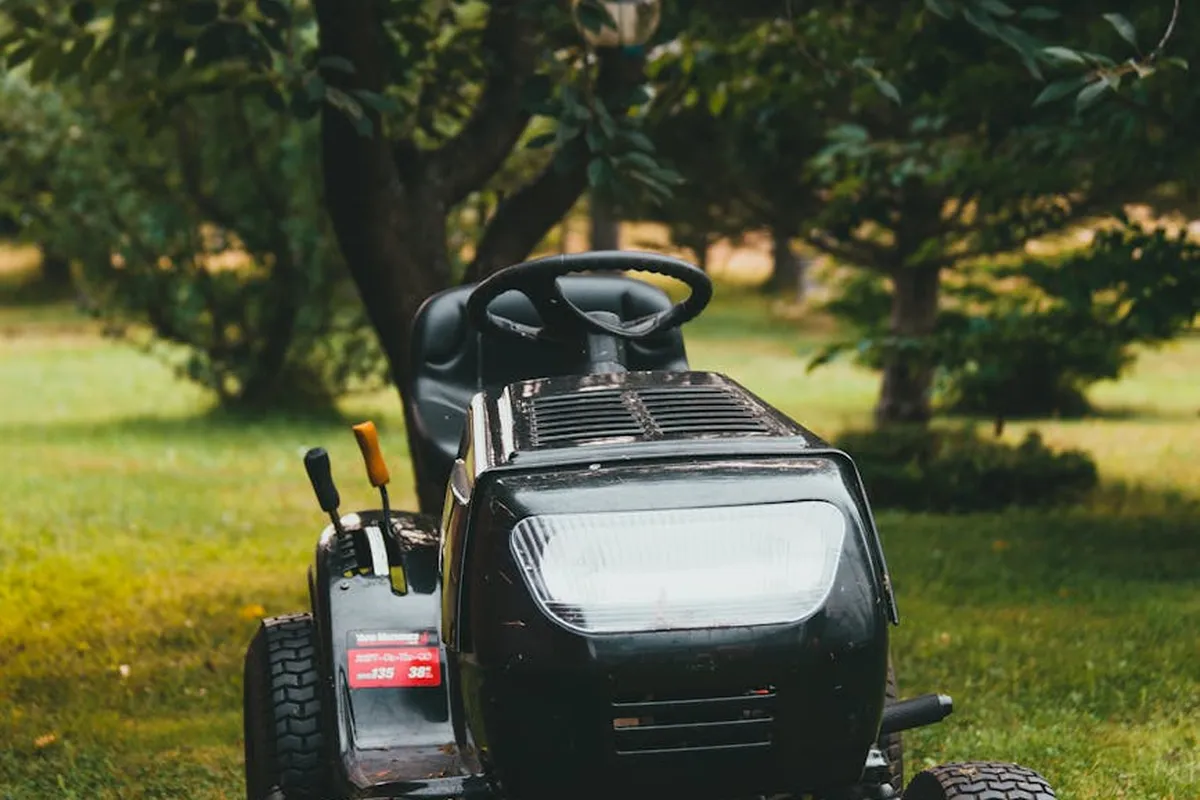
If you’re tired of the weekly wrestling match with the trimmer, these habits are for you. A little upfront effort pays off all season long.
Edge and Mulch to Create a Clear Border
Here’s the biggest time-saver I know. Once or twice a season, take a sharp garden spade or a powered edger and cut a clean, vertical edge between your lawn and your garden beds. Then, fill that trench with 2-3 inches of mulch. This creates a physical “moat” that your mower wheel can ride against, letting you get incredibly close without needing to trim. The mulch suppresses weeds, and the clear line tells you exactly where to stop mowing. My drip system, Sunny, loves it because the mulch helps keep its lines moist.
Rethink Problem Areas
Some spots are just a constant battle. I have one shady, rooty corner I call “Patch” that never grew grass well and was always full of weeds. Instead of fighting it forever, I expanded the garden bed a little and planted a low, pollinator-friendly ground cover there. Sometimes the smartest lawn care is knowing when to stop trying to grow grass. For shady, wet, or perpetually difficult areas, consider native ground covers like clover or creeping thyme. They look great, need no mowing, and help the bees.
Plan Your Mowing Pattern Around Obstacles
Don’t just mow in random rectangles. Think of your trees and gardens as part of the pattern. I start by mowing a first pass around all obstacles, blowing the clippings inward toward the open lawn. Then, I mow the main area in straight lines, incorporating those cleared perimeter strips. This “double-pass” method means you’re never trying to maneuver the mower right against a tree on the final pass. It’s smoother and faster. You’ll see crisp lawn stripes emerge as you vary the mowing directions. That ties the technique to classic lawn stripes mowing patterns.
Keep Your Blade Razor Sharp
A dull mower blade tears grass instead of cutting it. Torn grass tips turn brown, stress the plant, and leave a ragged edge that’s harder to get clean around beds. A sharp blade makes a crisp, clean cut. The grass heals faster, stays greener, and that clean edge is much simpler to maintain. I sharpen my mower blades every 20-25 hours of use; it makes every single task easier, especially the detailed work. You can hear the difference-a sharp blade has a clean *swish*, while a dull one has a ragged *thwack*. Balance the blade as you sharpen it to prevent vibration and ensure a consistent, clean cut. A balanced blade also makes future sharpening and maintenance easier.
Your Greedy Grass FAQ: Straight Talk on Mowing Around Obstacles
How often should I redefine the edge between my lawn and garden beds?
Sharpen those edges once at spring’s start and once mid-summer. A crisp line means your mower wheel can ride it cleanly, slashing your trim time and keeping grass from creeping in. But remember, no matter how sharp your line, proper installation and techniques are key to long-lasting edges.
What’s the gentlest way to trim grass around delicate flower stems?
Drop your string trimmer to a lower speed or grab hand shears for total control. You’ll snip the grass without bruising a single petal, keeping those blooms greedy for sun.
Will adding mulch around my trees really save me mowing time?
You bet-a wide mulch ring out to the drip line replaces grass you’d have to cut. Just mow right up to the mulch edge; it’s a healthy barrier that saves your back and your bark.
How should I mow around a newly planted tree to avoid stress?
Give that youngster a wide berth-keep all mower and trimmer heads at least 18 inches away. Use a quiet push mower or shears for the close-in grass to let its roots settle in peace.
What’s the most efficient mowing pattern for a yard packed with obstacles?
Knock out the open center first, then work in deliberate circles around each obstacle, blowing clippings inward. This creates clear lanes for your trimmer and prevents a messy, tangled finish.
Final Thoughts on Mowing Around Obstacles
The single best piece of advice I can give is to mow slowly and watch your lines when you approach any obstacle. This simple habit prevents damage to your plants and your mower, giving you a thicker, healthier lawn edge.
Being a good lawn owner means caring for the entire yard ecosystem, from the soil underfoot to the bees overhead. I find that staying curious and observing how your grass grows each week is the best way to keep improving. Guided by lawn care maintenance tips, your curiosity becomes action. Simple steps like mowing, watering, and soil care make a bigger difference.
Sources and Additional Information
- What is the most logical and easiest way to mow a lawn around a number of large maple trees? – Quora
- Mowing Under Trees And Around Roots – And What Not to Do!
- HOW TO CUT GRASS AROUND TREES WITHOUT HITTING BARK | BRUSH CUTTER,LAWN MOWER,EDGE TRIMMER PROTECTION – Instructables
- RF-series, orchard mower to mow around trees
- How to Mow Around a Tree
- Can This Garden Be Saved: I Don’t Like Mowing Around Trees – Gardenista
- need help cutting around trees!!!!! | Lawn Care Forum
Written by Ria Carrington. Ria is an avid lawn care enthusiast and advisor. No lawn is unsalvagable when Ria is at work. She has helped countless homeowners breath new life into their dying lawns. She has a B.Sc in Agriculture and brings practical advice combined with knowledge of plant science and her decade worth of hands on experience.