
Oscillating Sprinklers vs. Stationary Sprinklers: Which Saves More Water?
Worried about water waste and high bills every time you water the lawn? I get it, and I’ve been there with my own setup.
We will cover how each sprinkler type works on real grass, the smart way to measure water use, and which option truly keeps your wallet and lawn happy.
After a decade of fine-tuning my home irrigation, including systems like Sunny, I know what saves water without sacrificing a green yard.
At a Glance: Key Factors
Before we dive into the details, here are a few core truths I’ve picked up from weekends spent fine-tuning my watering.
- If your lawn is a perfect rectangle, a stationary sprinkler often wins on water use. For odd shapes, an oscillating model might be your friend.
- The best choice for your yard hinges on three things: lawn shape, lawn size, and your home’s water pressure.
- Smart setup and placement save more water than the sprinkler type alone. A well-placed stationary sprinkler can outperform a messy oscillating one.
- Always listen to your lawn. Brown spots or runoff are signs your setup needs a tweak.
How Oscillating and Stationary Sprinklers Really Work
Let’s look under the hood. An oscillating sprinkler has a metal arm with holes that moves like a slow windshield wiper. It sweeps back and forth, painting your lawn with water in a rectangular strip. A stationary sprinkler doesn’t move. It sits in one spot and sprays, much like a showerhead fixed to your wall, creating patterns like circles, squares, or fans.
The sound tells you a lot. My ‘Sunny’ drip lines for the flower beds are nearly silent, a gentle soaking. Sprinklers are louder, with a rhythmic hiss or a steady patter. When I’m on Max the mower, I watch for damp areas to avoid making ruts, so knowing where your sprinkler throws water is practical.
Coverage area and water pressure are the real players here. A common oscillating sprinkler might cover a rectangle up to 20 feet by 40 feet. Stationary types vary widely, from a small 10-foot circle to a large 50-foot circle. If your water pressure is low, an oscillating arm might stall, and a stationary spray won’t reach its full potential. Good pressure makes both types work as advertised.
The Oscillating Sprinkler: The Back-and-Forth Workhorse
This sprinkler loves big, open rectangles. Most have two dials. One controls the width of the spray, making the rectangle narrow or wide. The other sets the length, determining how far the water throws.
Its strength is covering large, uniform areas efficiently, but its weakness is overspray onto driveways and sidewalks. Wasting water on concrete is a sure way to hike up your bill. I see it in my neighborhood all the time.
Try this simple check. Before you set the sprinkler for the season, lay a garden hose along the edge of your lawn where it meets the driveway or street. Turn on the sprinkler and watch for a full cycle. If water consistently hits past the hose, adjust the width dial or physically move the sprinkler back. This five-minute test saves hundreds of gallons. To fine-tune this further, a lawn watering run time calculator can estimate exact run times for your yard. It uses climate, soil, and sprinkler flow to prevent overwatering while keeping your lawn healthy.
The Stationary Sprinkler: Your Fixed-Point Specialist
You have options here. A spike sprinkler pushes into the soil for a small corner or patch. Rotor types spin quietly to water full circles. Multi-arm models shoot several streams to cover squares or fan shapes.
These sprinklers give you precise control and suffer less from wind blowing the spray off course, but you usually need to move them more often to cover a whole lawn. For a big yard, that can mean more trips outside compared to drip irrigation systems.
My tip for complex lawns is to use a hose splitter. Connect two or three different stationary sprinklers to cover various zones, like a circle for a tree area and a square for a garden border. You can water the entire space at once without moving a thing. I use this trick for the tricky shape around my patio, and it works like a charm.
The Water Savings Showdown: Which Type Wastes Less?
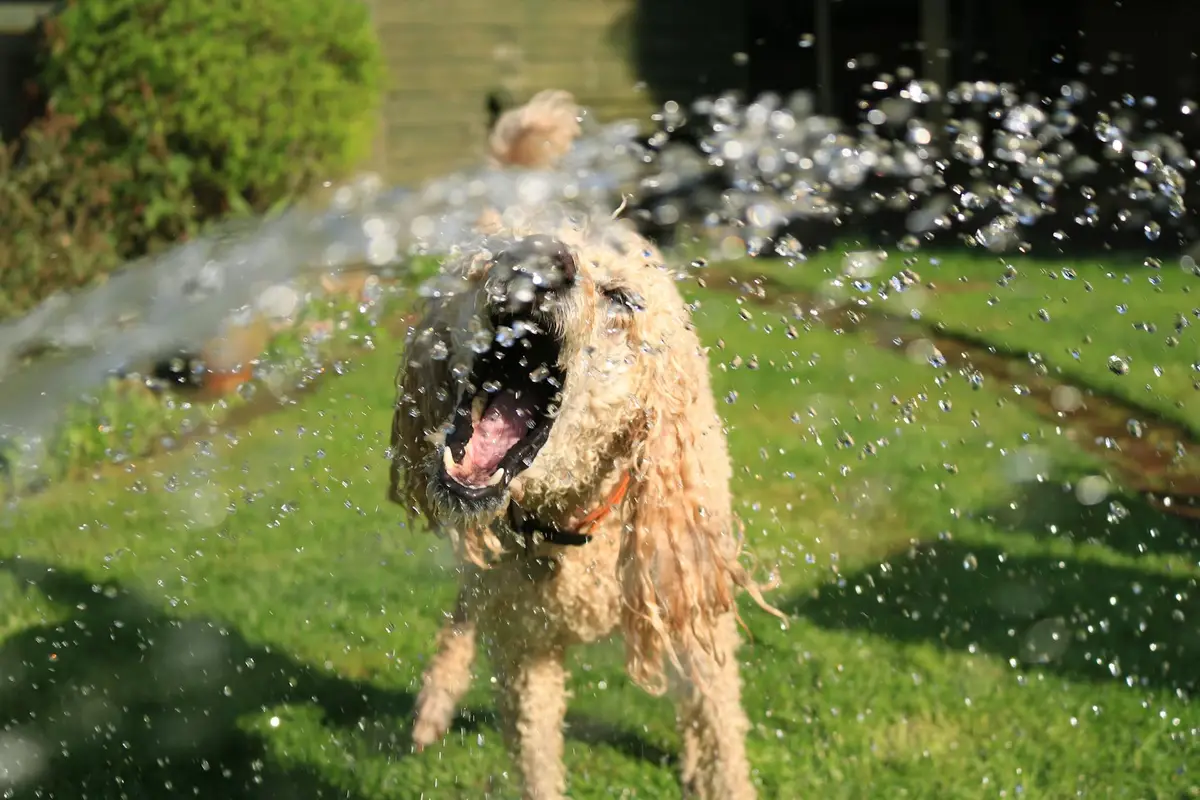
So, which one saves more water? Straight talk: stationary sprinklers, like impact or rotary heads, typically win on efficiency for the square footage they cover. My set of impact heads, which I think of as Sunny’s reliable cousins, have served me well for years on that principle. It’s one of the best lawn watering methods out there for saving water.
Stationary heads keep their spray lower to the ground, which means less water is lost to wind and evaporation before it even hits the grass. They’re designed to throw water in a specific arc or full circle, so you can aim them precisely. This cuts down on overspray onto the driveway, sidewalk, or your neighbor’s property.
Now, I’m not throwing my old metal oscillating sprinkler in the scrap pile. It has its place. For a long, narrow rectangle of lawn, an oscillator can be surprisingly efficient because it mimics the shape. The waste happens when you try to force it to water a square-the ends get soaked while the middle gets less, so you run it longer to compensate. If your lawn shape matches the spray pattern, and you dial it in right, an oscillator can do a decent job.
Putting Them to the Test: A Homeowner’s Comparison
Don’t just take my word for it. The best way to know what’s happening in your yard is to run a simple test. You’ll need your sprinkler, a hose, a timer, and a few empty, clean tuna cans or straight-sided containers.
- Place the containers in a grid pattern across the area you want to water. Put a few near the sprinkler, a few in the middle, and a few at the far edge.
- Hook up your first sprinkler, turn it on, and set a timer for exactly 15 minutes.
- After 15 minutes, turn off the water. Use a ruler to measure the water depth in each can. Write it down.
- Repeat the process with your other sprinkler type in the same spot.
You’re not just looking for which one put out more total water; you’re looking for which one gave you the most uniform coverage. Big differences between your can measurements mean dry spots and wasted water. This test is perfect for a tricky area like my ‘Patch’. You’ll see instantly which sprinkler can navigate around a tree or fence without leaving a dry zone behind.
What Actually Drives Water Waste (It’s Not Just the Sprinkler)
The sprinkler is just one piece of the puzzle. The biggest water wasters are usually your habits and your soil.
- Timing: Watering in the heat of the day is like trying to fill a cup with a hole in the bottom. Up to 30% can evaporate before it helps your grass.
- Poor Setup: If your sprinkler heads are tilted or blocked, you get uneven spray. Overlap is good, but giant gaps create dry patches that tempt weeds.
- High Pressure: Too much pressure creates a fine mist that drifts away on the breeze instead of heavy droplets that soak in.
Your soil type changes everything. Watering clay soil is like filling a dense sponge-it holds water well but absorbs it slowly. Watering sandy soil is like pouring water through a colander-it drains fast and needs shorter, more frequent drinks.
The single best habit you can build is watering deeply and infrequently, which trains grass roots to grow down deep into the soil where it’s cooler and moisture lasts longer. Frequent, shallow sprinkles keep roots lazy and near the surface.
Greedy Grass Pro Tips for Maximum Efficiency
Let’s get your system running smarter. This is where you save real water and money.
Greedy Grass Pro Tip: Pair your sprinkler with an inexpensive mechanical timer between the hose and the spigot. It’s the easiest way to prevent the “I-forgot-the-sprinkler-was-on” flood that wastes hundreds of gallons. Set it and walk away.
Dialing In Your Sprinkler’s Settings
Take five minutes to fine-tune your gear. For an oscillating sprinkler, you’ll usually find two adjustment knobs: one for the width of the spray arc and one for the distance it throws. Start with both wide open, then slowly dial them back until the spray *just* covers your lawn edges. For even more precision, a sprayer speed tool can help you dial in consistent coverage as you test.
For a stationary rotary or impact head, look for a set screw or knob to adjust the arc (how much of a circle it covers) and another for the radius (how far it throws). A flat-head screwdriver is often the only tool you need. While you’re down there, check that the head is sitting straight up and down, not tilted, and clear any grass clippings or mud from the nozzle.
Always aim to water between 4 a.m. and 10 a.m. The air is still, the sun is low, and your water has the best chance to soak into the soil where your grass can use it. This morning to mid-morning schedule is optimal for lawn watering.
Smart Lawn Zones and Sprinkler Placement
Your lawn isn’t one uniform zone. The sunny, south-facing side by the driveway bakes and needs more water. A shady, north-facing spot like ‘Patch’ stays damp longer and needs much less. Try to use separate sprinklers for these areas, or water them for different amounts of time.
Map it out in your head or on paper. Place your sprinkler so its spray pattern overlaps with the next one’s by about 50%. This eliminates dry seams. Picture it like laying down tiles on a floor-you want even coverage without gaps.
A basic rain gauge stuck in an open part of your lawn tells you when you can skip a watering cycle, and a smart soil moisture sensor takes the guesswork out completely. These small tools prevent you from watering right after a good rain, which is pure waste.
Common Watering Mistakes and How to Avoid Them
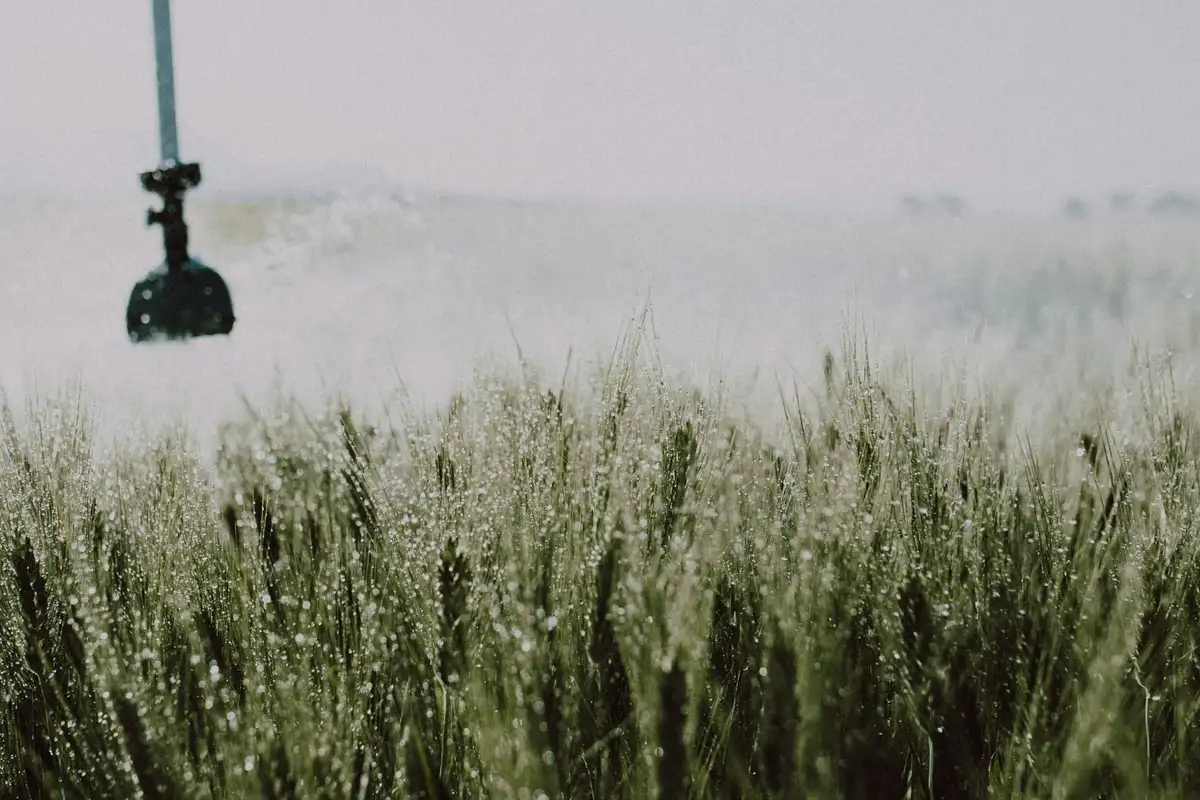
We all want a green lawn without wasting water or money. I’ve made every mistake in the book with my setup, Sunny. The good news is that fixing these common errors is simple. You don’t need fancy gear, just a slightly different routine.
Mistake 1: Setting and Forgetting
This is the big one with stationary sprinklers. You place it, turn it on, and go make a sandwich. The problem? That one spot gets a deep soak while the rest of your grass gets a light mist. Think of it like mowing: you don’t mow the same strip over and over, you move in a pattern for even coverage. Your sprinkler needs the same attention.
A stationary sprinkler waters in a fixed pattern, usually a circle or a square. To cover your whole lawn, you have to move it. I set a timer on my phone. Every 20 to 30 minutes, I walk out and move the sprinkler to the next dry zone, overlapping a bit with the last wet area. It takes five minutes and makes all the difference, especially when watering time is crucial.
Mistake 2: Ignoring the Weather and Soil
Your lawn doesn’t need a calendar. It needs water based on what’s actually happening in the soil and sky. Watering on a rigid schedule is how you end up with a soggy, fungus-prone mess or a parched, thirsty lawn. A seasonal lawn watering schedule keeps you in sync with rain, heat, and soil moisture. It helps you water when it matters across spring, summer, and fall.
Before you even turn on the tap, do the screwdriver test. Take a long screwdriver and push it into your soil. If it slides in easily 6 inches deep, your soil is damp enough. Wait. If it’s hard to push, it’s time to water.
After a solid, soaking rain, give your sprinklers a day or two off. During a heat wave, you might need to water a little more often. Remember, overwatering drowns grass roots and invites disease. It’s just as damaging as letting the lawn dry out.
Mistake 3: Watering the Wrong Things
Look at where your water is going. Are you giving your driveway a deep drink? Is your house siding getting soaked? That’s money and a precious resource literally going down the drain. It also encourages weeds and moss on hard surfaces.
The fix is simple: adjust. For an oscillating sprinkler, tighten the width or length controls to fit your lawn’s shape. For a stationary spray head, you can often adjust the arc or distance. No adjuster? A simple deflector, like a small patio block or a curved piece of plastic, can block spray from hitting the sidewalk.
While we’re keeping water on the grass, a little for your garden beds is a good thing for pollinators. Just aim for the soil at the base of plants, not a high spray that creates wasteful runoff. Your bees and butterflies will thank you.
Your Sprinkler Questions, Answered
1. I’ve got a smart timer. Does the sprinkler type even matter anymore?
Absolutely. A timer stops overwatering, but an inefficient sprinkler still wastes water by spraying it onto concrete or creating mist. Pair your timer with a well-placed, properly dialed-in sprinkler for the real one-two punch of savings.
2. My lawn is on a slope. Which sprinkler type is better to prevent runoff?
Stationary sprinklers win here. Use a pulse-setting or multi-stream model to apply water slowly, allowing it to soak in between cycles. Oscillating models often apply water too quickly on a slope, causing wasteful runoff before the roots can drink.
3. How do I know if my water pressure is too low for my sprinkler to work right?
Look for poor spray distance or a stalled oscillating arm. A simple test: run your sprinkler and see if the spray pattern looks weak and “sags” compared to its usual reach. Low pressure means longer run times, which is a sneaky water waster.
4. Should I switch sprinkler types between spring and peak summer heat?
Stick with your efficient type, but change your schedule. In summer’s heat, water deeper and slightly more often, ideally in the early morning. The sprinkler itself is less important than adapting your timing to the season’s demands.
5. How often should I reassess my sprinkler placement?
Do a quick visual check every month during the growing season. Grass grows, plants fill in, and a spot that was once covered can become a dry patch. A five-minute walkaround can catch these gaps before they hurt your lawn’s greedy thickness.
Final Thoughts on Sprinkler Choices
Your best water-saving move is matching your gear to your lawn’s shape. Use a stationary sprinkler for small, square patches and choose an oscillating model for large, rectangular spaces to cut down on wasted overlap. This simple match-up makes every drop work harder for you.
Keep an eye on your system, and don’t be afraid to turn it off when a good rain rolls in. The best lawn care is a mix of smart gear, a little observation, and the willingness to try a new setting next weekend.
Sources and Additional Information
- Which lawn sprinkler is right for you? Here’s how to choose
- The Pros and Cons of Oscillating Sprinklers: Is This Type Right for Your Lawn? – JET Landscape & Irrigation
- 6 Different Types of Sprinklers and their Benefits
- 6 Different Types of Lawn Sprinklers and Their Functions
Written by Ria Carrington. Ria is an avid lawn care enthusiast and advisor. No lawn is unsalvagable when Ria is at work. She has helped countless homeowners breath new life into their dying lawns. She has a B.Sc in Agriculture and brings practical advice combined with knowledge of plant science and her decade worth of hands on experience.