
Manual or Automatic: What’s the Best Way to Water Your Lawn?
Struggling to choose between dragging the hose every evening or installing a set-it-and-forget-it timer? You’re not alone, and the right choice can save you time and cash.
We will cover the honest pros and cons of manual watering, the smart benefits and hidden costs of automated timers, and how to decide based on your lawn, your schedule, and your budget.
I’ve spent years dialing in my watering routine, from hand-soaking Patch’s shady corner to programming Sunny, my drip system, so I know what gets results without waste.
At a Glance: Key Factors
If you’re short on time, here’s your cheat sheet. I keep a version of this taped inside my shed.
That’s the snapshot. The real choice comes down to your lawn’s size, your lifestyle, and what you’re willing to manage.
Your Budget and Setup: What’s the Real Cost?
Let’s talk dollars and sense. The price tag isn’t just what you pay at the store. It’s your time, your effort, and your long-term water bill.
Manual watering seems cheap. You likely own a hose. A decent wand or fan nozzle might cost $20 to $50. That’s it for gear. The real expense is you. Standing there, moving the sprinkler, trying to remember if you watered the back corner for ten minutes or five. For a large lawn, this can eat up hours each week. It’s much easier to install a DIY sprinkler system and let it handle the work.
Timer systems have a wider range. A simple hose-end timer screws on in seconds. A multi-zone smart controller for an in-ground system requires more planning and maybe an afternoon with some wire strippers. The installation complexity scales with the features. Screwing on a timer is a one-minute job. Wiring a controller is a project for a confident weekend warrior.
The long-term value tilts heavily toward automation once your lawn is bigger than a postage stamp. A good timer prevents overwatering, which saves money and is better for the grass. Manual watering often leads to underwatering in some spots and runoff in others. Consistency is what your lawn craves, and that’s what a timer delivers.
How Much Does a Basic Timer System Really Cost?
For most homeowners, a hose-end timer is the perfect first step into automation. You don’t need to redo your whole yard.
A basic mechanical timer, the kind with dials and pins, runs between $15 and $30. You get simple daily or every-other-day scheduling. Installation is literally “screw it onto the spigot, then screw your hose onto it.” It takes two minutes.
A Wi-Fi smart hose timer jumps to the $50 to $100 range. For that, you get control from your phone, custom schedules, and often a rain delay feature. Setup involves downloading an app and connecting to your home network. From box to first scheduled watering, plan for about 20 minutes of tinkering. This is the category I recommend to friends starting out. The convenience is a game-changer.
Is Manual Watering Actually “Free”?
Let’s do the math I did five years ago before I got serious. My old routine was about 30 minutes of watering, three times a week.
That’s 1.5 hours a week. Over a 20-week growing season, that’s 30 hours. Thirty hours of my Saturdays gone, holding a hose. I valued my weekend time more than that.
Contrast that with the one-time hour I spent setting up my first two-zone hose timer system. I reclaimed those 30 hours instantly. For a small patch of grass by the driveway, sure, 5 minutes with a watering can is trivial. But once your watering routine becomes a daily chore, your time is the most expensive part of the equation. The hose is only free if your time is worth nothing. To translate that time savings into precise watering, a lawn watering run time calculator can estimate how long to water based on lawn size and climate. It helps you set repeatable watering durations instead of guessing.
Convenience and Control: What Fits Your Life?
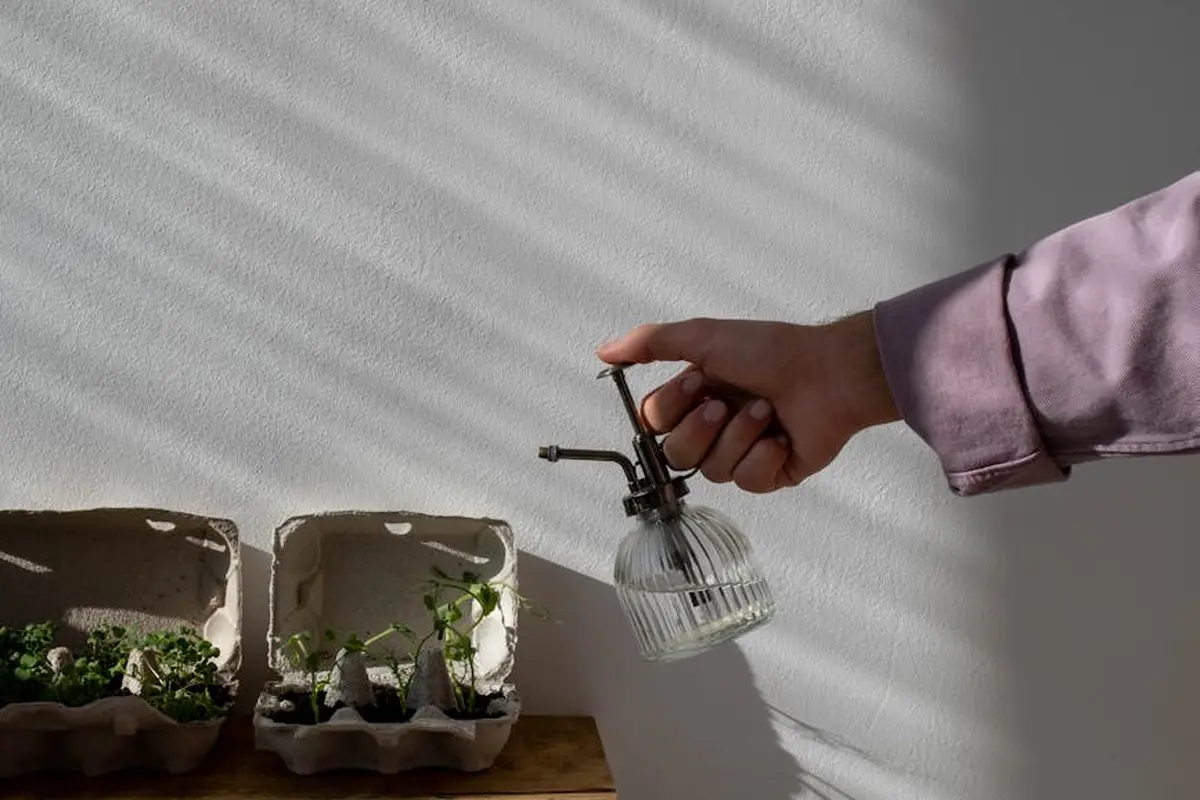
Manual watering is a daily ritual. You drag the hose, you move the sprinkler, you feel the sun on your neck. It connects you to your lawn. Timers are the opposite. You set them up once, program them, and they work while you sleep or are at work. It is a “set it and forget it” approach that fits a busy schedule, especially when compared to other lawn watering methods.
The big difference is control. With a hose, you see a dry patch and you can stand there and soak it. You have instant, pinpoint control. A timer gives you a different kind of control. You program zone one for 20 minutes and zone two for 40 because it’s on a slope. You manage the whole system from a little box on the wall.
I learned this the hard way a few summers back. We left for a long weekend and I completely forgot to ask a neighbor to water. I came back to grass that looked tired and thin. That was the final push to install Sunny, my drip system for the garden beds. Now, the timer handles the baseline, and the lawn never knows I’m gone.
Do Watering Timers Save Water or Waste It?
This is the most common question I get. The answer is not simple. A well-programmed timer is a water-saving machine. It applies the exact amount needed, at the right time of day, and stops. It does not get distracted by a phone call and leave the sprinkler running for two hours.
Manual watering often wastes water because it relies on memory and attention, two things that are in short supply on a Tuesday evening. It is easy to over-water when you are thinking about dinner, or to under-water when you are simply too busy to go outside.
The real key to efficiency is a rain sensor or smart weather integration. A basic timer will water on schedule even during a downpour, which is pure waste. A timer that skips a cycle after a half-inch of rain? That saves water and money.
What If I Like Being Hands-On With My Lawn?
I get it. There is a real peace in watering the lawn yourself. The sound of the spray, the smell of wet soil, the cool mist on a warm evening. It is a chore that does not always feel like one. That hands-on time is also how you spot problems early, like a new weed or a patch of fungus.
Your enjoyment is valid, and you do not have to give it up. Consider a hybrid approach. Use a simple timer for your main lawn zones to guarantee they get a deep drink every few days. Then, keep your hose ready for the hands-on work. You can give extra attention to trouble spots like my shady friend, Patch, or immediately address a dry area you see. This gives you the best of both worlds: consistency and connection.
Watering Smart: Efficiency for Your Lawn and Your Wallet
No matter how you deliver water, these rules are the same. Water deeply and infrequently to encourage strong roots. Do it in the early morning to reduce evaporation and fungal disease. Your goal is about one inch of water per week, including rain, split into one or two sessions.
A timer makes following these rules effortless. You set it for a long, early morning run once or twice a week, and you are done. Manual watering makes it harder. It is tough to know exactly how long to stand there to get that deep soak, and life often gets in the way of the perfect morning schedule.
Your soil type changes everything. Think of clay soil like a sponge. It holds water well but absorbs it slowly. Sandy soil is like a coffee filter; water runs right through it. With a timer, you program longer, slower cycles for clay and shorter, more frequent cycles for sand to get water to the roots without runoff. Manually, you just have to watch and learn the pace your soil drinks.
How Do I Set a Watering Timer the Right Way?
Do not just guess. Follow these seasonal steps for a healthy lawn.
- Spring Startup: As temperatures rise, start with two short cycles per week in the early morning. Watch how the grass responds.
- Summer Runtime: This is peak season. Program two or three longer sessions per week, aiming for that one-inch total. Always water before 10 AM.
- Fall Wind-Down: As growth slows and temps drop, reduce frequency. One deep watering per week is often enough by late fall before you winterize the system.
To set the perfect run time, do the “tuna can test.” Place a few empty tuna cans around your lawn in a sprinkler zone. Run that zone for 15 minutes. Measure the water in each can, average it, and then calculate how long you need to run to apply half an inch of water. It’s the only way to know for sure, especially when you’re trying to determine the correct watering duration for your lawn.
What’s a Drip Watering Timer and When Should I Use One?
A drip watering timer controls a low-pressure drip irrigation system, like my setup, Sunny. Instead of spraying water into the air, it sends water slowly and directly to the root zone through small tubes and emitters.
This method is incredibly efficient, losing almost no water to evaporation or wind. It is perfect for garden beds, vegetable patches, foundation plantings, or targeted lawn areas. Installing one is different from a sprinkler timer. It hooks up to a hose bib or a dedicated low-pressure line, and you program it to run for longer periods at a very low flow rate.
Use a drip timer when you need precise, water-thrifty irrigation for specific plants. It is not for watering your entire Kentucky bluegrass lawn, but for keeping your pollinator garden thriving with minimal waste. When weighing sprinkler systems vs drip irrigation, consider area size and plant needs. Drip irrigation delivers targeted efficiency for gardens, while sprinklers are better for larger, open lawns.
Common Lawn Watering Mistakes and How to Avoid Them

We’ve all been there. You’re trying to do the right thing for your grass, but sometimes the path to a green lawn is paved with good intentions and soggy, shallow roots. I’ve learned from my own backyard, especially from dealing with Patch’s damp problems. Let’s fix the top mistakes so you can water smarter.
Mistake 1: Daily Light Watering
This is the big one. Giving your lawn a quick sprinkle every day is like feeding it nothing but snacks. The roots stay lazy right at the surface, making your grass weak and thirsty. It’s a magnet for stress when the heat hits.
The simple fix is to water deeply and less often, training your grass roots to chase moisture down into the soil.
- Manual Fix: Grab a tuna can or a straight-sided container. Place it in the zone you’re watering. Time how long it takes to fill with half an inch of water. That’s your new watering session length. Do this 2-3 times a week, not daily.
- Timer Fix: Program your timer for those longer, less frequent sessions. Set it to run for the “tuna can time” you calculated, maybe on Mondays, Wednesdays, and Fridays early in the morning.
Mistake 2: Watering at Night
This seems convenient, but it’s a party invitation for fungus. Grass blades stay wet for 12+ hours without sunlight to dry them. I saw this first-hand in my shady Patch area before I corrected it.
Watering in the early morning is the best defense, giving blades time to dry before nightfall.
- Manual Fix: Make it a morning ritual with your coffee. Even if you start at 7 or 8 AM, it’s infinitely better than 8 PM.
- Timer Fix: This is where a timer shines. Set it to start between 4 AM and 8 AM. Your lawn gets watered while you sleep, and the sun handles the drying.
Mistake 3: Ignoring Your Soil Type
Watering the same way on sand and clay is like using the same amount of water on a sponge and a dinner plate. The results are a mess. Sandy soil drains fast, clay holds water tight, leading to different needs for irrigation in clay and sandy soils for lawns.
Your soil dictates your schedule; think of it as your lawn’s personality.
- Manual & Timer Fix: Do the screwdriver test. Water your lawn as you normally would. Wait an hour, then push a long screwdriver into the soil. If it slides in easily 6 inches deep, you’ve watered enough. If it stops hard at 2 inches, you need to water longer. If it’s soggy, you watered too much. Adjust your time and frequency based on what you find.
Mistake 4: Setting and Forgetting the Timer
This is the classic automation trap. You set it in spring and forget it through summer storms and fall cool-downs. This wastes a huge amount of water and can drown your lawn’s roots.
A timer is a tool, not a substitute for paying attention to the weather and your lawn’s needs.
- Timer Fix: Get a timer with a rain delay or a smart model that connects to local weather data. At minimum, make a calendar note to check and adjust your settings every two weeks as seasons change. Turn it off if you get a good, soaking rain.
- Manual Mindset: Even if you use a timer, adopt the manual waterer’s habit of looking at the lawn before you let it run. Is the soil still damp? Did it just rain? Skip the cycle.
Making Your Choice: A Simple Flowchart for Your Lawn
So, which path is right for you? It’s not about which method is “better,” but which is better for your life and your lawn right now. Let’s break it down.
Start here: How big is your lawn?
- Small (under 1,000 sq ft) or mostly container plants: The hose is probably all you need. It’s simple and cheap. You can water deeply by hand in just a few minutes.
- Medium to Large (over 1,000 sq ft): Carrying a hose or moving sprinklers gets old fast. An automated system starts to make real sense here.
Next, consider your lifestyle and budget.
- Choose a basic hose-end timer if… you travel sometimes, have a simple sprinkler, or want to dip your toes into automation without a big investment. It’s a great “set it for vacation” tool.
- Invest in a multi-zone irrigation system like Sunny if… you have a large or complex yard, value consistent perfection, and want maximum convenience and water savings long-term. The upfront cost is higher, but it pays off in time and a healthier lawn.
- Stick with the trusty hose if… you enjoy the mindful routine, have a small area, or are on a very tight budget. There’s no shame in the hands-on game. My first five years were all hose and a pulsating sprinkler.
Finally, listen to your own preference.
- Do you like control and feeling connected to your yard? Manual might be your zen.
- Do you want reliability and to free up your weekends? Automation is calling your name.
Both methods can give you a fantastic lawn if you avoid the common mistakes. Your choice isn’t permanent, either. I started manual, added a timer for vacations, and eventually built out a drip system for my beds. Your lawn will change, and so can your tools. The goal is a healthy, resilient yard that doesn’t own all your free time.
Got Questions? Let’s Get Your Lawn Greedy.
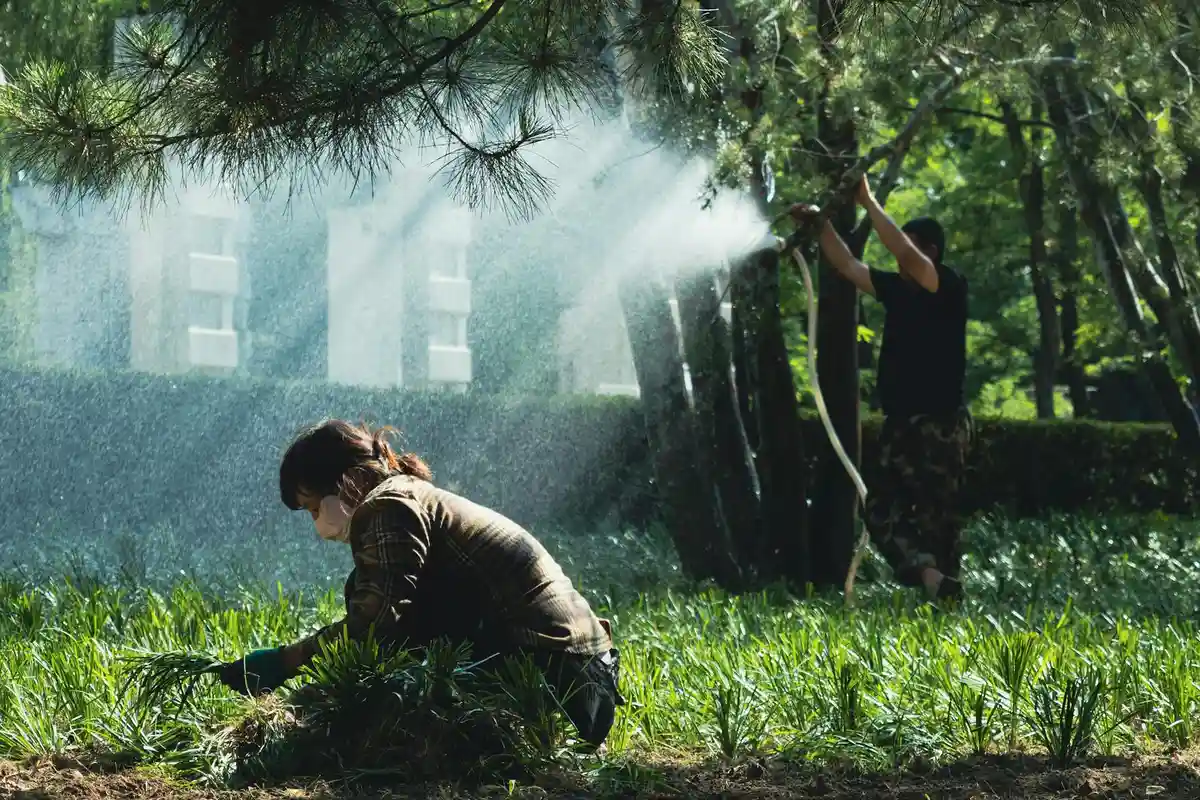
1. My town has watering restrictions. Can a timer help me comply?
Absolutely. A smart timer is your best ally for following odd/even schedules or specific time windows automatically. It takes the guesswork and midnight hose-dragging out of the equation, keeping you compliant and your grass consistently quenched.
2. Can I mix manual watering with an automated system?
You bet-that’s a pro move. Use your timer for the regular, deep soaks that build strong roots, and keep your hose handy for quick spot treatments on dry patches or new seed. This hybrid approach gives you both baseline consistency and hands-on control.
3. Are timers reliable, or will they fail and leave my lawn thirsty?
Quality timers are very reliable, but think of them like a good assistant, not a replacement for your oversight. Check the batteries seasonally and perform a quick system check every few weeks to ensure everything’s running on schedule and your greedy grass stays happy.
4. How do I adjust for unexpected heatwaves or rainy weeks?
With a manual routine, you adjust on the fly by simply watering more or skipping a day. For timers, you must be proactive: use the manual override or rain delay button, or better yet, invest in a smart model that adjusts itself based on local weather forecasts.
5. My lawn is already struggling. Which method will help it recover faster?
Your lawn needs precise, consistent care to bounce back. A well-programmed timer eliminates the risk of you forgetting a crucial watering, delivering the steady moisture recovery requires. Start with that for consistency, and use manual watering to give extra sips to the most stressed areas. Pair this with a seasonal lawn watering schedule to tailor watering to the season. That approach keeps roots healthy through heat, drought, and cooler months.
Making Every Drop Count in Your Lawn Care Routine

The best approach is rarely one or the other. For most of us, the winning strategy is a smart hybrid: let an automated timer handle the reliable, deep soakings, but keep the hose ready for those quick manual touch-ups when Patch looks thirsty or after a surprise seeding project. This balance gives your lawn consistency without sacrificing your ability to adapt the watering schedule as needed.
Owning a great lawn means being a good steward of your little piece of the environment. Whether you’re hand-watering or programming Sunny the irrigation system, your goal is the same: nurture thick grass that supports life, conserves water, and deepens your own connection to the green space you’re growing. Small choices about mowing, watering, and fertilizing can have real environmental impacts. Being mindful of these effects helps protect soil, water, and wildlife.
Expert Resources and Citations
- Manual Vs. Automatic Irrigation Systems: What’s Right for Me?
- Automatic vs. manual watering: Which is better for your lawn? – PantanoPowerEquipment.com
- 9 Automatic vs Manual Irrigation Systems That Save Water and Time – FarmstandApp
- The Pros and Cons of Manual vs. Automated Irrigation Systems | Titanium Excavation
Written by Ria Carrington. Ria is an avid lawn care enthusiast and advisor. No lawn is unsalvagable when Ria is at work. She has helped countless homeowners breath new life into their dying lawns. She has a B.Sc in Agriculture and brings practical advice combined with knowledge of plant science and her decade worth of hands on experience.