
When Is It Safe to Mow Your Newly Seeded Lawn?
You’ve nurtured your new grass from seed, and now you’re eyeing the mower with a mix of hope and hesitation. Getting the first mow right sets the stage for a thick, healthy lawn.
We’ll cover the exact grass height to target, a simple strength test for young blades, how to adjust your mower for a clean cut, and aftercare to protect your progress.
I’ve timed this first cut perfectly on my own lawn for years, with lessons learned from Max, my trusty zero-turn mower.
At a Glance: Key Factors for Your First Mow
You see green sprouts and you’re itching to get out there. Hold that thought. Mowing too early is the number one way to undo all your hard seeding work. Follow these simple rules.
- The One-Third Rule: Never cut more than one-third of the grass blade’s height in a single mow. For the first cut, this is your absolute law.
- Mower Readiness: Your mower blade must be razor sharp. A dull blade tears young grass, leaving ragged, white tips that invite disease. I give Max’s blades a fresh sharpen before this first, critical job every time.
- Grass Height: The grass needs to be tall enough that cutting one-third off still leaves it strong. For most cool-season grasses like fescue and Kentucky bluegrass, that means a starting height of about 3 to 4 inches.
Think of it this way: you’re waiting for the grass to be a sturdy teenager, not a wobbly toddler. A teenager can handle a trim. A toddler will get knocked over.
Your exact timing will shift based on a week of rain or if you’re growing a warm-season grass like Bermuda, which can often handle a cut a little sooner. Let the grass itself tell you when it’s ready.
Signs Your New Grass is Ready for Its First Haircut
So how do you know it’s go-time? Don’t just count days on a calendar. Get out there and look. Put your hands on it.
First, look for a uniform sea of green. The blades should be standing up tall and proud, not flopped over on each other. If it looks thin and you can still see lots of dirt, it’s not ready.
Then, do the tug test. Pick a few random spots, get down on a knee, and gently tug on a small clump of grass blades. If you feel firm resistance-like the grass is holding on for dear life-the roots are anchoring well. If it slides out with barely a pull, those roots are still too shallow. Wait.
How tall should it be? For that first mow, aim for the grass to be about one inch taller than your desired regular height. If you want a 3-inch lawn, let it grow to just over 4 inches before you mow it down to 3.
What about patchy areas? This is where Patch taught me patience. If you have thin spots, mow the thick areas when they’re ready. For the patchy zones, either set your mower to its highest setting to just kiss the tops, or better yet, go around them. Mowing too low over thin soil can rip out what little grass you have and suck up seed with the mower bag.
How to Tell If It’s Still Too Soon
The signs that you need to wait are just as clear as the signs that you can mow. Heed these warnings.
- The grass blades are laying flat and matted, especially after a morning dew.
- The soil feels soft and spongy under your shoes. You shouldn’t be sinking in.
- You can still see large areas of bare dirt between green shoots.
What happens if you mow too soon? You cause real damage. You scalp the young plants, shocking them. You risk tearing the fragile, shallow roots right out of the soil, especially if the ground is damp. Your mower tires can also compact the soft seedbed, making it harder for new roots to grow.
Here’s my simple field test: walk across the lawn. If your footprints stay visible and the grass doesn’t spring back up after a minute, the turf isn’t mature enough to handle your weight, let alone a 500-pound mower. Wait longer.
The Right Timing: How Long After Seeding Can You Mow?
How long after planting grass seed can you mow? I hear this question every season. The honest answer is that you need to think in weeks, not days. While you might see green sprouts in 7-14 days, those baby grass plants are not ready for the mower. The general safe range is between 3 and 8 weeks after germination, but your lawn will tell you when it’s ready.
Forget the calendar date on your phone. Your first mow depends on two things you can see and feel: grass height and root strength. Think of the new grass like a toddler learning to walk. It needs to be sturdy on its own feet, or roots, before it can handle any traffic.
Here is your simple two-part check before you even think about starting the engine:
- The Height Test: Has the grass reached at least one-and-a-half times your desired mowing height? If you want a 3-inch lawn, wait until most grass blades are about 4 to 4.5 inches tall.
- The Tug Test: This is the real test. Grab a handful of grass blades and give a gentle, upward pull. If you feel firm resistance, the roots have anchored into the soil. If the grass pulls up easily with little to no soil attached, those roots are still too weak. Wait another week and test again.
Cool-Season vs. Warm-Season Grass Timelines
Your grass type is a huge factor. Cool-season and warm-season grasses grow at different speeds, especially when they’re young.
Cool-season grasses like Kentucky Bluegrass, Fescue, and Ryegrass are the slow starters. They put a lot of early energy into building deep roots, which is great for long-term drought resistance. Bluegrass can be particularly slow to establish from seed. Warm-season grasses like Bermudagrass and Zoysia spread quickly once the soil is warm, often filling in faster above ground.
Not sure what you have? Look at the blades. Cool-season grasses typically have thin, fine blades and thrive in northern climates. Warm-season grasses have broader, coarser blades and are common in the southern U.S. Climate shapes which grasses perform best—cool-season varieties thrive in cooler regions while warm-season types favor warmer areas. Understanding this cool-season vs. warm-season grasses climate can help you plan and care for your lawn.
For cool-season lawns, when you seed matters too. Fall seeding is ideal because the soil is warm, the air is cool, and weeds are slow. This gives grass a long, strong establishment period before summer stress. Spring seeding often means you’re mowing right before the heat hits, so those young plants need extra care with water and a higher mowing height.
Getting Your Lawn and Mower Ready for the First Pass
How do you prepare for the first mow on a new lawn? The prep work you do now protects your investment and sets the stage for a healthy cut. It’s about being gentle.
First, get the lawn itself ready. The soil must be firm and dry. If your shoes sink in or leave deep prints, it’s too wet. Mowing on soggy ground will rip young roots and create ruts. Walk the entire area and pick up any stray straw, mulch mats, or debris that could tangle in your mower or smother new grass.
Now, for your mower. This is non-negotiable. You must have sharp blades. Dull blades tear and shred the tender grass blades, leaving ragged, white tips that are open doors for disease. I sharpen my blades to a razor’s edge before this first cut. If your blade shows nicks or dullness, sharpen or replace it. A sharp, undamaged blade ensures a clean, healthy cut. Clean the mower deck to prevent rust or old clippings from falling onto the new lawn. Check the tire pressure, as uneven tires can scalp the turf.
What type of mower is best for a new lawn? A lightweight push mower or a modern battery-powered mower is the top choice. They’re maneuverable and put the least amount of pressure on the soft soil. You can use a riding mower if you’re careful, but it’s risky. My zero-turn, Max, is a beast. He stays in the shed for this first job. If you must use a rider, ensure the soil is very firm, use the highest setting, and make slow, wide turns to avoid tearing up the turf with the tires.
When you finally make that first pass, mow high. Remove only the top third of the grass blade. This keeps enough leaf surface for photosynthesis so the plant can keep growing strong roots. Your new lawn has worked hard. A good first mow rewards that work.
The First Mow: How to Cut New Grass Without Harming It
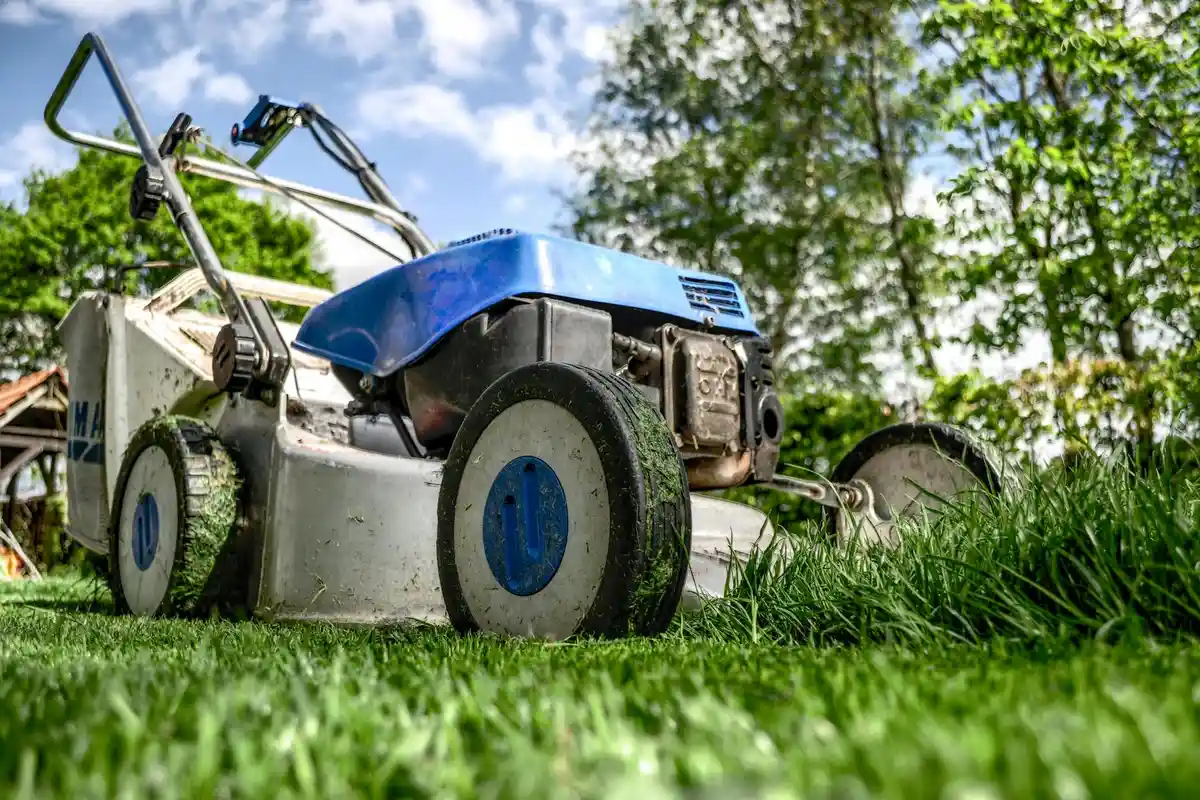
The day finally arrives. Your baby grass is tall enough, and it’s time for its first haircut. I know the urge is to fire up Max and get to work, but this is a precision job, not a race. Think of it as a gentle trim, not a back-to-school buzz cut.
The best time of day to mow new grass is in the late morning, after the dew has dried but before the midday heat sets in. The grass blades will be completely dry, which prevents clumping and reduces the chance of spreading disease. That late morning sun also helps any tiny, unavoidable scuffs heal quickly. Beyond the time of day, the season and weather can affect mowing. Considering the best time, day, and season to mow helps keep your lawn healthy year-round.
You should always mow new grass when it is dry, period. Water the day before if you need to, but never mow right after watering or if the ground is soggy. Wet grass clumps up, mats down, and can get ripped out by the mower wheels. A dry lawn is a safe lawn for that first cut.
For the first mow, never cut more than one-third of the grass blade’s height. This is the golden rule for a healthy lawn. If your grass is 4 inches tall, you shouldn’t take it lower than about 2.7 inches. A good target for most cool-season grasses is a finished height of 3 inches for that very first cut. This leaves plenty of leaf surface for photosynthesis so the young roots stay strong.
Your mowing pattern matters. Go slow. Make your first pass around the very edge of the area to create a clean turning space. Then, mow in straight lines, overlapping each pass by a few inches to ensure an even cut. When you turn, do it slowly and gently, preferably on a driveway or sidewalk to avoid tearing up the tender soil with the tires.
Leave the clippings right where they fall. They are free, gentle fertilizer. They are so small they will disappear quickly, returning moisture and nutrients back to the soil and protecting the crowns of your new grass plants. This simple habit also reduces yard waste and chemical inputs, lowering the environmental footprint of lawn care. Keeping clippings on the lawn supports soil health and can improve water-use efficiency as part of responsible maintenance.
Common Lawn Care Mistakes to Avoid When Mowing New Grass
It’s easy to get excited and make a simple error that sets your new lawn back. I’ve learned from every one of these, especially in that tricky spot I call Patch.
- Mowing When Wet: This is the top mistake. It leads to clumpy, smothered grass and invites fungal diseases. The mower also leaves ruts in soft soil.
- Using a Dull Blade: A sharp blade makes a clean slice. A dull blade tears and frays the grass tips, leaving ragged, brown ends that stress the plant and look awful.
- Cutting Too Short (Scalping): Taking off too much green leaf shocks the plant. It forces the grass to use energy to regrow leaves instead of building deep, drought-resistant roots. This weakens it for the long haul.
- Mowing at the Wrong Time of Day: Mowing in the heat of the afternoon stresses the freshly cut grass. Mowing in the evening leaves it damp and vulnerable to disease all night.
Patch, my stubborn shady corner, taught me the cost of impatience. I mowed it a day too early, when the soil was still a bit damp from morning shade. The wheels dug in, and I pulled up tiny seedlings. I had to wait and re-seed. Sometimes the smartest move is just waiting another 48 hours.
Greedy Grass Pro Tip
When in doubt, wait it out. One extra week of growth builds a lifetime of lawn strength. It’s better to let the grass get a little shaggy than to cut it too soon and risk killing it. Once you see germination, set a phone reminder to check the lawn’s height every three days. Use a ruler. When it hits that magic “one-third taller than your target height” mark, you’ll know it’s go-time.
Your First Mow on a New Lawn: Quick Answers for a Greedy, Thick Yard
1. How do I know for SURE my new grass is ready for that first cut?
Do the simple tug test: gently pull a handful of grass. If it resists firmly, the roots are anchored and it’s time. If it slips out easily, wait another week for stronger roots.
2. What is the absolute best time of day to mow a new lawn?
Aim for late morning, after the dew dries but before the afternoon heat. This gives you a clean cut and lets the grass heal quickly without staying damp overnight and inviting disease.
3. Should I bag or mulch the clippings from the first mow?
Always mulch them back onto the lawn. Those tiny grass clippings after mowing are free fertilizer and moisture-retaining mulch that will disappear quickly, feeding your greedy new grass.
4. What’s the biggest mistake people make with their first mow?
Using a dull mower blade. A sharp blade makes a clean slice; a dull one tears the grass, leaving ragged, white tips that stress the plant and open the door to lawn disease.
5. Can I use my riding mower, or should I use a push mower?
Use a lightweight push or battery mower if you can. It’s gentler on soft soil. If you must use a rider, ensure the ground is very firm, set it to the highest cut, and make slow, wide turns.
Setting Your New Lawn Up for Success
Your best move is to wait patiently for that new grass to hit the 3 to 4 inch mark before the first cut. Then, with your mower blade set high, only take off the top third to avoid shocking the young plants and encourage stronger roots.
I make it a point to use methods that are safe for my pets and the pollinators visiting my yard. Stick with that mindset, keep observing how your grass responds, and you’ll build a lush, resilient lawn you can be proud of.
Related Guides and Information
- r/lawncare on Reddit: I planted new grass with old grass… when can I mow?
- Care and Maintenance of a Lawn after Seeding | University of Maryland Extension
- r/lawncare on Reddit: Should I mow my newly seeded lawn now?
- Don’t Mow Your Lawn Too Soon After Seeding or You May Kill It-What to Know
- Can You Mow the Lawn After Planting Grass Seed?
Written by Ria Carrington. Ria is an avid lawn care enthusiast and advisor. No lawn is unsalvagable when Ria is at work. She has helped countless homeowners breath new life into their dying lawns. She has a B.Sc in Agriculture and brings practical advice combined with knowledge of plant science and her decade worth of hands on experience.