
What’s the Best Way to Fertilize and Fix Soil for a Shady Lawn That Won’t Grow?
Staring at a thin, patchy lawn under your trees and feeling like you’re wasting money on fertilizer that does nothing? I get it, and the fix starts with smarter soil and feeding strategies, not more product.
We’ll cut through the confusion and get practical, covering why shade changes everything for your grass, how to test and amend your soil for better results, picking the right fertilizer type and schedule, and simple maintenance shifts that make a big difference.
I’ve nursed my own stubborn shady corner, Patch, back to health through seasons of testing what actually works for a homeowner’s budget and time.
At a Glance: Key Factors for a Shady Lawn
Working with a shady lawn means changing your entire approach. Success comes from smart adjustments, not brute force.
- You will use less fertilizer than on a sunny lawn. More is not better here; it can burn the grass or feed weeds.
- You must have more patience. Growth is slower. Recovery takes longer. This is a marathon.
- You must mow taller, always. Longer blades mean more surface area to catch the limited light.
- You must focus on perfect soil. Everything depends on this. Air, water, and nutrients must be able to reach the grass roots easily.
Think of your sunny lawn as a full-speed race car. It guzzles fuel (fertilizer) and loves wide-open throttle (sun). Your shady lawn is a careful, efficient commuter car. It needs less fuel, a gentle touch, and a perfectly tuned engine to make the most of what it has. For shady areas, lawn care follows a different tune—focusing on soil health, moisture management, and shade-tolerant grasses to keep things thriving. These nuances make all the difference for a lush, resilient yard even where the sun isn’t as forgiving. In the shade, soil health is the foundation for any success you will have.
Why Is Shade So Tough on Grass?
At its core, grass is a solar panel. Each blade uses sunlight to create the energy it needs to grow thick roots and push out new leaves. When you reduce the light, you reduce the factory’s power supply. The grass simply can’t produce as much food for itself.
The problems don’t stop with dim light. Shady areas stay cooler, so the soil warms up slowly in spring. They hold moisture longer, which can lead to fungus. And often, you’re not just growing grass-you’re competing with a massive tree root system that drinks first from the water and nutrient buffet.
I watched this happen in my own backyard. A red maple sapling I planted years ago is now a full tree. Each season, the circle of thick grass beneath it got a little thinner, a little more sparse. It wasn’t dying from disease; it was just slowly being starved of light and outcompeted by roots. That corner taught me more about patience and strategy than any sunny patch ever did.
The Light Isn’t Just Dim, It’s Different
Not all shade is created equal. You need to know what you’re dealing with. Dappled shade is sunlight filtering through moving tree leaves-it’s bright spots and shadows dancing on the lawn all day. Deep shade is the solid, unchanging shadow cast by a north-facing wall or a dense evergreen.
Go outside on a sunny day and just watch. See how the light moves across your problem area. Does it ever get direct sun, even for an hour? Does the light flicker? Grass can often survive in dappled or filtered light, but solid, deep shade from a structure is the biggest challenge of all. The type of tree matters, too. A tree with a high canopy and small leaves lets in more useful light than a low, thick spruce.
Soil Under Trees Is a Battlefield
If the grass is struggling for light above ground, it’s in a war for survival below ground. Tree roots, especially from thirsty maples or willows, spread wide and shallow. They act like a network of straws, sucking up water and nutrients before your grass roots can get a good drink.
At the same time, that soil is usually compacted. It doesn’t get the sun and wind to dry and fluff it up. Every time you walk on it to mow, you press it down more. Shady soil often ends up like a damp, packed-down sponge-it can’t hold air or let water drain properly, and grass roots suffocate. Your first and most critical job is to fix that compaction and bring life back into the soil.
Your Shady Lawn Fertilizer Strategy: Less Is More
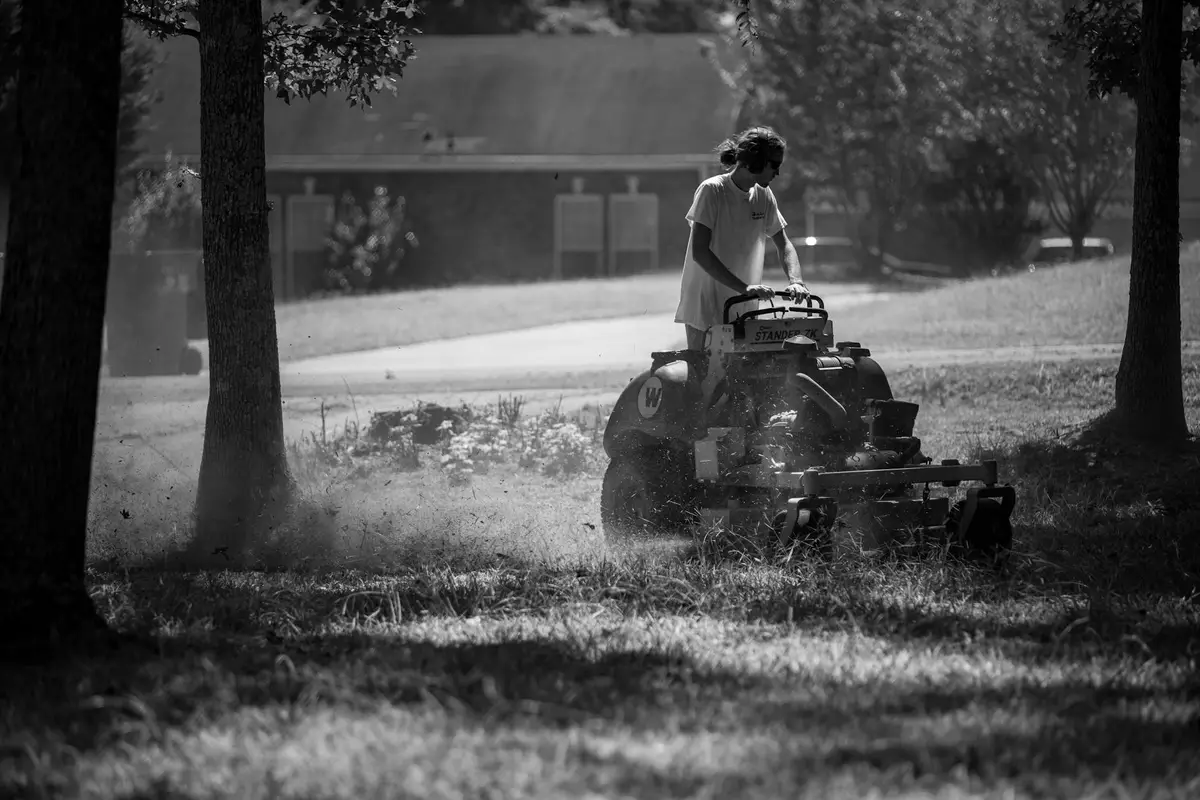
Here is the most critical rule for feeding a shady lawn: you must use less fertilizer than you do in the sun.
In full sun, grass can use a big meal to fuel thick growth. In the shade, it’s like a napping cat. It doesn’t need much. Pushing too much fertilizer at it doesn’t make it grow better. It makes it grow weak and spindly. That weak grass is a welcome mat for diseases like dollar spot and brown patch. Even worse, the excess nitrogen you’re pouring on often feeds the moss and weeds that already have a foothold, not your struggling grass. I learned this the hard way with Patch, my shady corner. More food just meant more moss.
Step 1: Test, Don’t Guess
Before you pour anything from a bag, know what you’re working with. A simple DIY soil test kit from the garden center is perfect. You just take a few samples from different spots in the shade, mix them, and follow the kit’s directions.
Focus on the pH reading. Soil under trees like pines, oaks, or maples often turns acidic from falling needles and leaves. If your soil is too acidic, it “locks up” nutrients like nitrogen, making them unavailable to grass roots no matter how much fertilizer you add. Think of it like putting a meal in a locked box. The grass can see it but can’t eat it. The test will tell you if you need to add lime to sweeten the soil first.
Step 2: Choosing the Right Food
All fertilizers are not the same, especially for shade.
- Quick-Release Synthetic: This is like a sugar rush. It dumps all its nutrients at once. It can easily burn delicate shade grass and cause that fast, weak growth I warned you about.
- Slow-Release or Organic-Based: This is the steady, wholesome meal. It feeds the grass a little bit over several weeks. It won’t burn, and it encourages stronger, deeper roots.
For shady areas, I always choose a gentle, slow-release or organic fertilizer. Look for an N-P-K ratio meant for maintenance, not aggressive growth. A ratio like 10-0-2 (more nitrogen for green, less phosphorus, some potassium for stress) works well. A balanced organic blend (like a 5-5-5) is also excellent because it feeds the soil life, which in turn feeds your grass.
Step 3: The When and How Much
Timing and rate are everything. Forget the four-step program for your shady spots.
For cool-season grasses, your best and often only necessary feeding is in early fall. The days are cooler, the tree roots are less competitive, and the grass can focus on root growth. You might do a second, very light feeding in late spring, after the tree canopy fills out but before summer stress hits.
My visual rule is simple: take the application rate listed on the bag for a sunny lawn and cut it in half for shade. If the bag says 4 pounds per 1,000 square feet, use 2 pounds. Use a broadcast spreader for the most even coverage. Uneven spreading leads to stripes of dark green and burned yellow grass. Walk slowly, overlap your passes, and you will be set.
Fixing Shady Lawn Soil: It’s All About the Foundation
This is where the real work pays off. Understanding your lawn soil composition clarifies its purpose—how it holds moisture, drains, and feeds roots. You can have the perfect fertilizer strategy, but if your soil is hard as a brick, that food and water will just run off. Improving your soil is the single most impactful thing you can do for a shady lawn.
Core Aeration: Let It Breathe
Shady soil gets compacted. Foot traffic, mower weight, and even just gravity press the soil particles together until there’s no room for air or water. Core aeration fixes this.
The machine, which you can rent, pulls out plugs of soil about the size of your finger. It sounds violent, but it’s like opening a window in a stuffy room. Those holes relieve compaction, let water and oxygen reach the roots, and create space for beneficial soil microbes to break down old thatch. I do this to my entire yard every other fall, and I can hear the difference when Max rolls over it the next day. It’s a quieter, softer sound.
Do this in the early fall for cool-season grass. The grass recovers quickly, and the tree roots are less active, giving your lawn a better chance to use the new space.
Topdressing: The Secret Sauce
After you aerate, don’t just leave those soil plugs on the surface. This is your golden opportunity to topdress.
Topdressing means spreading a thin layer (about 1/4 inch) of quality compost or screened topsoil over the lawn. You simply rake it gently so it fills the aeration holes and settles around the grass blades.
This is the secret sauce because it injects life directly into the root zone. The compost feeds the soil’s microbiome, improves drainage in clay soil, and helps retain moisture in sandy soil. Over time, it levels out minor bumps and ruts. It’s the best thing I ever did for Patch. I use sifted compost from my local municipality. It’s cheap, effective, and beats any bagged “magic in a bottle.”
Shady Lawn Maintenance: Mow, Water, and Watch

Think of your shady patch as a different plant from your sunny lawn. It needs a gentler, smarter routine. Combine these three practices, and you’ll give it a fighting chance.
Mow High and Let Clippings Lie
The golden rule for shade is simple: set your mower deck to its highest setting. For most mowers, that’s 3.5 to 4 inches. I run Max on the highest notch every single time I circle near Patch.
Longer grass blades aren’t just lazy. They create more surface area to catch what little light filters through. It’s like giving each grass plant a bigger solar panel.
Always mulch your clippings back into the lawn instead of bagging them. This returns free nitrogen and organic matter directly to the soil, which is a quiet boost the struggling area desperately needs. It reduces thatch and feeds the roots without harsh chemicals.
Water Deeply, But Infrequently
Shady soil stays damp much longer than sunny spots. That constant moisture is an open invitation for fungus and disease. Your watering schedule should be completely different here.
My rule is to water the shady areas only when the sunny parts of the lawn show signs of thirst (like footprints that don’t bounce back). When you do water, make it count. Soak the soil deeply to encourage roots to grow downward, searching for water reserves. Using best watering methods can help you achieve this effectively.
This deep, infrequent watering builds a more resilient root system and keeps the surface drier to discourage mold. This is where my drip irrigation, Sunny, really shines. It delivers water right to the soil line without wetting the grass blades, which is perfect for preventing disease in those perpetually damp, shady zones.
Common Shady Lawn Mistakes and How to Avoid Them

We’ve all been there, trying to force a shady spot to behave. Here are the top errors I see (and have made myself) and how to fix them for good.
Throwing Seed and Fertilizer at the Problem
The Mistake: Seeing thin grass and immediately dumping grass seed and a heavy dose of fertilizer. Grass seed isn’t a magic fix for lawn problems, especially in shady areas.
What If Grass Just Won’t Work? Weighing Your Options
Let’s be honest with each other. Sometimes, you can do everything right and a spot just refuses to cooperate. My own corner, Patch, taught me this. Under two massive oaks, it gets about an hour of dappled light. No amount of the right grass seed or aeration made it look like the rest of my lawn. It was a lesson in acceptance.
If you’ve tried improving the light and soil, and your grass still looks thin and sad, it’s time to think differently about that space.
You have three main paths forward, and none of them are wrong. It’s about what fits your goals for that spot, your budget, and how much effort you want to put in.
The Organic-Only Path
This is the slow and steady route. You’re feeding the soil food web-the microbes, fungi, and earthworms-so they can build a healthier home for your grass. It’s not a quick fix, but it builds resilience.
Think of your soil like a community. Organic amendments are like inviting more helpful neighbors to move in.
Here’s what you can use:
- Compost Tea: This is liquid gold for shady soil. It’s not a heavy fertilizer. Instead, it’s a brew packed with beneficial microbes. You spray it on. These microbes go to work breaking down thatch and making nutrients available to grass roots. It smells earthy, like a forest floor after rain.
- Corn Gluten Meal: This is a two-in-one product. It’s a mild, natural source of nitrogen and it acts as a pre-emergent to block weed seeds. You apply it in early spring. It requires patience, as the nitrogen release is very slow. It won’t green up your lawn in a week.
- Other Amendments: Simple top-dressing with a thin layer of fine compost or using a bio-stimulant like kelp meal can work wonders over time. They improve soil structure quietly.
This path demands more patience, but it creates a living soil that holds moisture better and supports grass in tough conditions.
The Low-Maintenance Ground Cover Path
This is where you stop fighting nature and work with it. If you’re tired of babying a failing patch of grass, a ground cover can be a beautiful, smart solution.
My top suggestion is a micro clover or a shade-tolerant white clover blend. It stays green, needs no mowing (or very little), and its tiny flowers feed bees and other pollinators. Once established, it’s incredibly tough.
Clover feels different underfoot-softer and more dense than grass-and it looks like a lush, green carpet dotted with little white flowers.
It’s a conscious choice to have something other than turf. Other options like creeping thyme or certain sedges work too, but clover is the easiest for most homeowners to manage. You simply overseed it into the thin area, keep it moist, and let it take over. The look is unique, but the benefit is a vibrant, living cover that asks for almost nothing in return.
The Traditional Synthetic Path
If you want to stick with grass and need results within the current season, a precise synthetic approach is your tool. The key word here is precision. Shady grass is delicate and can be easily burned.
You must follow the “less is more” rule religiously. Look for a slow-release fertilizer labeled as “slow-release” or “controlled-release.” This is non-negotiable for shade. These products feed the grass little bits over 8-12 weeks, preventing a surge of weak, susceptible growth.
Always, always use a broadcast spreader for even application. Hand-tossing leads to hot spots that will burn your grass. Cut the recommended application rate on the bag by at least 25% for deep shade areas.
Apply synthetic fertilizer only when the grass is dry, and water it in lightly immediately after to move the granules off the blades and into the soil. This path gives you control and predictable results, but it requires a careful hand to avoid damaging the very grass you’re trying to help. For ongoing lawn health, you may also explore organic options and how they complement synthetic inputs. Understanding how organic and synthetic fertilizers affect soil health can guide more balanced lawn care.
Shady Lawn FAQ: Your Top Questions, Answered
1. Are “shady lawn” fertilizer blends from the store worth buying?
They can be a great shortcut, as they’re usually a gentler, slow-release formula. Just remember to still use half the recommended rate to avoid burning your grass.
2. How do I handle moss without harming my remaining grass?
Moss means you need to fix the environment, not just kill the symptom. Gently rake it out, then focus on improving soil drainage and sunlight by pruning tree limbs to let in more light.
3. What’s the single best time of year to fertilize a shady lawn?
Early fall is your powerhouse feeding window. The grass focuses on root growth, and tree competition slows down, giving your lawn the best chance to absorb nutrients.
4. How often should I topdress with compost?
After core aerating each fall is perfect. A thin, quarter-inch layer every year or two steadily builds healthier soil without smothering the grass.
5. How should I water under a thirsty tree?
Water deeply and infrequently, preferably in the morning, to encourage grass roots to grow down. Soaking the soil thoroughly ensures moisture gets past the dense surface tree roots.
Wrapping Up Your Shady Lawn Strategy
If you do one thing this year, make it a soil test to guide your fertilizer choice. Matching food to your lawn’s actual needs beats guessing every time.
Choose products that are kind to pets and pollinators, because a green lawn should never come at that cost. I’m still learning from my own yard, and watching how Patch responds each season is the best teacher I have.
Expert Resources and Citations
- Fertilizing Your Lawn | Lawns | Illinois Extension | UIUC
- Best Grass Fertilizing Tips | When to Fertilize Lawns | HGTV
- When To Fertilize Your Lawn-And The Mistake To Avoid
- Shaded Lawn: More or Less Fert? | Lawn Care Forum
- How Do I Get a Lawn Growing in Heavy Shade? – Turf Unlimited
- How to Grow Grass in Heavy Shade and Improve Lawn Health
Written by Ria Carrington. Ria is an avid lawn care enthusiast and advisor. No lawn is unsalvagable when Ria is at work. She has helped countless homeowners breath new life into their dying lawns. She has a B.Sc in Agriculture and brings practical advice combined with knowledge of plant science and her decade worth of hands on experience.