
Why Does Your Lawn Look Thirsty No Matter How Much You Water?
If your lawn stays soggy or dries out in a flash, your sprinklers might not be the problem. The secret lies in what’s underneath your grass.
We will cover how clay and sand behave, how to water each one smartly, and simple tweaks to make your irrigation system work with your soil, not against it.
I’ve spent years figuring this out firsthand, dialing in my sprinklers for the dense clay and sandy patches in my own yard.
Quick Snapshot: Clay vs. Sandy Soil Watering Basics
Watering wrong for your soil type is the fastest way to waste time and money. Get this right first.
| Clay Soil | Sandy Soil |
| Acts like a dense sponge | Acts like a loose sieve |
| Water soaks in slowly | Water drains through quickly |
| Holds water (and nutrients) tightly | Loses water (and nutrients) easily |
| Prone to compaction and puddling | Prone to drying out and drought stress |
The core rule you must follow: water clay soil less often but for longer periods. Water sandy soil more often but for shorter periods. This is the single most important adjustment you can make.
Your lawn will tell you when you’re getting it wrong. On clay, the first sign is water running off the surface onto your driveway or sidewalk before it soaks in. On sandy soil, you’ll see dry, thirsty patches appearing in the same areas just a day or two after watering.
Getting to Know Your Soil: The Sponge and the Sieve
Think of clay soil particles as tiny, flat plates. They pack together tightly, like a brand-new kitchen sponge that’s hard to wet. Water has to work its way into all those tight spaces. Sandy soil particles are like little balls. They have huge gaps between them, so water runs through almost as fast as through a coffee filter.
Don’t guess what you have. Do the squeeze test. Grab a handful of damp (not sopping wet) soil and squeeze it in your fist.
- Clay will form a smooth, sticky ball that holds its shape and might even leave a sheen on your hand.
- Sandy soil will feel gritty and fall apart as soon as you open your hand.
This texture dictates everything about how water moves and how deep your grass roots can grow. In tight clay, roots struggle to push down and water struggles to seep in. In loose sand, water vanishes before roots can drink deeply, leading to shallow, weak root systems.
You can improve both types. For clay, mixing in compost is your best move. It creates tiny air pockets between those dense particles, improving drainage and giving roots room. For sandy soil, adding organic matter like compost gives those loose particles something to hold onto, helping them retain both water and nutrients.
Clay Soil: The Patient Sponge
Watering clay requires a slow hand. If you turn on Sunny, my drip system, full blast for a short time, you’ll just create a muddy river. The water hits the surface faster than the dense soil can absorb it, leading to runoff. That wasted water takes your expensive fertilizer with it.
I learned this lesson with Patch, my stubborn shady spot. It’s on a slight slope with clay soil. If I wasn’t careful, water would just sheet right over it, pooling at the bottom and leaving the roots high and dry. Compaction from foot traffic or even my mower wheels makes this problem worse.
The key is patience-applying water so slowly that the soil has time to drink it in deeply. This encourages roots to chase that moisture down, building a tougher, drought-resistant lawn. It often means breaking your watering into multiple, shorter cycles with breaks in between to let the water penetrate.
Sandy Soil: The Quick-Draining Sieve
Sandy soil is the opposite challenge. It’s like trying to fill a flower pot with a giant hole in the bottom. You pour water in, and it’s gone almost immediately, only wetting the very top layer. The grass gets a quick drink, but the moisture never makes it down to where it needs to be.
Because it drains so fast, sandy soil also flushes away nutrients, so your grass can starve even if you fertilize. Your goal is to get water to move down about 6 inches into the root zone before it all drains away. This is tough to do in one shot without causing wasteful runoff.
The strategy here is shorter, more frequent watering sessions. You’re essentially refilling the pot more often before it completely empties. The challenge is getting the timing right so you encourage deep roots without letting the surface completely parch in between.
How Often to Water: Frequency for Healthy Roots

Let’s get specific. For a healthy lawn, your goal is to train roots to grow deep. Deep roots mean a resilient lawn that can handle heat and dry spells. Watering frequency is the biggest lever you pull to make that happen.
Clay soil acts like a dense sponge, it holds water for a long time but absorbs it slowly. I water my clay sections deeply once a week during peak summer heat. Sandy soil, on the other hand, is like a kitchen sieve. It drains fast. Sandy lawns often need water every two to three days when it’s hot and sunny.
Your lawn will tell you when it’s thirsty. Use the footprint test. Walk across your grass in the late afternoon. If your footprints stay visible and the blades don’t spring back up, your grass is asking for a drink. It’s a simple check I do every few days.
Remember, these are starting points. Your actual schedule changes with the weather. A week of cloudy, cool days means you can skip a watering. A heatwave with blazing sun might mean sandy soil needs water every other day. The type of grass matters too. Fescue in a shady spot like Patch needs less than Kentucky bluegrass baking in full sun.
The most common mistake is judging by the surface. You must check the soil itself. After you water, wait a day. Then, take a screwdriver and poke it into the ground. You should feel moist soil at least one inch down. If it’s dry and hard an inch below the surface, your water isn’t soaking deep enough.
Here’s the simple answer to how often: clay soil lawns thrive on infrequent, deep watering (think once a week). Sandy soil lawns need more frequent, deep watering (think every few days). Always let the footprint test and your screwdriver probe be your final guide.
How Long to Water: Duration to Prevent Problems
How long you run your sprinklers or let Sunny the drip system work is just as critical as how often. Get this wrong, and you waste water or hurt your lawn.
For clay soil, you must use the “cycle and soak” method to avoid runoff and wasted water. Clay particles are tiny and pack tightly. Water hits them and just sits on top, then sheets away before it can sink in. I set my timer for 10 to 15 minutes. After that cycle, I wait 30 minutes. This lets the water that’s on top slowly seep down. Then I run another 10 to 15 minute cycle. This patience gets the water deep where the roots are.
Sandy soil is the opposite. Its large particles create big air pockets. For sandy lawns, a single, longer watering session of 30 to 40 minutes pushes the moisture down into the root zone before it can evaporate or drain too far. You want to create a deep reservoir of water for those roots to chase.
How do you know you’re applying the right amount? Use the tuna can trick. Place a few empty, flat-bottomed tuna cans around your lawn. Run your irrigation for a set time. Measure how much water collects in the cans. You’re aiming for about half an inch of water per session for sandy soil. For clay, you might get that half-inch over two or three short cycles.
The signs of wrong duration are clear. On clay, if you see water running down your driveway or sidewalk, you’re applying it too fast. That’s runoff, and it means your lawn isn’t getting a drop of it. On sandy soil, if water pools briefly and then vanishes instantly, it might be draining too fast, a process called deep percolation, where it goes past the root zone.
The ideal watering duration? For clay soil, break it into multiple short sessions (10-15 minutes each) with breaks in between. For sandy soil, go for one longer session (30+ minutes) to build a deep water bank. Your tuna cans and your lawn’s reaction will fine-tune the exact minutes for your setup.
Timing is Everything: Best Hours and Seasonal Tweaks
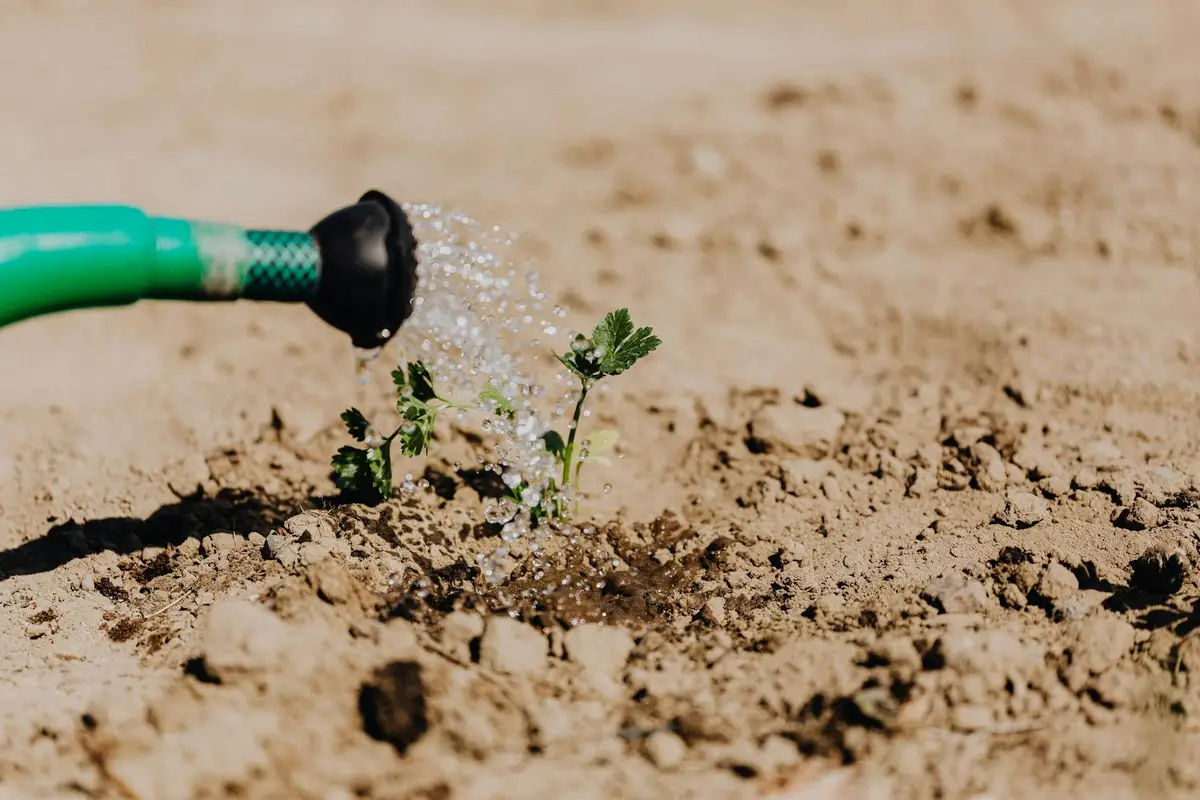
Watering at the right time is just as important as watering the right amount. If you get this wrong, you’re fighting an uphill battle from the start.
The absolute best time to water is early in the morning, before 10 AM. The air is cool and still, so very little water is lost to evaporation. This gives the grass blades plenty of time to dry off as the sun comes up, which is your best defense against fungal diseases. I love the quiet, damp smell of the grass at that hour; it feels like you’re getting a head start on the whole neighborhood. It’s also crucial to adjust the water levels based on the season to maintain a healthy lawn.
Watering in the evening is a big mistake. It leaves your lawn wet all night, creating a perfect, damp playground for fungus. This is especially risky on clay soil, which already holds moisture for so long. A better approach is to follow a best time of day schedule for watering your lawn, typically in the early morning. This minimizes evaporation and helps the grass absorb moisture before the heat of the day, reducing the risk of fungal growth.
Your watering schedule isn’t set in stone for the year. You need to change it with the seasons. In the peak summer heat, your grass is thirsty and actively growing, so it needs more frequent, deeper drinks. In the spring and fall, when temperatures are milder, you can taper back. During winter dormancy, you water very little, if at all, just enough to prevent the roots from completely drying out in a dry spell.
This is where I adjust Sunny, my drip irrigation. In the cooler months, I’ll program it to run less often or for shorter cycles. It’s a simple timer tweak that saves a surprising amount of water and money over a season.
A common question is, “What’s the single best time of day to water?” Morning, always morning. Another is, “How do seasonal changes affect my schedule?” Think of your lawn like you: it needs more water when it’s working hard in the summer heat and less when it’s just lounging in the cool spring and fall weather. A seasonal lawn watering schedule helps translate that to practical watering—adjusting frequency and duration as the season changes. It keeps your lawn thriving in summer and saves water in milder seasons.
Smart Setups: Grass, Mulch, and Irrigation Systems
Getting your lawn to handle water well starts long before you turn on the hose. It’s about building a team-the right grass, smart habits, and a tuned-up system-that works with your soil, not against it.
Choosing the Right Grass for Your Soil
You can’t force a grass to love soil it hates. Picking a variety suited to your dirt is the first step to a resilient, water-efficient lawn.
For dense clay soil, you want grasses with deep, strong roots that can punch through and find moisture down below. Tall Fescue is a champion here. It’s tough, forms deep roots, and handles the compaction of clay better than most. Kentucky Bluegrass is another good option for clay if you get plenty of sun; it spreads to fill in bare spots. Choosing grass seed suited for your climate and soil is essential for a healthy lawn.
For thirsty sandy soil, you need drought-tolerant survivors. Bermuda grass thrives in sand, loves the sun, and spreads aggressively to form a thick carpet. Zoysia grass is another great choice for sandy areas; it’s tough, drought-resistant, and establishes a dense turf that crowds out weeds.
When selecting seed or sod, always check with a local garden center. They know what works best in your specific climate and can point you to the best variety for your patch of earth.
Mulching: Your Lawn’s Natural Moisture Blanket
Here’s the easiest water-saving tip you’ll ever get: stop bagging your grass clippings. When I finish mowing with Max, I let those clippings fly. They aren’t trash; they’re a free, thin blanket for your lawn.
Leaving clippings on the lawn returns valuable nutrients and, most importantly, acts as a mulch layer that conserves soil moisture. For sandy soil, this is crucial. That thin layer dramatically reduces surface evaporation, so water stays in the root zone longer. For clay soil, those decomposing clippings slowly add organic matter, which helps improve soil structure and drainage over time.
Dialing In Your Irrigation System
An irrigation system is a tool, and a tool needs to be calibrated. A “set it and forget it” mentality will waste water and leave some areas parched.
Start with a simple audit. Place a few empty tuna cans around your lawn and run your sprinklers. See how evenly they fill up. You’ll often find dry zones or areas getting drowned.
For clay soil: Slow and steady wins the race. Use sprinklers with a low output rate or consider drip lines in garden beds. To avoid runoff, set your system to run multiple, shorter cycles (for example, 5 minutes on, 30 minutes off, 5 minutes on again). This lets the water soak in between cycles.
For sandy soil: Your goal is even, thorough coverage. You need to get water moving through that fast-draining soil quickly. Ensure your sprinkler heads are aligned properly to avoid dry spots and run them long enough for a deep soak.
Two cost-effective upgrades make a world of difference: a simple timer and a rain sensor. The timer automates your morning schedule, and the rain sensor shuts everything off during a storm, so you’re not watering for nothing.
People often ask, “How do I adjust my system for my soil?” For clay, break watering into short cycles. For sand, check for even coverage and water deeply. Another good question is, “What’s the role of mulching in irrigation?” It’s your lawn’s own built-in water retention layer, keeping the soil damp longer between waterings.
Common Watering Blunders and How to Avoid Them

I’ve made every watering mistake in the book on my own property. Watering your lawn seems simple, but doing it wrong on your specific soil type is the fastest way to waste water and stress your grass. Here’s what to look for and how to course-correct, especially when choosing the right watering method.
Spotting Trouble on Clay Soil
Clay soil acts like a dense sponge. It soaks up water slowly but holds onto it for a long, long time. The biggest risk here is drowning your lawn’s roots, even if you amend and fertilize the clay soil.
- Spongy Turf: If your lawn feels soft and squishy underfoot a day after watering, that’s a red flag.
- Mushrooms: These pop up in consistently damp, low-air environments. They’re a sign, not the problem itself.
- Yellow or Light Green Grass: This is grass screaming for oxygen because its roots are waterlogged.
If you see mushrooms or a spongy feel, you’re giving clay more water than it can drain, and you need to cut back immediately. That stubborn corner I call ‘Patch’ taught me this the hard way. It stayed wet for days and the grass just gave up.
Spotting Trouble on Sandy Soil
Sandy soil is the opposite. Think of it like a sieve-water runs straight through, leaving roots thirsty. The main danger here is your grass getting a quick sip but never a full drink.
- Brittle Brown Patches: The grass literally dries out, loses flexibility, and turns crispy.
- Wilting or Footprinting: If your footprints stay visible on the lawn in the evening, the grass blades lack the water pressure to spring back.
- Blue-Gray Hue: This is a classic sign of drought stress. The grass loses its vibrant green color as it goes into survival mode.
Brittle, discolored grass on sandy soil means water is moving past the roots too fast, and you need to water more deeply or more often.
The Mistakes We All Make
Beyond soil type, a few universal errors trip up almost every homeowner, including me.
Watering in the midday sun is a prime example. I used to think a noon soak would cool the grass. Instead, too much water evaporates before it even hits the soil. You’re just watering the air.
Shallow, frequent watering is another big one. This trains grass roots to stay near the surface, making them weak and vulnerable to heat. You want deep roots that seek moisture down below.
Ignoring the rain forecast is like throwing money on the ground. My system, Sunny, has a rain sensor now, but for years I’d run the sprinklers only for a downpour to start an hour later.
Simple Fixes for Healthier Lawns
The good news is, correcting these issues is straightforward once you know what to do.
Adjust Your Watering Depth. This is the most critical step. For clay, you want deep, infrequent soaks to encourage roots down. For sand, you may need the same deep soak, but more often. A great test is to water, then wait 30 minutes and push a long screwdriver into the soil. It should slide easily 6-8 inches deep. If it stops short, keep watering.
Aerate Compacted Clay. If your clay is a hardpan, water just pools and runs off. Core aeration once a year creates holes for water, air, and nutrients to penetrate. It made a night-and-day difference for Patch.
Add a Soil Wetting Agent for Sandy Soil. These are like a gentle detergent for your soil. They help water spread evenly and soak in instead of beading up and running straight down. It’s a game-changer for getting sand to hold moisture where roots can reach it.
How Smart Soil Prep Saves You Headaches
This is where the work you might have done earlier pays off forever. Amending your soil isn’t a one-time fix, it’s a long-term strategy.
Mixing compost into clay soil improves its structure, creating tiny pores that let water drain and air flow. Your earlier effort directly prevents that soggy, spongy feeling.
Adding organic matter like peat moss to sandy soil acts like a tiny reservoir, giving the water something to cling to. This helps prevent those brittle brown patches from forming so quickly during a dry spell.
Getting your soil right means your watering efforts actually work, instead of fighting against the ground beneath your feet.
Your Clay vs. Sandy Soil Watering Questions, Answered
How does adding compost change how often I need to water?
Amending clay soil with compost creates better drainage, so you can water slightly more effectively without runoff, but you’ll still follow the “deep and infrequent” rule. For sandy soil, adding organic matter helps it retain moisture, allowing you to stretch the time between waterings a bit longer.
What’s the best grass type to help my soil hold water better?
For clay soil, choose deep-rooted varieties like Tall Fescue to naturally break up compaction and access deep moisture. For sandy soil, drought-champs like Bermuda or Zoysia grass have extensive root systems that chase water down fast, making them perfect for quick-draining conditions.
Is mulching just for garden beds, or does it help my lawn’s irrigation too?
Absolutely-leaving grass clippings on your lawn is free mulch! For sandy soil, this layer drastically cuts surface evaporation, and for clay, it slowly adds organic matter to improve soil structure, making every drop of water you apply work harder—especially when combined with a mulching mower.
Should I use different sprinkler heads for clay and sandy areas?
Yes. For clay soil, use sprinklers with a lower precipitation rate or drip irrigation to apply water slowly and prevent immediate runoff. For sandy soil, ensure you have heads that provide uniform, overlapping coverage to soak the entire area deeply and evenly before water drains away.
How drastically should I change my watering schedule from spring to summer?
Get ready to adjust often. Sandy soil will demand more frequent watering much earlier in the heat, while clay’s schedule will hold steady longer-but when summer peaks, both types need deeper soakings, just on their own unique timetables.
Watering Wisely for the Long Haul

Getting your watering right comes down to one simple match: your sprinkler schedule must fit your soil’s personality. Think short, frequent sips for clay to prevent a muddy mess, and long, deep drinks for sand so the moisture actually reaches the roots. When you sync your irrigation to your soil type, you stop fighting your lawn and start working with it.
This mindful approach saves a tremendous amount of water and builds a lawn that can handle stress. Your best tool is your own observation-watch how your grass responds after a watering cycle, feel the soil, and don’t be afraid to adjust; that’s how you grow your expertise season after season.
Research and Related Sources
- Signs of a Dehydrated Lawn – Southern Lawns
- My Grass Looks Thirsty! | Fulton From the Ground Up
- 8 Signs Your Lawn Needs Watering
- What Does an Overwatered Lawn Look Like? Signs & Solutions
- What to do when your lawn’s looking thirsty | STIGA
- Why Your Lawn Has an Unquenchable Thirst for Water
Written by Ria Carrington. Ria is an avid lawn care enthusiast and advisor. No lawn is unsalvagable when Ria is at work. She has helped countless homeowners breath new life into their dying lawns. She has a B.Sc in Agriculture and brings practical advice combined with knowledge of plant science and her decade worth of hands on experience.