
How Can You Safely Mow a Severely Overgrown Lawn?
Staring down a thicket of grass that’s knee high can feel overwhelming, but taking the right steps makes it manageable and safe.
We will cover checking your lawn’s condition, preparing your equipment, the smart mowing sequence, vital safety gear, and handling the clippings.
I’ve learned this process through seasons of wrestling with my own neglected patches, saving cash and avoiding costly mistakes.
What Makes an Overgrown Lawn a Different Beast to Mow?
When you let a lawn go for weeks, it isn’t just tall grass anymore. It becomes a dense, stressed ecosystem that needs a gentle hand, not brute force. Cutting too much off at once shocks the grass plant. It turns that vibrant green blade into a pale, ragged stub, a process called scalping. This opens the soil to baking sun, invites weeds, and can set your lawn back months.
Before you even start the mower, you need to assess what you’re really dealing with. Get out there. Walk through it. Feel how thick it is with your boots. Look for seed heads waving on top, a sign the grass is putting energy into reproduction, not roots. Check if you have any woody stems from weeds that a mower blade will just batter down instead of cut. Then consider how you’ll start and operate it, depending on the mower type. Different starting procedures apply to electric, gas, and manual models.
You absolutely must check for hidden hazards that a normal weekly mow would miss. An overgrown lawn hides everything. I’ve found toys, hoses, and more than one rock that could have sent Max to the shop. Run your foot along the ground in front of you as you walk. Look for mounds that might be an animal burrow or a nest. A startled rabbit is one thing, but harming pollinators or other beneficial creatures goes against everything we do.
People often ask, “How long can grass grow before you need to mow it?” Here’s my practical rule. If your grass is over 6 inches tall, you are officially in “recovery mow” territory and need this step-by-step approach. Trying to hack it down to 3 inches in one pass will hurt it.
Gathering Your Arsenal: Tools Needed for the Job
You wouldn’t try to chop down a tree with a butter knife. Tackling a jungle of a lawn requires the right gear. This isn’t your typical Saturday morning quick cut.
The star of the show is your mower. My trusty Max, a standard walk-behind, can handle a lawn that’s been neglected for maybe three weeks. If it’s been a month or more, or if the grass is incredibly thick and woody, you might need a heavier-duty model with more horsepower. A mower with a sturdy deck and strong vacuum lift is key to pulling up and cutting tall grass cleanly.
The single most important thing you can do is start with a sharp mower blade. A dull blade will tear the grass, leaving frayed, brown tips that are an open door for disease. It makes the mower work harder, too. A clean slice heals faster and looks better immediately.
Your mower can’t do it all. A string trimmer is your best friend for cleaning up edges, knocking down the worst of it around trees and fences before you mow, and handling spots too thick for the mower. A good leaf rake is for gathering the immense amount of clippings you’ll create, so they don’t smother the grass you’re trying to save.
Required Materials for Overgrown Lawn Mowing
- Heavy-Duty Mower: This is your workhorse. Ensure it has adjustable cutting height and enough power to not stall in thick grass. A bagging attachment is highly recommended for this first cut to manage clippings.
- Ear and Eye Protection: This job is loud, and a mower can kick up debris. Safety glasses and hearing protection are non-negotiable.
- Sturdy Gloves: Protect your hands from blisters, thorny weeds, and anything you might need to pick up out of the grass.
- Sturdy, Closed-Toe Boots: Leather work boots are ideal. They protect your feet from hidden objects and give you ankle support on uneven ground.
- String Trimmer (Weed Whacker): Use this to pre-cut the worst areas and clean up where the mower can’t reach. It reduces strain on your mower.
- Leaf Rake and Lawn Bags/Wheelbarrow: You will generate a mountain of clippings. Be ready to rake and remove them to prevent a thick, wet mat from killing the grass underneath.
- Water: For you! This is a workout. Stay hydrated.
Safety First: Protecting Yourself, Your Pet, and Your Property
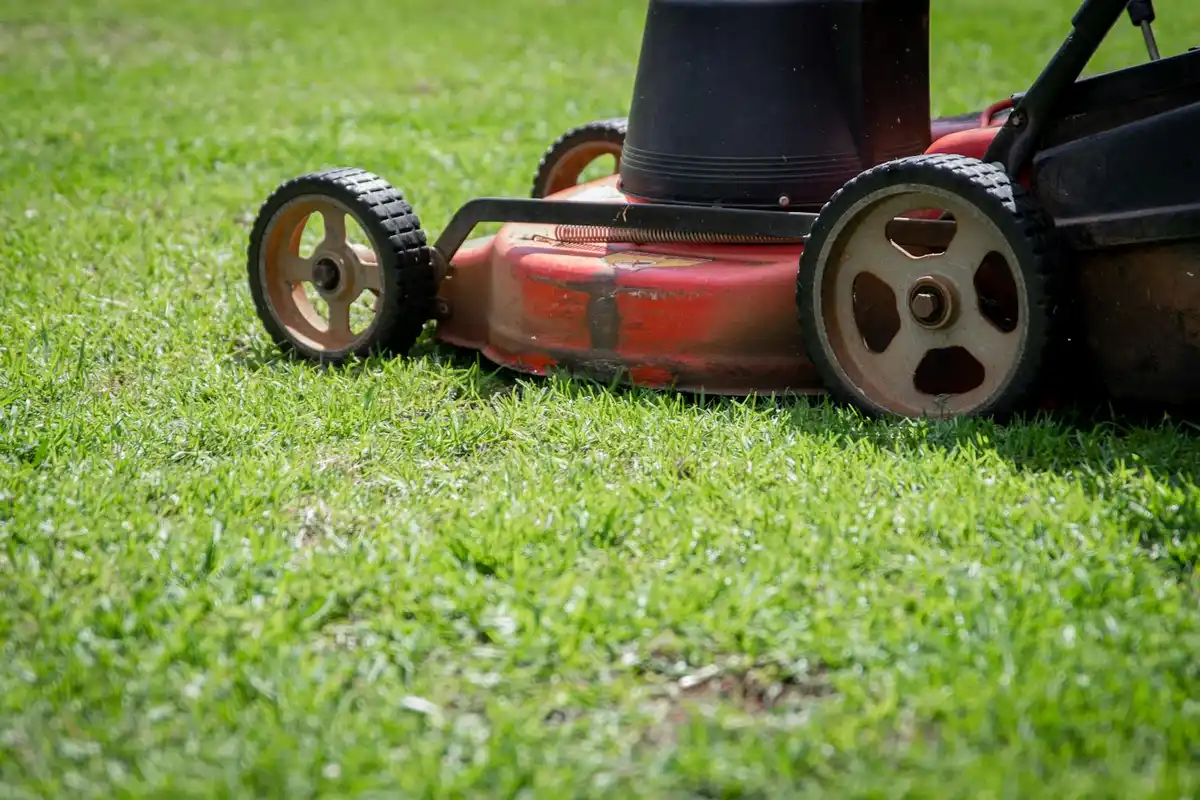
Before you even think about starting Max, we need to get suited up. An overgrown lawn isn’t just tall grass, it’s a hiding spot for rocks, sticks, and who knows what else your mower will find.
- Long pants and sturdy boots are non-negotiable. Jeans and work boots protect your legs and feet from flying debris.
- Safety glasses or goggles stop a stray pebble or a piece of mulch from becoming a problem.
- Hearing protection matters. Your mower is loud, and a long session can damage your ears over time.
- Work gloves give you a better grip and protect your hands if you need to clear branches.
Now, look at your lawn. Really look. Walk to the edges and scan for the obvious stuff. Move hoses, garden gnomes, kids’ toys, and any large sticks or stones far away from your mowing path. A mower can turn a forgotten dog toy into a dangerous projectile.
The best time to tackle this job is in the late afternoon on a dry day. The morning dew will have evaporated, and the grass won’t be stressed by the midday sun. This leads to a common question: what is the best time of day and season to mow the lawn?
Can you mow the lawn when it’s wet? For an overgrown lawn, the answer is a firm no. Wet grass clumps terribly, clogs your mower deck, and gives you a ragged cut. More importantly, wet grass is slick. The risk of you or your mower slipping on a slope is very real. Wait for it to dry. If you must mow damp grass, take extra precautions. Stay on flat ground, avoid slopes, and wear non-slip boots.
Greedy Grass Pro Tip: The Two-Minute Walk-Through
I have a ritual. Before any big mow, especially one like this, I give the lawn a slow, deliberate walk. I call it checking on Patch, that shady corner that always has surprises. You feel things underfoot a mower wheel would miss a buried sprinkler head, a thick vine, a soggy patch. Those two minutes can save you a broken spindle on Max or a nasty stumble. It’s the cheapest insurance you’ll ever buy.
The Step-by-Step Strategy to Tame Tall Grass
You can’t just hack it down to golf course height in one go. That shocks the grass, leaving it weak, yellow, and open to weeds. We use the multi-pass method.
- Set your mower to its highest cutting height. For most mowers, this is 3.5 to 4 inches. The goal of the first pass is simply to knock the tops off and get the lay of the land.
- Mow in a clockwise pattern. This throws the clippings inward, toward the area you’ve already cut. It keeps the discharge chute from constantly blasting long clippings into the uncut jungle, which can mat down and smother the grass.
- Go slow. Let the mower do the work. If you hear the engine bog down, you’re going too fast or the grass is too thick.
If the mower struggles even on the highest setting, your string trimmer is your best friend. Use it to knock down the tallest clumps in a patch. Swing it side-to-side to shear off the tops. Then, go over that area with the mower. It’s a one-two punch for the thickest stuff.
After that first high cut, let the lawn recover for 2-3 days. Then, lower the mower blade by one notch and mow again. Repeat this process over the next week or two until you reach your ideal height.
So, how short should you mow the grass finally? For cool-season grasses like Kentucky Bluegrass or Fescue, aim for 3 to 3.5 inches. For warm-season grasses like Bermuda or Zoysia, you can go shorter, to about 2 inches. A taller final height encourages deeper roots and shades out weed seeds. Pair these heights with smart mowing techniques—keep blades sharp and mow on dry days. Consistent mowing patterns and proper frequency help maintain color and density.
What If the Grass is Comically Tall or Has Woody Weeds?
Sometimes grass isn’t just tall, it’s a small meadow with woody stems. If the growth is over your knees or has thick, stick-like weeds, a standard mower isn’t the right tool for cutting even well-maintained grass.
For areas like this, a brush cutter or a heavy-duty string trimmer with a metal blade is the next step. The key is to work in layers. Take off the top third, then the next. Wear all your safety gear, plus long sleeves. These tools can throw material much farther than a mower.
In the very worst cases, for a small patch, an old-fashioned tool like a scythe or a sturdy manual brush cutter can be the safest, most controlled option. It’s quiet, gives you precise control, and there’s no risk of hitting a hidden rock with a spinning metal blade. It’s hard work, but sometimes the old ways are the smartest way to start.
Cleanup After the Cut: Handling a Mountain of Clippings
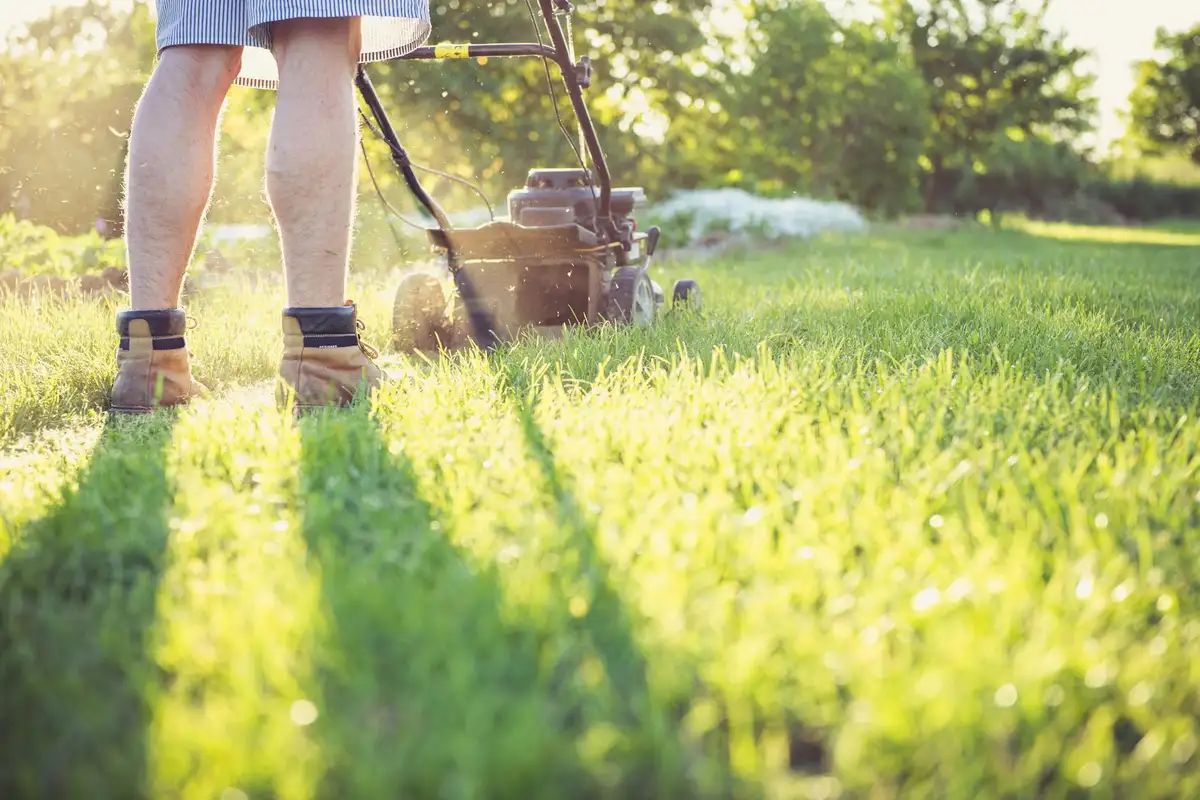
Right now, your lawn is covered in clumps. Those wet, heavy mats of grass are more than just messy. They act like a wet blanket, blocking all sunlight and air from the grass underneath. This smothers your lawn and creates a damp, dark paradise for fungus and disease. You have to get them up.
You have a few good options to tackle this. The method depends on your gear and your back.
- Bagger Attachment: If your mower has one, this is your best friend for the first cut. Max, my zero-turn, has a huge collection bag. It fills up fast, but it’s the quickest way to pick up the bulk.
- The Trusty Rake: No bagger? A stiff-tined rake works. It’s a workout, but you get that satisfying scrape and pile. I’ve spent many afternoons doing this in Patch’s corner.
- The Tarp Drag: For large areas, lay out a heavy tarp. Rake or pitchfork clippings onto it, then drag the whole pile to your compost or curb. It’s efficient for big messes.
Now, what do you do with this mountain of green? Tossing it in the trash is a waste.
Start a compost pile in a back corner of your yard; those nitrogen-rich clippings will break down into black gold for your garden beds. If the clippings from your later mows are short and dry, you can leave them thinly spread as a natural mulch. They return nutrients and moisture to the soil as they decompose.
This brings up a common question: can you just mow over the clippings? The answer is yes, but only later. For this first major cut, you must remove them. Once your lawn is back to a normal height and you’re mowing regularly, those light, dry clippings can be left on the lawn. They’ll vanish in a day or two, feeding the soil. Mowing over the wet clumps from your first cut will just make a bigger, smothering mess.
When to Call in the Pros: Evaluating a Lawn Mowing Service
Tackling a jungle is satisfying, but it’s not for every situation or person. Be honest with yourself about safety and scale. Calling a professional is a smart move, not a defeat.
Consider getting quotes for an overgrown lawn mowing service if you see any of these issues:
- Steep slopes or uneven ground where a mower could tip.
- A property so large that the job would take multiple full days.
- Hidden debris like rocks, branches, or old fencing that could damage your mower or become a dangerous projectile.
- You simply don’t have the right, heavy-duty equipment for the job.
Start your search by looking for local services. A query like “overgrown lawn mowing near me cost” will give you a starting point. Read recent reviews and look at photos of their work. When you call, don’t just ask for a price. Think about how you’ll find and manage lawn care services going forward. This helps you plan for ongoing maintenance and easier coordination with providers.
Ask specific questions to find a good fit. For example, someone searching “overgrown lawn mowing near Brooklyn” should ask:
- “How will you dispose of the clippings and debris?” (Look for composting or responsible removal).
- “Are you insured in case of damage to my property?”
- “What equipment will you use for a lawn this tall?”
When to Seek Professional Help
There are specific times when picking up the phone is the best first step. If the lawn hasn’t been touched all season and the grass is knee-high or worse, the scale of work is immense. A pro crew with commercial equipment can knock it out in hours.
Also call a pro if you suspect invasive species like poison ivy, wild blackberries, or thick vines are woven into the grass, as these require careful handling and disposal. They have the experience and protective gear to deal with it safely, saving you from a rash or a relentless regrowth battle. Know your limits, and use your weekend for the regular maintenance you enjoy.
Your Overgrown Lawn Questions, Answered
1. How much does it typically cost to hire an overgrown lawn mowing service?
Costs vary wildly by size and condition, but for a severely overgrown standard yard, expect an initial clean-up fee of $150-$400+. This reflects the extra labor, heavy equipment, and disposal needed to reset your lawn properly.
2. I’m in New York, NY. What should I look for in a local overgrown lawn service?
Look for a service that specifically mentions “overgrown” or “recovery” cuts and has photos to prove it. In urban areas, confirm they handle their own green waste disposal, as bagging and hauling away that volume of clippings is non-negotiable.
3. How long will it realistically take to mow my jungle back to normal?
Don’t rush it. The multi-pass method means you’ll mow at a high setting, then again days later, taking 1-2 weeks total. The actual cutting time for the first pass on a quarter-acre could be 2-3 hours with breaks-it’s a workout.
4. Is it worth paying a pro, or should I just buy a better mower?
If it’s a one-time reset, hiring a pro with a commercial brush hog is often more cost-effective than buying new equipment. For ongoing neglect, investing in a heavy-duty mower pays off if you’re committed to regular maintenance afterward.
5. What’s the one question I must ask a service before hiring them?
Always ask, “What is your process for the first cut on a lawn this tall?” The right answer involves height adjustments, multiple passes, and a plan for clippings. That mindset aligns with a mowing weed control strategy. The first cut sets the stage for weed control. If they say they’ll just “cut it low,” hire someone else.
Your Lawn After the Big Cut
The single best move you can make is to resist the urge to scalp it all down in one pass. I always start Max on the highest setting, then patiently lower the deck over the next two or three mows to let the grass recover properly.
Good lawn care means leaving the clippings as natural fertilizer and choosing pet-safe products that protect the bees visiting your clover. I still learn from Patch every year, and you will too as you watch your lawn thicken up.
Related Guides and Information
- How to Mow an Overgrown Lawn
- 6 Hidden Dangers of Poor Lawn Maintenance | SodPods®
- 13 Common Lawn Mowing Mistakes to Avoid
- Tackling overgrown yards. What equipment to use? | Lawn Care Forum
Written by Ria Carrington. Ria is an avid lawn care enthusiast and advisor. No lawn is unsalvagable when Ria is at work. She has helped countless homeowners breath new life into their dying lawns. She has a B.Sc in Agriculture and brings practical advice combined with knowledge of plant science and her decade worth of hands on experience.