
What Do Those NPK Numbers on Fertilizer Bags Really Mean for Your Lawn?
Staring at a fertilizer bag can feel confusing, but those three numbers hold a simple secret to a thicker, greener lawn.
We will cover what NPK stands for, how nitrogen works in your soil to build strong grass, and how to pick the right product without wasting your money.
I know this works because I’ve tested it on my own lawn for years, getting lush results that make my mower Max proud.
At a Glance: Key Takeaways on NPK and Nitrogen
Before we get into the details, here are the essentials you should remember every time you pick up a bag of fertilizer.
- NPK is a ratio label, not a fertilizer itself. Think of it as the nutrition facts panel on your lawn’s food, telling you what’s inside the bag.
- Nitrogen (the “N”) is the main ingredient for that green, thick, leafy growth you’re after. It’s the engine that makes your grass grow up and fill in.
- Using the right type and amount of nitrogen prevents burning your lawn and protects local waterways. More is not always better. A slow, steady feed is safer for your grass, your pets, and the environment.
Breaking Down the Bag: What Does NPK Stand For?
Those three letters on every fertilizer bag answer one big question: what’s in this stuff? NPK stands for the three primary nutrients your grass uses.
- N is for Nitrogen. This is for green, leafy, top growth. It’s what gives your lawn that vibrant color and helps it grow thick enough to crowd out weeds.
- P is for Phosphorus. This nutrient supports strong root development and helps new grass get established. It’s crucial for seeding projects.
- K is for Potassium. Think of this as the grass’s immune system booster. It helps your lawn handle stress from heat, cold, drought, and even foot traffic.
The numbers, like 24-0-6, tell you the percentage of each nutrient by weight. It’s like a recipe showing you how much of each “ingredient” is in the mix. A 50-pound bag of 24-0-6 fertilizer contains 24% nitrogen. That’s 12 pounds of pure nitrogen in that bag.
Now, to answer a common question head-on: NPK is not a fertilizer, it is the universal labeling system that tells you what a fertilizer contains. It’s the code you learn to read, like understanding the numbers on a fertilizer bag.
Different ratios serve different purposes. A high-nitrogen blend like 24-0-6 is for greening up and pushing growth in the peak season. A more balanced food like 10-10-10 might be used to strengthen an overall weak lawn. For fall prep, you often see something like 6-0-24, which is light on nitrogen but heavy on potassium to toughen up the grass for winter.
Nitrogen (N): The Green Growth Engine
So, what does nitrogen do in fertilizer? Everything for the look and feel of your lawn.
Nitrogen is the building block for chlorophyll, the molecule that makes grass green and powers photosynthesis. It’s the difference between a pale, thin lawn and that deep, emerald carpet you want to walk on barefoot. I know that feeling. It’s the crisp, clean smell after mowing a thick, well-fed lawn with Max, my zero-turn. That smell is nitrogen at work.
When you apply it, nitrogen signals the grass plant to focus on producing more leaves and shoots. This is why it’s the star of the show. To answer another direct question: yes, almost all standard lawn fertilizers have nitrogen as their main component. It’s the most commonly needed nutrient because grass uses so much of it as it grows and gets mowed. Understanding fertilizer requirements for healthy plants helps you tailor nitrogen use to the lawn’s actual needs. This balance promotes vibrant growth while avoiding excess buildup.
But you have to be smart about it. Too much, too fast, and you’ll “burn” the grass, leaving yellow or brown streaks. It can also wash away into storm drains, which isn’t good for anyone. I use a slow-release nitrogen source whenever I can. It feeds the lawn gently over weeks, like a steady drip from my irrigation system, Sunny. It’s safer and the grass responds better.
Phosphorus (P) and Potassium (K): The Supporting Cast
While nitrogen handles the showy top growth, phosphorus and potassium work behind the scenes.
Phosphorus is critical for developing a strong, deep root system. It’s especially important when you’re starting new grass from seed or sod. Potassium is all about overall plant health and hardiness. It helps regulate water, strengthens cell walls, and improves the lawn’s resistance to disease and environmental stress.
Here’s a key tip I learned the hard way: many established lawns don’t need extra phosphorus. My local soil test showed my levels were already fine. Adding more is a waste and can potentially harm local waterways. A simple soil test from your county extension office will tell you exactly what your lawn, and your own “Patch” of trouble spots, truly needs. It takes the guesswork out of the equation. Understanding your lawn fertilizer needs guides a precise application. With the right timing, you apply only what your lawn needs and help protect local waterways.
The Green Machine: How Does Nitrogen Work in Your Lawn?
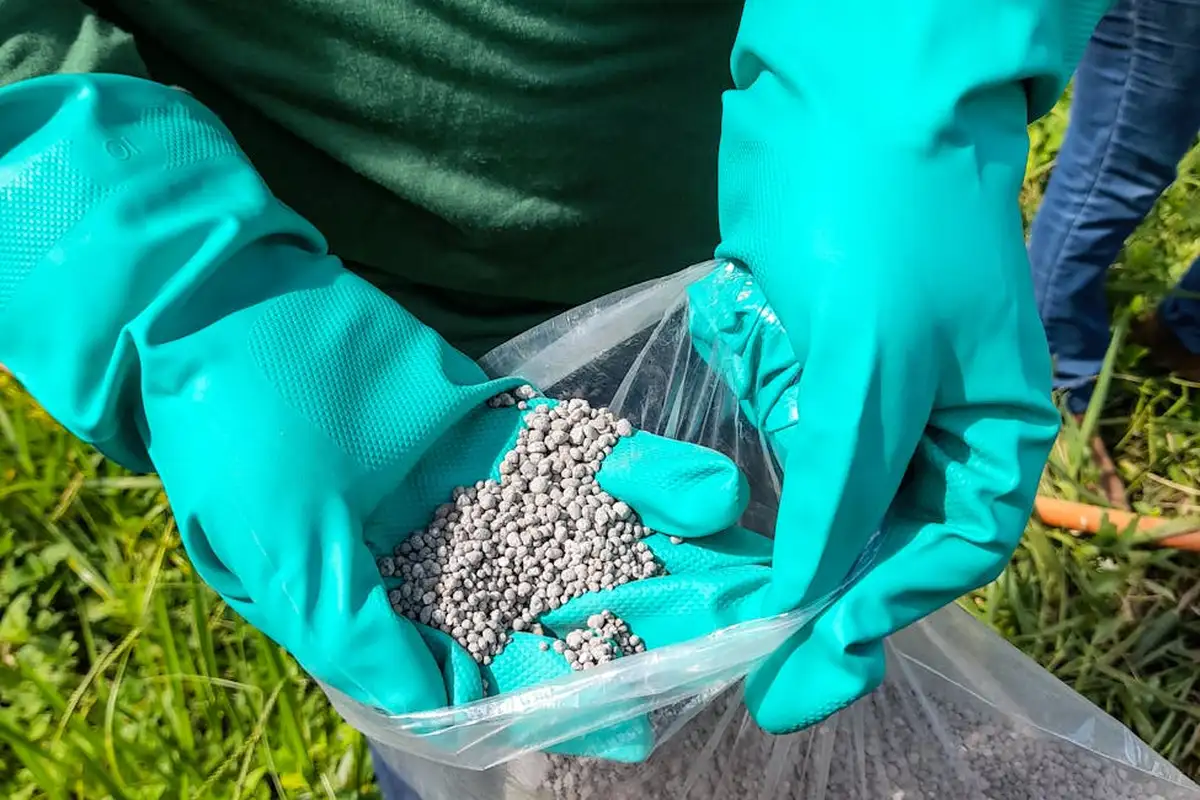
Think of nitrogen in your lawn fertilizer like premium fuel for your car. You pour the granules on the lawn, but the grass can’t use them yet. They need to be broken down.
Water and soil microbes are the keys. When you water it in, the granules start to dissolve. Soil microbes, those tiny living things in healthy soil, get to work. They process the nitrogen compounds, releasing them into the soil solution where grass roots can drink them up. It’s like soaking a tea bag to release the flavor into your cup.
Once the roots take up the nitrogen, it travels to the grass blades. This is the core of how does nitrogen work in lawn fertilizer: it fuels the plant’s internal machinery to make chlorophyll. Chlorophyll is the green pigment that captures sunlight for energy. More nitrogen means more chlorophyll, which means a thicker, greener lawn.
Not all nitrogen is released the same way. Quick-release forms give your lawn a rapid jolt of green growth. Slow-release forms provide a steady, gentle feed over weeks. The type you choose changes the growth pace and, more importantly, the safety for your lawn and the environment. Different fertilizer types have different environmental footprints. Considering their impact helps you choose a product that feeds your lawn while protecting soil and water.
Fast Food vs. Slow Feeds: Nitrogen Release Rates
Quick-release nitrogen is like fast food for your grass. Sources like ammonium sulfate or urea give a dramatic green-up in just days. That speed comes with risk. If you apply too much or don’t water it in properly, it can “burn” the grass, leaving yellow or brown patches. It can also leach away quickly with heavy rain, wasting your money and potentially harming waterways.
Slow-release nitrogen is the steady, smart choice for most homeowners. These sources break down gradually, feeding the grass a little at a time. Common types include:
- Polymer-coated urea (tiny granules with a plastic-like coating that controls release).
- Organic sources like feather meal, bone meal, or composted manure (microbes must break them down).
Slow-release nitrogen is safer for pets, pollinators, and your lawn because it doesn’t create a toxic surge of salts in the soil. It promotes sturdy, sustained growth instead of a weak, rapid flush that attracts pests. For my lawn, I use a slow-release formula in spring. It builds strength going into summer heat instead of pushing vulnerable, fast growth.
Choosing Your Nitrogen: What Are Nitrogen Fertilizers?
When you see “what are nitrogen fertilizers” or the more technical term “what are nitrogenous fertilizers,” it simply means any product formulated to deliver nitrogen to your plants. Pure nitrogen gas from the air isn’t a fertilizer you can buy. It’s always part of a compound mixed into a usable product.
So, is nitrogen a fertilizer? Not on its own, but it’s the main active ingredient in almost every lawn food you’ll buy. These products fall into a few main categories:
- Water-soluble synthetic granules: Often a mix of quick and slow-release sources. You spread them with a broadcast spreader and water them in.
- Organic, feather-meal based blends: Feed the soil microbes first, which then feed the grass. They improve soil health over time.
- Liquid fertilizers for quick correction: Usually fast-acting, applied with a hose-end sprayer for a rapid green-up.
Is nitrogen fertilizer safe for my dog and bees? Yes, if you choose wisely. Pet-safe, slow-release formulas are the best bet, especially when fertilizing for pets. The critical step is to water the product in thoroughly after application. This moves the granules into the soil and away from paws and foraging insects, making the lawn safe for play and pollinators quickly.
Sustainable Feeding: Is Nitrogen Fertilizer Sustainable?
This is a vital question: is nitrogen fertilizer sustainable? It can be, but it depends entirely on how we use it. The biggest issue is runoff. Applying too much, or at the wrong time, leads to excess nitrogen washing into storm drains and local streams. This pollutes water and harms aquatic life.
Sustainable use starts with a soil test. Knowing what your soil actually needs prevents over-application. I get mine done every other year. It takes the guesswork out.
Using organic fertilizers or blends builds soil health, which holds nutrients and water better. Applying the right amount at the right time (not before a heavy rain) makes a huge difference. My drip irrigation system, Sunny, is a star here. It delivers water slowly and deeply to the root zone, which helps the grass use the fertilizer efficiently and prevents wasteful runoff. It’s a simple system that saves water and makes my fertilizer work smarter.
Feeding Time: How to Apply Nitrogen Fertilizer
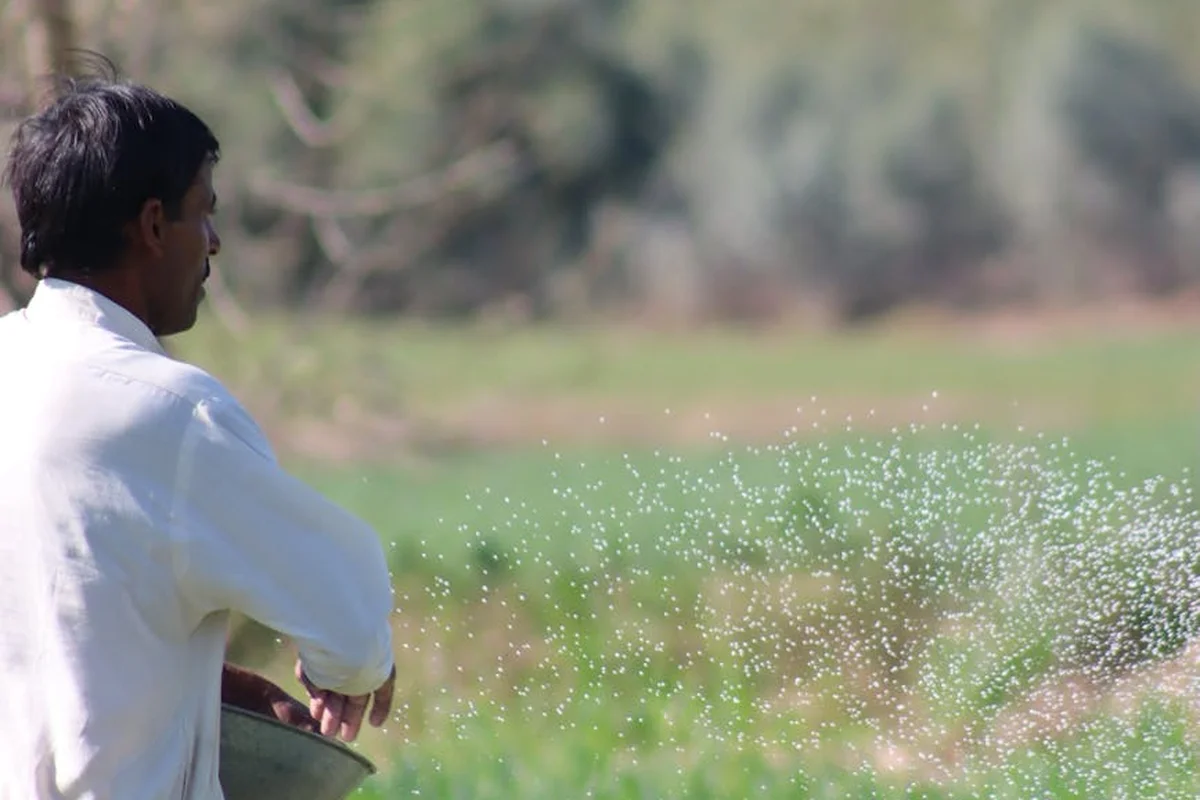
Applying nitrogen is not about dumping a bag and hoping. It is a precise meal for your lawn. You must know how much to serve, when to serve it, and how to deliver it evenly. This is the method I use every season.
Step one is always a soil test, which tells you exactly what your lawn is hungry for. It is like a checkup for your soil. You can find cheap test kits or send a sample to your local extension office. The results will show your soil’s current nitrogen level and pH, which tells you if you need a full meal or just a light snack.
Measuring the Meal: How Much Nitrogen Does Your Lawn Need?
Once you know what your soil lacks, you need to know how much nitrogen to add over the entire year. A good rule of thumb is the annual need per 1,000 square feet.
| Grass Type | Annual Nitrogen Need (lbs per 1,000 sq ft) |
|---|---|
| Kentucky Bluegrass, Perennial Ryegrass, Tall Fescue (Cool-Season) | 2 to 4 |
| Bermuda, Zoysia, St. Augustine (Warm-Season) | 3 to 5 |
This is a yearly total. You split this amount into smaller applications throughout the growing season. A mature, healthy lawn often thrives on the lower end of that range. More fertilizer does not mean a better lawn, it often means more problems with runoff and thatch.
Now, how do you figure out how much of your bag to use? Look at the three NPK numbers. The first number is the percentage of nitrogen by weight. A bag labeled 24-0-6 is 24% nitrogen. To find pounds of actual nitrogen in the bag, multiply the bag’s weight by the nitrogen percentage.
For example, a 20-pound bag of 24-0-6 contains 4.8 pounds of actual nitrogen (20 lbs x 0.24 = 4.8 lbs). If your lawn needs 3 pounds of nitrogen per 1,000 sq ft, this one bag would cover about 1,600 square feet.
Back to timing. You feed your grass when it is actively growing and can use the nutrients.
- Cool-season grasses (like Kentucky Bluegrass) crave nitrogen in early fall and again in late spring. I avoid heavy summer feeding, it stresses the grass.
- Warm-season grasses (like Bermuda) get their main meals from late spring through summer, when the heat kicks their growth into high gear.
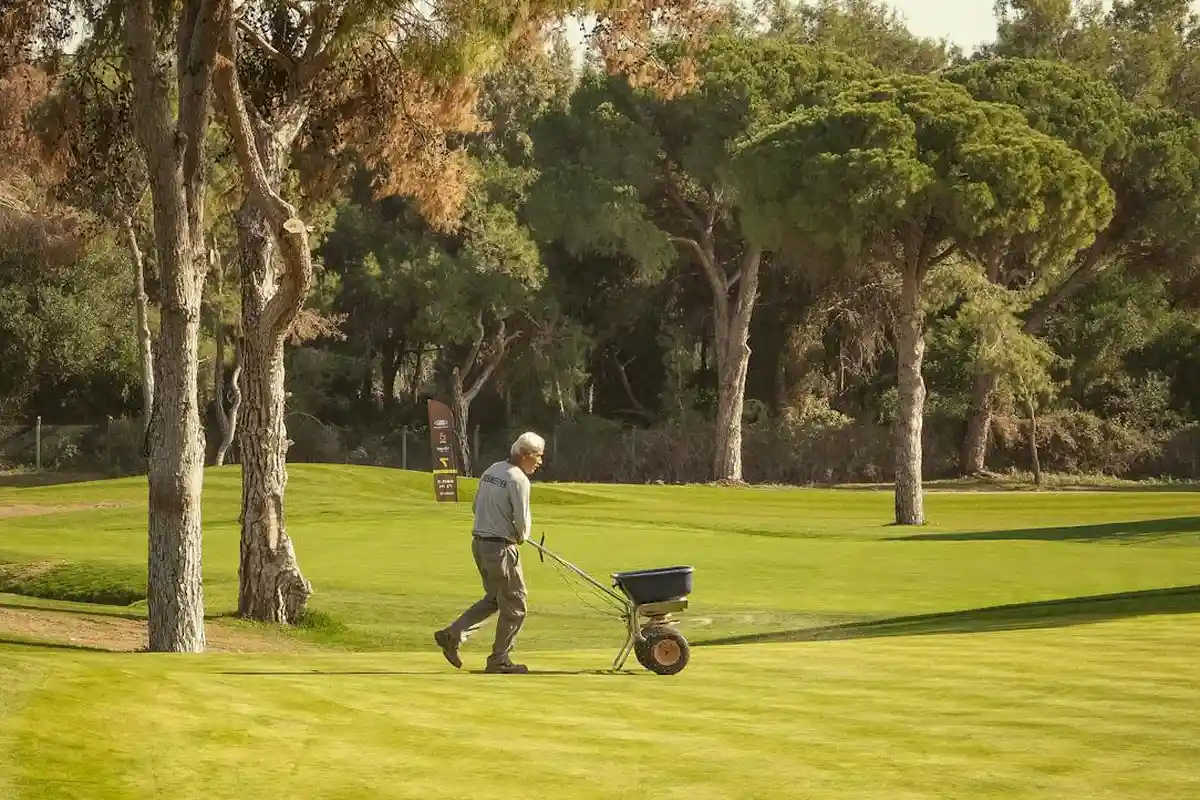
Next, choose your tool. A broadcast (rotary) spreader covers large areas quickly but needs careful handling to avoid throwing fertilizer onto sidewalks or flower beds. A drop spreader is more precise for smaller or irregular lawns. I use a broadcast spreader for the main yard and a small drop spreader for the tricky edges near Patch.
Calibration is key for an even feed. Set your spreader to the rate listed on the fertilizer bag. I do a test run on my driveway to see the pattern and flow rate. When I start, I walk at a steady, even pace, just like I do when mowing with Max. I make two passes in a crisscross pattern to prevent striping or missed spots.
The final, non-negotiable step is watering. You must water the fertilizer in thoroughly after application. This washes the granules off the grass blades and down to the soil, activating the nutrients. It also prevents fertilizer burn, which happens when salts in the fertilizer sit on dry grass and dehydrate it. I give the lawn a good, deep drink with Sunny, enough to moisten the top inch of soil. This keeps the fertilizer working for the roots, not against the blades.
Reading the Leaves: Signs of Nitrogen Problems
Your lawn talks to you. Its color and growth rate tell you if it is getting the right amount of nitrogen. Learning this language saves you time and money.
A nitrogen-deficient lawn looks hungry and tired. The vibrant green fades to a pale, washed-out lime or even a yellowish hue. You will notice it grows much slower after mowing, and the grass blades seem thin. In my experience, this often shows up first in high-traffic areas or spots with poor soil. It is a clear call for a modest meal.
The fix is straightforward. Apply a light dose of a fast-release nitrogen fertilizer, following the steps above. An organic option like milorganite is a gentle, pet-safe choice that gives a slow, steady green-up without the risk of a sudden surge.
On the flip side, nitrogen burn is what happens when you serve too much of a good thing. It appears as brown, crispy streaks or patches, often within a day or two of application. The grass tips look scorched. This is usually from over-application, applying fertilizer to wet grass, or not watering it in. The salts in the fertilizer literally draw the moisture out of the grass blade.
If you see burn, do not panic. Flush the area with deep, heavy watering to dilute and move the excess salts through the soil. The lawn will often recover, though the browned tips will remain until you mow again.
Sometimes, persistent problems are not about the food, but the plate. If you keep having deficiency symptoms in the same spot, like my shady area I call Patch, the issue might be soil compaction or poor drainage. The roots simply cannot access the nutrients. In that case, core aeration in the fall is a better solution than just adding more fertilizer. It fixes the real problem underneath.
Avoiding Lawn Care Blunders: Common Fertilizer Mistakes

Fertilizing seems simple. You spread the bag, water the lawn, and watch it turn green. But a few small errors can set you back for months. I’ve made my share of them in Patch’s corner. Here are the big ones to watch for and how to sidestep them so you stay on top of the best practices for fertilizing your yard.
The “More is Better” Mindset
This is the classic blunder. You think an extra handful will give you a turbocharged lawn. What it often gives you is burned, yellow streaks and a ton of wasted money. Too much fertilizer stresses the grass, pushing excessive growth that demands more water and mowing. The worst part? Excess nutrients don’t just vanish. They wash away with rain, polluting local streams and harming aquatic life. It’s bad for your wallet and your local ecosystem.
The fix is simple: always measure your lawn area and follow the application rate on the bag exactly, using a calibrated spreader.
Timing It Wrong
Fertilizing when your grass is asleep or stressed is like serving a big meal to someone who’s napping. Cool-season grasses crave food in early fall and spring. Warm-season grasses want it as they wake up in late spring and through summer. Apply at the wrong time, and the fertilizer either sits unused or feeds weeds instead of your lawn.
Apply fertilizer when your grass is actively growing and the soil temperature matches its needs, not just when the calendar says it’s spring.
Skipping the Water-In
I get it. You finish spreading and just want to be done. But walking away without watering is a gamble. Granular fertilizer needs moisture to dissolve and move into the soil where roots can use it. If it sits on dry blades, it can cause leaf burn. More than that, a sudden downpour can wash all those expensive granules right into the street drain before they ever help your lawn.
Always water your lawn lightly but thoroughly immediately after applying dry fertilizer to wash it off the grass blades and into the soil.
Guessing What Your Soil Needs
Fertilizing without a soil test is like cooking a complex meal without a recipe. You’re just throwing ingredients in and hoping. Your soil might already have plenty of phosphorus but be starving for potassium. Adding a balanced fertilizer anyway is wasteful and can lock up other nutrients, making them unavailable to the grass. A quick soil test tells you what to amend, and if the soil pH supports grass seed germination.
Get a reliable soil test every 2-3 years; it’s the only way to know exactly what nutrients your lawn is missing so you can buy the right fertilizer.
Reaching for Weed-and-Feed Out of Habit
This product has its place, but that place isn’t on a generally healthy lawn. Weed-and-feed combines fertilizer with broadleaf weed killer. If you don’t have a significant weed problem, you’re applying herbicides unnecessarily. On a breezy day, that herbicide can drift onto flower beds, harming the pollinators we want to protect. It’s often more cost-effective and safer to tackle feeding and weeding as two separate jobs. There are many lawn care myths about quick fixes for weeds and pests. Understanding what really works helps you avoid unnecessary chemicals and protects pollinators for the long term.
Only use a weed-and-feed product if you have a verified, widespread weed issue; otherwise, fertilize and spot-treat weeds separately.
I’ve over-applied and burned a strip with Max. I’ve fertilized too early and watched the weeds get fat. Every mistake is a lesson that makes your lawn care smarter and more effective. Getting it right saves you time, money, and makes for a healthier, greener space for everyone.
Greedy Grass FAQ: Your NPK and Nitrogen Questions, Answered
1. How do I pick the right NPK ratio for my lawn?
Start with a simple soil test from your local extension office-it tells you exactly what your soil is hungry for. Then, match the ratio to your goal: a high first number (like 24-0-6) for green-up, or a high last number (like 6-0-24) for fall stress protection.
2. Is a fertilizer with a super high nitrogen number always better?
Not at all. More nitrogen than your grass can use leads to burning, weak growth, and polluted runoff. A slow-release source with a moderate number feeds your lawn steadily and safely, building real thickness without the risk.
3. How soon after fertilizing is my lawn safe for my dog and kids?
Once the granules are fully watered in and the lawn surface is dry to the touch, it’s safe for play. Always water thoroughly after application to move the fertilizer into the soil and away from paws and feet.
4. What’s the single best time to apply nitrogen fertilizer?
For cool-season grasses, early fall is the champion feeding time-it builds strong roots for the next year. For warm-season grasses, aim for late spring, just as they wake up and are ready to grow greedily.
5. I applied fertilizer but my lawn still looks thin and pale. What gives?
This often means your soil is compacted or drainage is poor, so roots can’t access the food. Core aerate in the fall to fix the “plate” your lawn eats from, then fertilize again.
Putting Nitrogen to Work for Your Lawn

Getting your nitrogen right is the single biggest factor for a thick, green lawn. Focus on feeding your grass consistently through the growing season instead of dumping a huge amount all at once. Make sure to fertilize your lawn safely and effectively.
Every bag you put down is a choice for your yard’s health and the little ecosystem it supports. I keep learning more each season, and sticking with pet-safe, pollinator-friendly options always makes me feel better about the results.
Research and Related Sources
- What Is NPK in Lawn Fertilizer? Meaning, Ratios & Benefits
- Fertilizer Labels: What N-P-K Numbers Mean
- NPK Explainer – Here’s What Those Fertilizer Numbers Mean | Gardening Know How
- NPK: What It Stands for & Its Importance in Lawn Fertilizers | ETCH Outdoor Living
- What do the Letters NPK Mean in a Fertilizer? | C-I-L® Lawn and Garden
- Lawn Fertilizer Numbers: Understanding N-P-K Ratios & What Your Grass Needs
- What Does “NPK” Stand For In Fertilizers?
Written by Ria Carrington. Ria is an avid lawn care enthusiast and advisor. No lawn is unsalvagable when Ria is at work. She has helped countless homeowners breath new life into their dying lawns. She has a B.Sc in Agriculture and brings practical advice combined with knowledge of plant science and her decade worth of hands on experience.