
Riding Mower vs. Push Mower: Which Is Right for Your Lawn?
Staring at your lawn and wondering if a riding mower is worth the investment, or if a trusty push mower still gets the job done? You’re not alone in this common homeowner debate.
We will cover the real-world pros and cons of each machine, from cost and time to lawn health and storage, and how to match the right mower to your specific yard and lifestyle.
I’ve spent years with both types, from zipping around on my zero-turn Max to the steady workout of a push mower, so I know what works without wasting your money.
At a Glance: The 4 Big Questions to Ask Yourself
Before you think about horsepower or brand names, answer these four questions. They cut through the noise and point you straight to the right machine.
1. How big is your lawn?
This is the biggest factor. Measure it, don’t guess. A simple trick: walk it off. One of your average steps is about 2.5 feet. A half acre lawn (about 22,000 sq ft) is a very different beast than a typical suburban quarter-acre lot.
2. What’s your terrain like?
Is it flat? Does it have gentle slopes, or hills that make you breathe hard just walking up? Are there tight corners around trees, gardens, or fences? Terrain decides if you need agility or raw power.
3. Where will you store it?
Be honest about your garage or shed. A riding mower needs a clear path in and out and a dedicated parking spot. A push mower can tuck into a corner or hang on a wall hook.
4. What’s your real budget?
Think total cost. The price tag is just the start. Factor in long term fuel, annual maintenance, and potential repairs. A cheaper mower that breaks in two years is more expensive than a reliable one that lasts ten.
| Push Mower | Riding Mower | |
|---|---|---|
| Typical Lawn Size | Up to 1/2 acre | 1/2 acre and up |
| Effort Level | High (you provide the power) | Low (you provide the steering) |
| Cost Range | $200 – $800+ | $1,500 – $5,000+ |
| Best For Terrain | Flat to moderate slopes, tight spaces | Open, flat or gently sloped areas |
| Storage Footprint | Small (can hang vertically) | Large (needs floor space, clear aisle) |
The right mower is the one that fits your actual yard and life, not the one that just looks fun. I learned this the hard way, almost buying a zero-turn for my first, tiny yard. My neighbor talked me out of it, and I’m still grateful.
The Push Mower: Your Nimble Neighborhood Workhorse
There’s a sound I still love, the crisp *snick-snick-snick* of a sharp reel mower blade cutting grass. It’s the sound of a perfect cut on a Saturday morning. For years, my old gas push mower was my only partner. It never failed to start, and it taught me the contours of every square foot of my lawn.
Let’s break down the types in simple terms. Think of a standard push mower like a basic bicycle, you pedal to move. A self-propelled model is like a bike with gears, it helps you up the hills. A reel mower is like scissors for your grass, quiet and incredibly sharp, but it needs a flat, smooth lawn to work best.
The Good: Why You Might Love a Push Mower
- The upfront cost is much easier to swallow. You can get a fantastic, durable mower without a major financial hit.
- They’re agile. You can weave around flower beds, under low tree branches, and through gates a riding mower could never fit.
- They often give a better quality cut. A sharp blade on a push mower lifts and cuts cleanly. A heavy riding mower can sometimes scalp uneven ground.
- It’s a legitimate workout. An hour of pushing is real exercise, and you’re out in the fresh air.
- Storage is simple. Lean it against a wall, hang it up, or slide it into a tight shed corner.
The Bad & The Practical: The Honest Truth
- It’s physical work. On a hot day or a steep hill, you will feel it. Your arms and legs are the engine.
- It takes time. Mowing a full half-acre with a push mower is a commitment of an hour or more, depending on your pace.
- Tall, thick grass is its enemy. You’ll need to make multiple passes or raise the deck to avoid bogging down or leaving clumps.
The self-propelled vs. standard push debate comes down to your hills and your preference. If you have any slope, get self-propelled. It’s worth every extra dollar. For a small, flat lawn, a standard push is simpler and lighter.
People often ask if a push mower actually cuts better. With a sharp blade, absolutely. A reel mower shears the grass like scissors. Even a sharp rotary blade on a push mower can outperform a dull, battered blade on a giant riding mower. The smaller machine lets you be more precise. I always get cleaner edges around “Patch,” my stubborn garden corner, with my push mower. Regular professional sharpening of lawn mower blades helps keep that edge sharp longer. A quick visit to a pro can restore precision, especially around tight corners like Patch.
For most yards under half an acre, a good push mower isn’t just a budget choice, it’s the smart choice. But when your land opens up, the equation changes. Let’s talk about when it’s time to consider a seat.
The Riding Mower: Your Command Center on Wheels

Let me introduce you to Max. He’s my zero-turn mower, a hulking piece of orange metal that’s been part of the family for five summers now. Sitting in that high-back seat gives you a view of the whole yard. You feel the rumble of the engine through the seat, hear the crisp whirl of the blades, and watch the grass fall in neat rows behind you. What used to be a two-hour push-mowing chore is now a 40-minute cruise. That feeling, and that time back, is the real magic.
You’ve got two main types of riders. Think of a traditional lawn tractor like a car. It steers with a wheel, moves at a steady pace, and is predictable. A zero-turn, like Max, operates more like a forklift. Two levers control each drive wheel independently. This lets you spin on a dime and zip around obstacles with incredible agility, but the controls can be touchy until you get the hang of them.
The Good: Why You Might Want a Seat
It turns a big job into a small one. The single biggest advantage is pure coverage speed. You can mow an acre in the time it takes to brew a pot of coffee and read the paper.
- It saves your body. You trade walking and pushing for sitting and steering. For anyone with a bad back, knees, or just a desire to not be drenched in sweat, this is a game-changer.
- More power on tap. If you let the grass get a little too tall after a rainy week, a rider’s bigger engine plows through it where a push mower might bog down or leave clumps.
- Utility player. Many riders let you hook up a cart for hauling mulch or a sweeper for fall leaves. It becomes a multi-season tool.
The Bad & The Practical: The Trade-Offs
A riding mower is a major investment, not just in money but in space and complexity. Let’s be real about the other side of the coin.
- The upfront cost is high. We’re talking thousands, not hundreds, for a new machine.
- It needs a real home. You can’t just lean it against a shed wall. A rider demands a full garage bay or a very large, clear shed. You need space to walk around it.
- It can be clumsy. Navigating a tight gate, trimming around a delicate flower bed, or mowing a steep slope can be nerve-wracking with a heavy machine. Zero-turns are notorious for scalping uneven ground.
- Weight equals marks. A heavy rider on soft or damp soil will leave temporary tire depressions and can even compact your soil over time.
- Maintenance is more involved. More engine, more parts, more fluids. An oil change isn’t a five-minute job, and a repair bill can sting.
That last point leads to a key FAQ: the true “riding mower vs push mower cost.” Look beyond the sticker price. A rider will drink more gas and oil per season. It has more belts, spindles, and hydraulics that can fail. A quality push mower might run for a decade with little more than blade sharpening and an oil change. A rider asks for more attention and a bigger wallet for its care.
Side-by-Side: A Direct Comparison for Your Lawn
Forget generic advice. The best choice lives at the intersection of your property and your life. Grab a notepad and answer these questions honestly.
Your Lawn’s Size & Shape
This is the first filter. Here’s my simple rule of thumb from years of looking at yards.
If your lot is under 1/3 of an acre and mostly open, a push mower is often perfect. The mowing time is manageable, and you’ll appreciate the control when you know how to operate it properly.
Once you cross the 1/2 acre line, start seriously considering a rider. That’s where the weekly time savings become truly meaningful.
Now, consider shape. A one-acre rectangle is a rider’s dream. A half-acre plot with twenty trees, winding garden beds, and a tiny shed? That’s different. A rider will spend more time maneuvering than mowing. In tight, obstacle-heavy yards, a nimble push mower often wins on efficiency.
Your Terrain (Hills, Bumps, Wet Spots)
Ground conditions matter more than you think.
- Hills: A heavy riding mower on a steep slope can feel tippy and dangerous. A self-propelled push mower, with you as a counterweight, is often the safer, more stable choice for hills.
- Bumps: Zero-turn mowers have a rigid frame. If your lawn is uneven, those wheels will dip into every low spot, and the blades will scalp the high spots. A push mower’s deck can float over minor imperfections.
- Wet Spots: A rider’s weight turns a soft spot into a muddy rut. A lighter push mower might leave a track, but it won’t sink a battleship.
Your Garage or Shed (The Storage Test)
Be brutally honest. Go measure. A rider isn’t just the machine’s footprint. You need at least a foot of clearance on all sides for parking and maintenance. Can you still fit your car, bikes, or garbage cans? If the answer involves creative Tetris, a push mower that hangs on a wall might be your real-world winner.
Your Budget (The Real Numbers)
Let’s talk real numbers you might see on marketplace listings or store tags.
You can find a fantastic, reliable used push mower for $150. A decent new one starts around $400.
For a rider, even a basic, aging used lawn tractor often starts at $800 or more. A new entry-level model is a $2,500+ commitment. That gap isn’t just about the machine, it’s about what else that money could do for your lawn or your home. A lawn mower cost buying guide can help you compare upfront costs and long-term value. It can guide you toward smarter budget choices before you buy.
Your Time and Your Back
This is the personal equation only you can solve.
Is saving 90 minutes of your Saturday worth the higher investment? For a busy parent or someone who values that time, absolutely. If you enjoy the quiet workout and the close-up view of your grass, maybe not. And your body gets a vote. If pushing aggravates an old injury, the value of a seat skyrockets overnight. This isn’t just about lawn care, it’s about your quality of life every weekend.
How to Choose: Real-Yard Scenarios
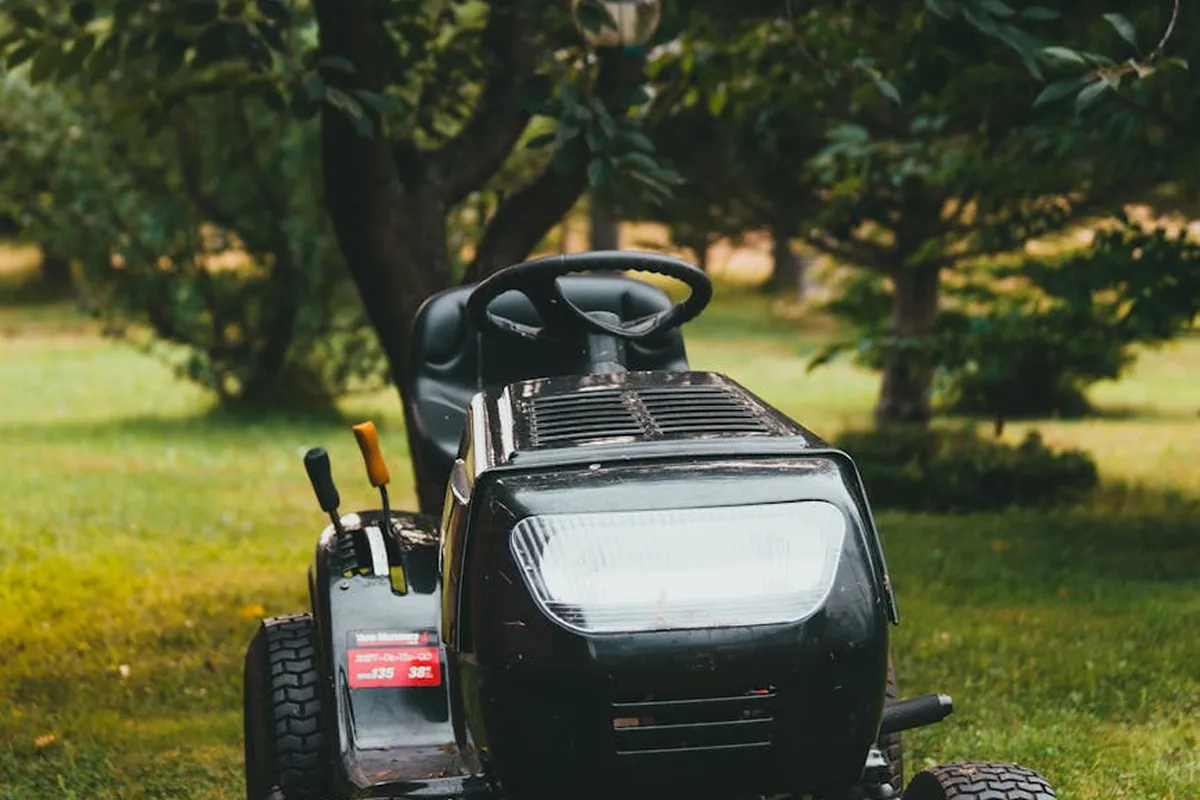
Forget the general advice. The best mower for you depends entirely on the grass under your feet. Let’s walk through the most common situations I’ve seen, and the one I live with myself. A smart budget helps you choose the perfect lawn mower without compromise. In the next steps, we’ll tie each scenario to practical budget ranges.
You have a small, flat city lot.
Think a quarter-acre or less, with a simple rectangle of grass. A riding mower here is like using a dump truck to get groceries.
A standard or self-propelled push mower is your perfect match. You’ll finish the job quickly, get a bit of exercise, and avoid a huge storage headache. My neighbor has a lot like this. Watching him wrestle a lawn tractor out of a single-car garage just to mow for 20 minutes is a lesson I didn’t need to learn myself. Self-propelled mowers use a powered drive system that moves the mower forward, letting you guide it with less effort. The wheels are driven by the engine, so you don’t have to push as hard.
You have a 1-acre lot with gentle slopes.
This is the classic debate. You *can* push-mow an acre. I’ve done it. Your arms will remember it for days. The question is about trading money for time.
A robust self-propelled mower can handle it, especially if you enjoy the workout and want a simpler machine to maintain. A lawn tractor, however, turns a 90-minute chore into a 30-minute cruise. This is where my zero-turn, Max, earns his keep. Zero-turn mowers come with features like a tight turning radius, a responsive hydrostatic drive, and wide cutting decks that boost efficiency. These design elements help explain why Max is such a time-saver on larger plots. For an acre, that weekly time savings adds up to whole weekends over a season. It’s the tipping point where a rider starts to make real sense.
You have a large property with many trees and flower beds.
Two acres or more, dotted with gardens, swing sets, and tight corners. A big riding mower alone will leave you with hours of trimming work by hand.
This is where the smart money goes for a combo: a rider for the open fields and a nimble push mower for the detail work. This is what professional crews do. Use the riding mower to cover 80% of the area fast. Then, use a lightweight electric mower to zip around every tree and bed. It’s efficient and gives you the cleanest finish.
You want the best cut quality and enjoy the workout.
You’re not just cutting grass; you’re crafting stripes. You notice the crisp, clean shear of a blade.
For you, a sharp reel mower or a high-end gas-powered push mower is the only choice. A reel mower scissor-cuts each blade like a barber’s clippers, promoting healthier grass. The sound and the stripe it leaves are deeply satisfying. It’s a workout, but it’s a purposeful one. This is the enthusiast’s path.
Your yard is on a serious hill.
This isn’t about comfort. It’s about safety. Riding mowers can tip on slopes, especially when turning.
I strongly advise against using a riding mower on any significant incline. Your best tool here is a self-propelled push mower with large rear wheels. The big wheels give you better traction and stability. You control the pace and keep all four points of contact (your two feet and the mower’s two wheels) firmly on the ground. Listen to this advice.
The Final Verdict and Your Next Steps
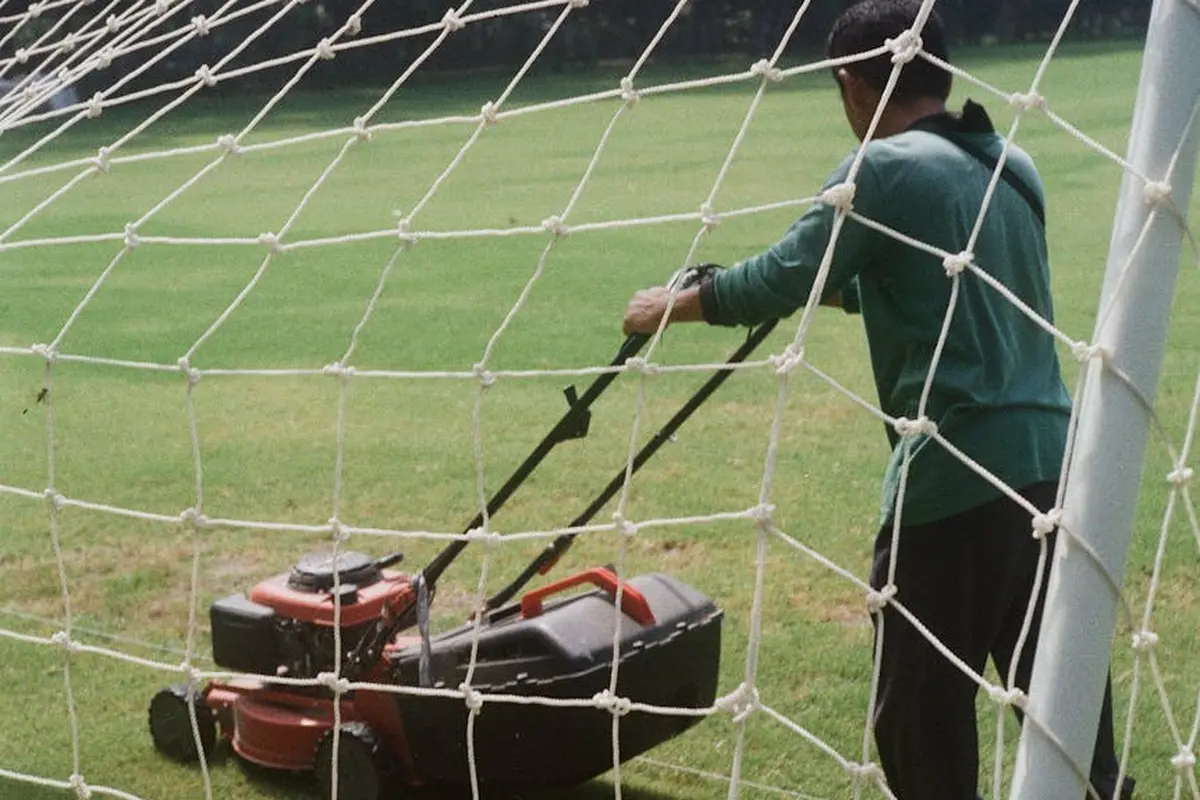
There’s no single “best” mower. There’s only the best mower for your specific patch of earth.
Before you look at a single model, get to know your yard with these tools:
- A 100-foot measuring tape.
- A notepad to sketch your yard’s shape.
- The exact dimensions of your shed or garage space.
Walk your property. Note the steep areas. Count the tight spaces between trees. Feel how much space you really have to turn a big machine around. Once you know your yard’s facts, the choice usually becomes clear. Trust what your property is telling you.
Your Mower Matchmaker: Quick-Answer FAQ
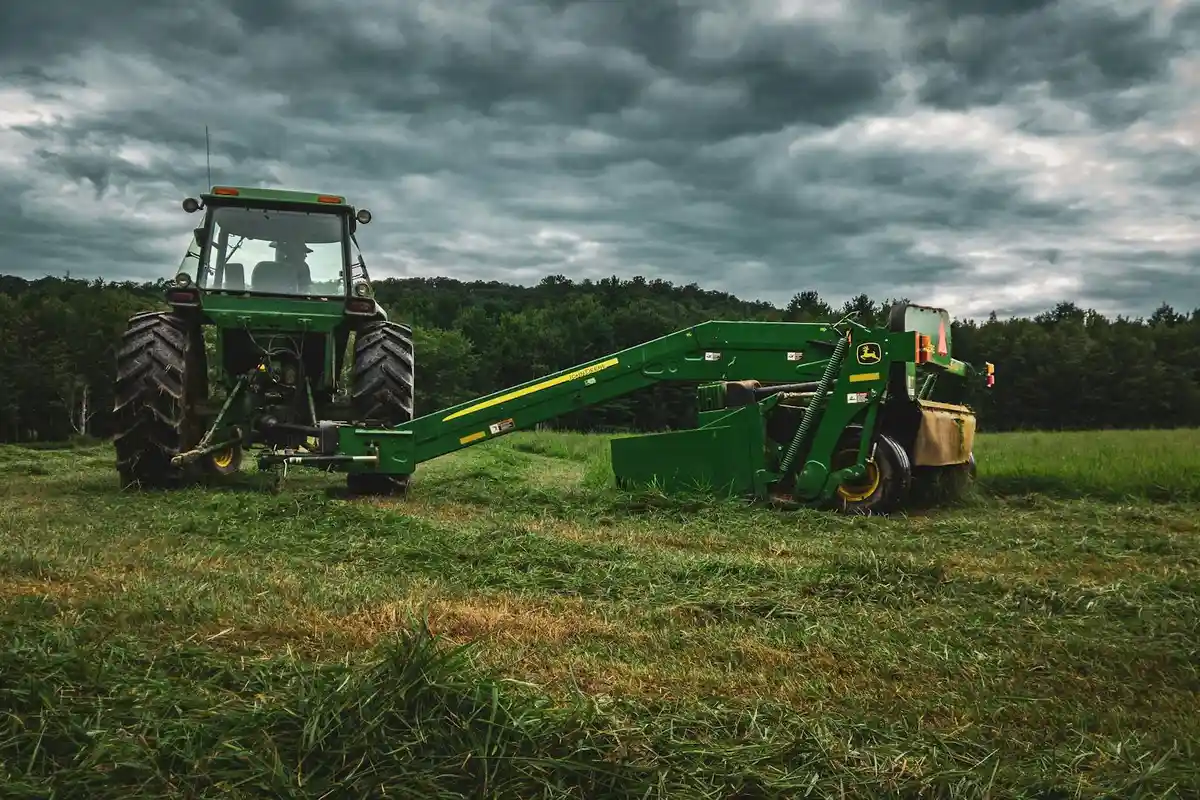
I’ve heard riding mowers leave tire marks and hurt the lawn. Is that true?
Yes, heavy riders can leave temporary depressions on soft or damp soil and compact it over time, which is tough on greedy grass roots. If your soil is soft or you mow when wet, a lighter push mower is the gentler choice for your lawn’s long-term health.
What are the “hidden” costs beyond the sticker price?
Think fuel, oil, and repairs. A rider costs more to feed and maintain every season, while a quality push mower often runs for years on little more than a sharp blade and fresh oil. The true cost is purchase price plus a decade of Saturday mornings.
My yard is just under 1/2 acre. Is a riding mower overkill?
Often, yes. A robust self-propelled push mower can handle a 1/2 acre efficiently, saving you thousands upfront and in storage space. Only consider a rider at that size if your terrain is very open or mowing is physically difficult for you.
Self-propelled vs. standard push: When is the upgrade worth it?
If your lawn has any slope at all, self-propelled is non-negotiable-it saves your back and your sanity. For a small, perfectly flat postage stamp, a standard push is simpler, lighter, and cheaper to run.
I see a lot of debate online (like on Reddit) about cut quality. What’s the real deal?
A sharp blade on any mower cuts best, but a push mower’s lighter weight allows its deck to follow ground contours better, reducing scalping. For a truly pristine, scissor-like cut that makes grass look greedy, a well-maintained reel or push mower is the undisputed champion.
Making Your Mower Decision Stick
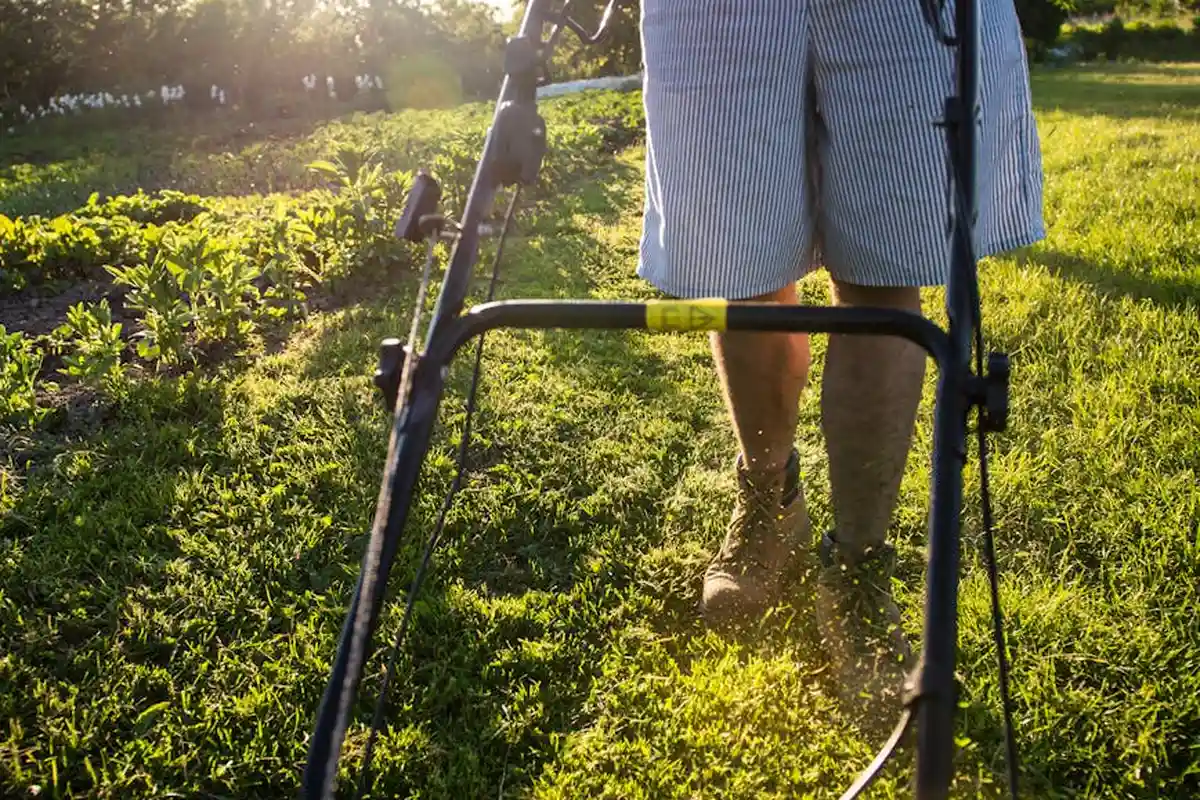
The biggest takeaway is this: match the mower to your lawn’s real size and your own pace of life. Your goal is a tool that gets the job done so you can enjoy your yard, not one that adds stress or sits unused. A rider saves time on big spaces, while a push mower keeps you connected to every inch of a smaller one.
Own your choice by maintaining your machine well-sharp blades mean a cleaner cut and a healthier lawn. I always mow high, leave the clippings to feed the grass, and avoid harsh sprays to keep it safe for everyone, including the bees and butterflies that visit Sunny’s drip line. There’s always more to learn from each season, just like Patch teaches me, so keep experimenting and talking with fellow homeowners.
Relevant Resources for Further Exploration
- Riding mower vs push mower – which is best for you and your lawn?
- Riding Mower Vs. Push Mower | Push and Riding Mowers
- Riding vs Push Mower: Which One Saves More Time for Your Lawn?
- Riding vs. Pushing | Lawn Care Forum
- Push vs. Riding Mowers: Which Is Best for Your Lawn Size?
Written by Ria Carrington. Ria is an avid lawn care enthusiast and advisor. No lawn is unsalvagable when Ria is at work. She has helped countless homeowners breath new life into their dying lawns. She has a B.Sc in Agriculture and brings practical advice combined with knowledge of plant science and her decade worth of hands on experience.