
Where Is the Carburetor on My Lawn Mower? A Homeowner’s Guide to Finding It Fast.
That frustrating sputter or silent pull cord often points to the carburetor. Let’s clear the confusion and get you looking in the right spot on your machine.
We’ll cover exactly where to find the carburetor on common mower types, how to identify it by its unique shape and hoses, and the simple signs it needs your attention.
I’ve sorted this out on my own mowers for years, including my trusty zero-turn Max, so I know the practical steps that save you time and money.
At a Glance: Key Takeaways
You are not alone asking this question. When your mower sputters or refuses to start, finding the carburetor is your first move toward a fix. That’s where lawn mower won’t start troubleshooting comes in, guiding you through quick checks and common causes. A short diagnostic can save you time and prevent unnecessary tinkering as you move toward a solution.
Here’s what you need to know right away: most gas-powered mowers have one, it’s always bolted directly to the engine, and it looks like a small metal or plastic box with thin fuel lines and little moving rods attached. That’s just the start—different lawn mower types differ in parts and features you’ll want to know about. In the next steps, we’ll link to sections that break down those parts and features by mower type.
Identifying it correctly turns a confusing engine into parts you can actually understand and work with.
What Does a Lawn Mower Carburetor Even Do? (A Simple Explanation)
Think of your carburetor as the mower’s bartender. Its only job is to mix the perfect, tiny cocktail of air and gasoline vapor for the engine to drink and burn. It’s especially important to ensure it’s clean and functioning well before you spray starter fluid on your lawn mower.
It takes liquid fuel from the tank and fresh air, mixes them in a precise ratio, and serves that mixture to the engine’s cylinder. When this mix is just right, your mower runs smooth and strong. When it’s off, you get sputtering, hard starts, or a mower that just quits.
Do lawn mowers have carburetors? If it runs on gasoline, the answer is almost always yes. Newer fuel-injected models are the rare exception. For the mower in your shed, like my old reliable Max, the carburetor is the heart of the operation. It’s a simple but finicky piece of machinery that doesn’t like sitting all winter with old gas in it.
You don’t need an engineering degree, just this basic idea: a dirty or gunked-up carburetor means a bad fuel mix, and that’s the root of most running problems.
Exactly Where to Look: Finding the Carburetor on Any Mower
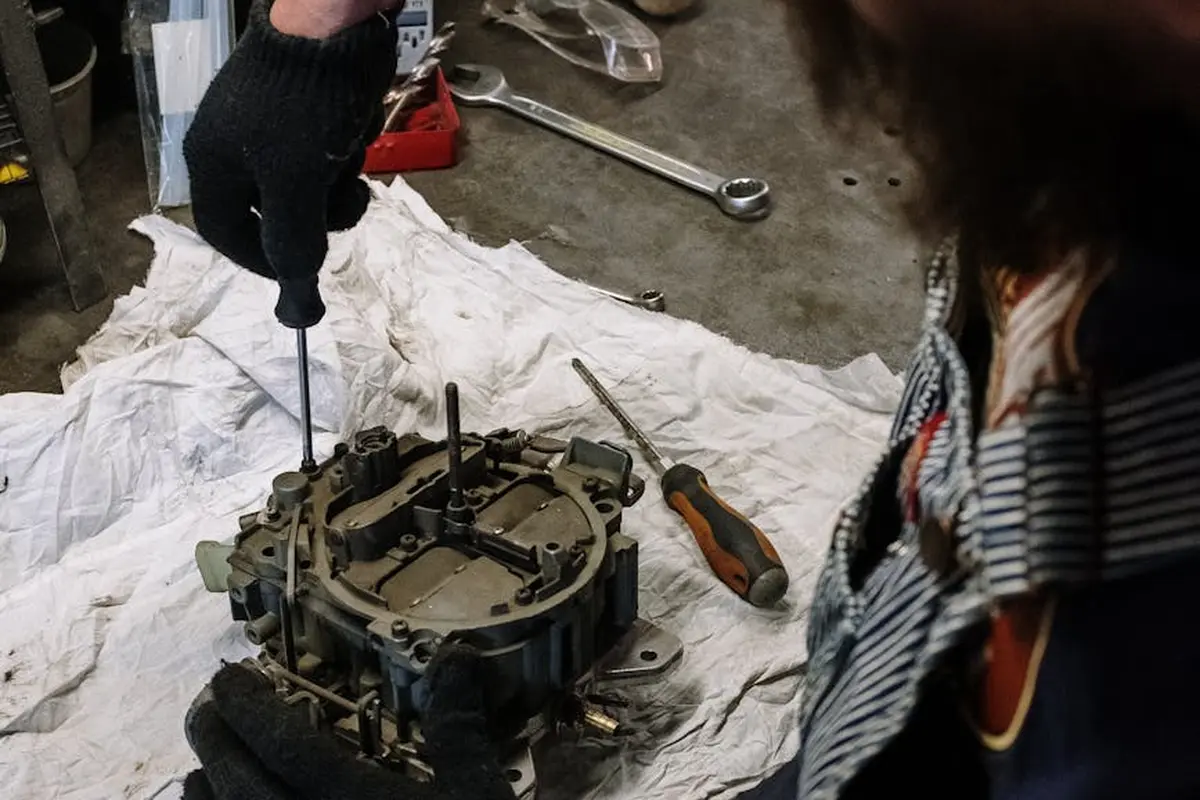
You don’t need to be a mechanic. Every mower carburetor is found the same way. Start at the gas tank. Find the rubber or plastic fuel line (it looks like a small hose). Follow it. It will lead you straight to the carburetor, which is bolted to the side of the engine. Also, the lawn mower gas type you use can affect how smoothly the carburetor runs. Using the right fuel type helps prevent varnish buildup and maintenance hassles.
It almost always lives right next to the air filter, so look for that plastic box first. The air filter cover is usually square or round, held on by a single wing nut or a couple of clips. Pop that off, and the carburetor is the piece the filter sits directly against.
The details change a little with your mower type:
- Push Mowers: Look on the side of the engine, near the rear. It’s often exposed or under a simple metal plate.
- Riding Mowers & Zero-Turns (like my mower, Max): It’s in the same spot on the engine, but that engine is usually under a big metal shroud or hood on the mower’s frame. You might need to lift that shroud to see it clearly.
If you’re searching “where is the carburetor on my Craftsman lawn mower,” the answer is the same. Brand doesn’t matter. Honda, Toro, Craftsman-they all follow this simple rule: fuel line to engine, next to the air filter.
What Does a Lawn Mower Carburetor Look Like? Spotting the Key Parts
Once you find it, you’ll see a small, boxy component made of metal or plastic. The biggest clue is the float bowl. This is a bulbous, cup-like part (often clear plastic) screwed to the very bottom. It’s where gas sits before getting sucked into the engine.
Look for these other identifying parts:
- Fuel Inlet: The spot where that fuel line you followed attaches. It’s a small nipple or tube.
- Throttle Linkage: A thin metal rod or spring that connects to a lever. This is how the engine knows you’ve moved the throttle control.
- Adjustment Screws: Usually one or two small screws with slotted or Phillips heads. Don’t turn them yet. They are for fine-tuning the fuel mixture.
Before you touch a single bolt, take a clear picture with your phone. This gives you a perfect map for how everything should look when you put it back together. It saves a huge headache later.
How to Know If Your Carburetor Is the Problem
Your mower will tell you when the carburetor is dirty or failing. Listen for these common symptoms:
- Hard starting, needing many pulls or cranks.
- A rough, shaky idle instead of a smooth rumble.
- The engine stalling or bogging down when you engage the blade or go up a hill.
- Black smoke coming from the exhaust.
- It simply won’t start, but you have spark and fresh gas.
In my experience, 9 times out of 10, the culprit is old gas leaving behind gummy, varnish-like deposits inside the tiny passages of the carburetor. This happens to my gear every single season if I’m not diligent about fuel treatment. It’s like clogging the straw in your favorite drink.
Think of this list as a diagnosis, not a final verdict. A good, careful cleaning is almost always the first and most effective fix you can do yourself. It’s a satisfying repair that brings that old engine back to life.
Tools You’ll Need for Carburetor Care

You don’t need a fancy mechanic’s shop to tackle this job. A simple collection of tools from your garage will get you most of the way there.
Start by gathering these basics on a clean workbench or sturdy table.
- A set of screwdrivers (both flathead and Phillips).
- A basic socket set or wrench that fits your mower’s bolts.
- Safety glasses and a pair of nitrile gloves.
Now, the items that will make the job smoother and more successful. Think of these as your secret weapons.
- A can of aerosol carburetor cleaner spray. This is the workhorse for dissolving varnish and gunk.
- A small, clean container for organizing screws and tiny parts. An old muffin tin works perfectly.
- Your phone’s camera. Before you touch anything, take clear pictures of all the linkage connections. This is your personal lawn mower carburetor linkage diagram and it will save you from guessing during reassembly.
For a truly thorough job, consider investing in two specific kits. They’re inexpensive and prevent headaches.
A dedicated lawn mower carburetor cleaning kit often includes soft brass wires and picks that won’t damage the delicate aluminum interior, which is far better than using a paperclip or metal tool.
You should also get a lawn mower carburetor gasket kit. The old paper gaskets often tear when you take the carb apart, and a fresh seal is critical for proper fuel and air pressure.
A Step-by-Step Guide to Cleaning Your Carburetor

Safety is your first step, every single time. I’ve seen a mower kick over unexpectedly while someone was tinkering, and it’s not worth the scare. Following lawn mower safety tips, such as a pre-use check and safe starting procedures, makes every session safer. These basics are worth checking before you mow.
- Disconnect the spark plug wire. Pull the boot off the plug and secure the wire away from the terminal. This ensures the engine cannot start while you’re working.
- Remove the air filter cover and the foam or paper filter element. This exposes the top of the carburetor.
- This is when you use your camera. Snap photos of any springs, rods, or levers connected to the carburetor. On my mower Max, there’s a single throttle linkage that’s easy to forget.
- Use your socket set to unbolt the carburetor from the engine. Usually, it’s just one or two bolts. There will be a fuel line connected-have a rag ready for a few drips and carefully slide the line off its nipple.
Now you have the carb in your hands. The real cleaning begins.
Take it to your clean workspace. Gently remove the float bowl from the bottom. You’ll likely see a yellowish, syrupy residue-that’s old gas varnish.
Spray every hole, passage, and part with your carburetor cleaner, using the straw nozzle to get into the tiny jets. Imagine you’re clearing a clogged straw.
Use the soft picks from your cleaning kit to gently probe the main jet and any visible passages. You should see light through them when they’re clean. Never use a metal pick or screwdriver; you can easily change the size of the jet and ruin the fuel mixture.
Let everything air dry completely. Reassemble using the new gaskets from your lawn mower carburetor gasket kit. Follow your photos in reverse to reconnect all linkages correctly. That satisfying *snap* of the fuel line going back on means you’re almost done.
When Cleaning Isn’t Enough: Repair or Replace?
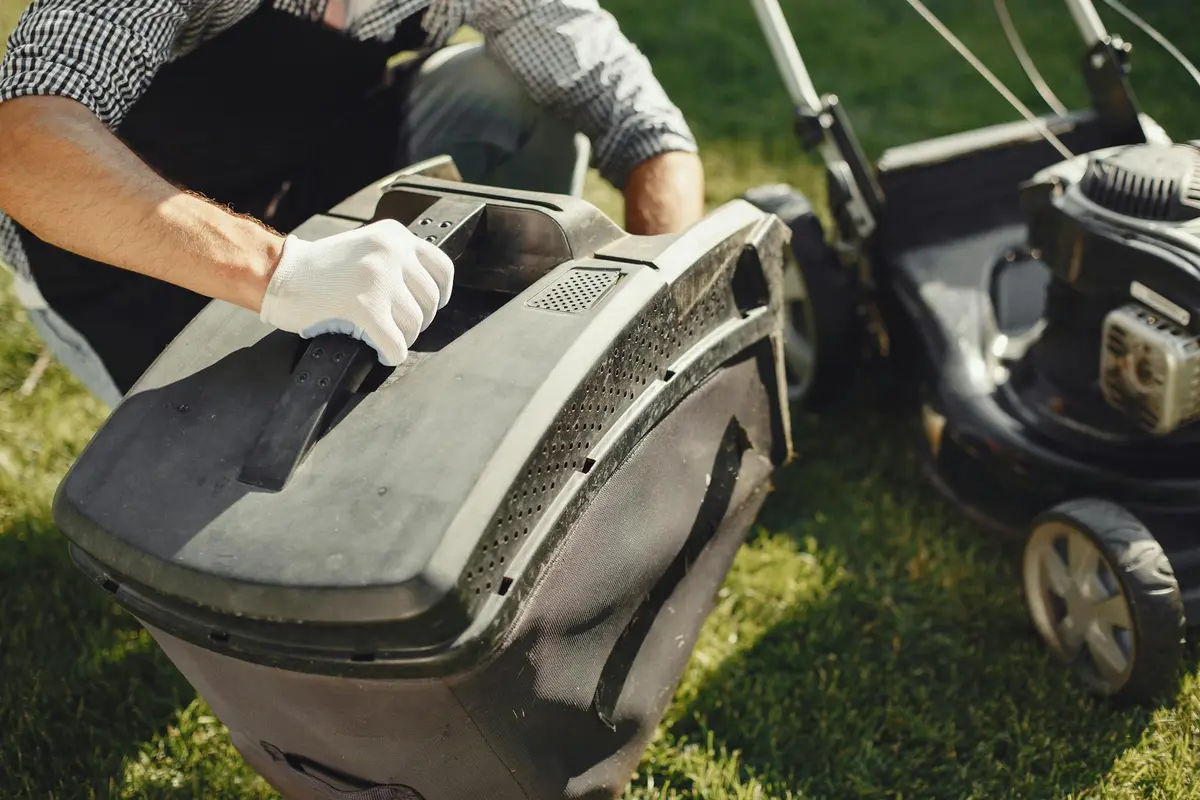
Sometimes, a good cleaning just won’t cut it. You’ve taken the carb off, soaked it, blasted the jets, and it still sputters like it’s out of breath. I’ve been there with old gear. It means the part itself is damaged.
Look for a few clear signs that mean you need a lawn mower carburetor replacement, not just a clean-up. Visible cracks in the main body are a death sentence. Severe corrosion that pits the metal, especially around the float bowl, is another. If the threads for the bowl screw or fuel line are stripped, you’re fighting a leak you can’t win. These problems go beyond dirt.
So, do you attempt a lawn mower carburetor repair with a rebuild kit, or just buy a new one? Here’s my take.
A rebuild kit has a bag of small parts: new gaskets, a needle valve, maybe a float. It’s cheaper, often $15 to $30. The catch is that it only fixes wear on internal seals and valves; it does nothing for a cracked or corroded carburetor body. If the main housing is sound, a kit is a great, economical choice.
A brand-new carburetor is the full reset button. For many common mower engines, a compatible new carb costs between $25 and $50 online. For that price, you get every component fresh. No wondering if you missed a clogged passage. No old, worn diaphragm. I often go this route for my older utility mowers-it saves an afternoon of fiddly work.
To find the right model, you need your engine’s fingerprint. Don’t just search by your mower brand. Find the model number sticker on the engine itself. It’s usually stamped on a silver tag near the spark plug or on the engine shroud. Type that exact number into a search. That number tells you the exact engine family, and sellers will list compatible carbs. Taking a clear photo of your old carb before you remove it also helps for visual matching when checking engine types and specifications.
When to Wave the White Flag and Call a Pro
Let’s be real. Fuel systems can be finicky, and there’s no trophy for stressing yourself out over a two-inch piece of metal. Knowing your limits is a sign of a smart homeowner.
If the maze of throttle linkages, springs, and governor arms looks like a puzzle box, stopping is the smart move. One wrong hook-up can cause the engine to run away at full throttle, which is dangerous. If you’re deeply uncomfortable taking apart fuel systems, your time and safety are worth more than the repair bill.
A professional small engine tune-up often costs between $80 and $150. For that, they don’t just swap the carb. They’ll check the spark plug, air filter, oil, and adjust everything. What you thought was a carb problem might actually be a weak ignition coil or a clogged fuel tank vent. They solve the whole puzzle.
And here’s the real win: you already did the hard part. You found the carburetor, you know what it does, and you diagnosed the likely issue. That knowledge lets you talk to the repair shop with confidence and understand their estimate. You’re not handing over a mystery box. You’re making an informed decision to get Max, your mower, back on the lawn faster and safer. Should you want a hands-off check, a local lawn mower repair service can inspect Max and confirm the fix. They can also tune the carburetor to prevent future hiccups. That’s a victory in my book.
Greedy Grass Carburetor FAQ: Your Quick-Answer Guide
My mower runs worse after I cleaned the carburetor. What did I do wrong?
You likely reassembled a linkage incorrectly or left a tiny passage clogged. Double-check your photos against the engine, and consider a new gasket kit to ensure a perfect seal.
I’m completely lost. How can a lawn mower carburetor diagram help me?
A diagram is your visual cheat sheet for how all the small parts connect. Search online using your engine’s model number to find an exact match before you start taking things apart.
Should I repair my old carburetor or just replace it?
If the main body isn’t cracked or corroded, a rebuild kit is a cheap and satisfying fix. For a carb that’s seen decades of use, a brand-new replacement (often under $50) is the fastest path to a greedy, thick-grass cut.
How do I know which screw is which for adjustment?
The idle speed screw typically presses against a throttle lever, while the finer fuel mixture screw is often set deeper in the body. Before turning, make a reference mark so you can always return to your starting point.
Is a specialized lawn mower carburetor cleaning kit really necessary?
Absolutely. Those soft brass picks and jets won’t damage delicate internal passages like a paperclip or screwdriver can. It’s the right tool for the job, ensuring you fix the problem instead of creating a new one.
Final Thoughts on Your Mower’s Carburetor
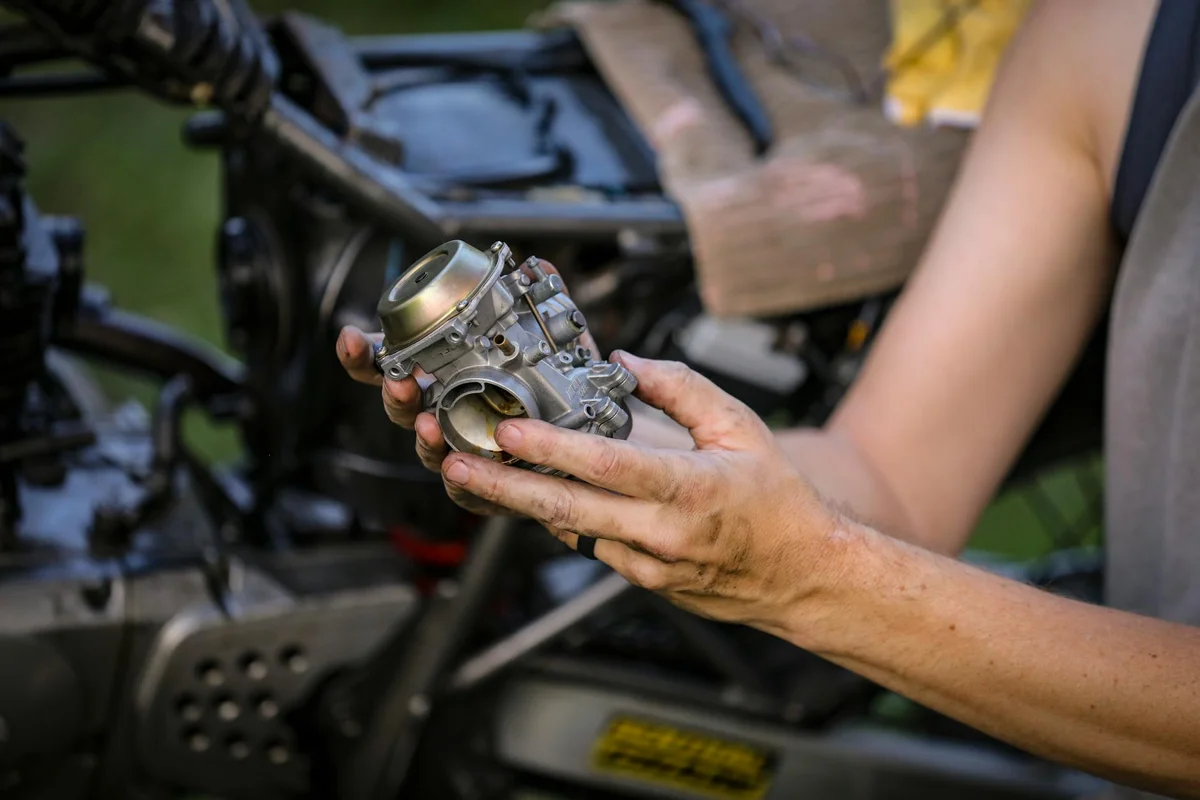
The best way to find and identify your mower’s carburetor is to grab your owner’s manual first and look for that small, metal box attached between the air filter and the engine. Taking a moment to locate it now, when the mower is cool and off, saves a lot of hassle later when you need a quick clean or adjustment.
Being a good steward of your tools means being mindful of the environment they work in. A well-maintained carburetor runs cleaner, wastes less fuel, and helps you keep that thick, green lawn we all want, one simple check at a time.
References & External Links
- Where is the carburetor on a lawn mower? | Top Ten Reviews
- Where is the Carburetor on a Lawn Mower? (every type of mower)
- How To Clean the Carburetor on a Lawn Mower | Cleaning a Mower Carburetor – DIY Repair Clinic
- Where is the Lawn Mower Carburetor?
- Carburetor on a Lawn Mower: Cleaning DIY Guide
- How To Locate A Carburetor On A Lawn Mower – Hunker
Written by Ria Carrington. Ria is an avid lawn care enthusiast and advisor. No lawn is unsalvagable when Ria is at work. She has helped countless homeowners breath new life into their dying lawns. She has a B.Sc in Agriculture and brings practical advice combined with knowledge of plant science and her decade worth of hands on experience.