
How Much Grass Seed Do I Need? Your Simple, Money-Smart Guide
Figuring out grass seed quantities stops you from wasting cash on extra bags or scrambling for more mid-project. I’ll help you get it right the first time.
We will cover how to measure your lawn area correctly, read seed bag labels like a pro, adjust for overseeding versus a full renovation, and my tested tips to use every seed efficiently.
I’ve calculated seed for my own lawn countless times, with Max the mower parked nearby, learning through trial and error.
At a Glance: Key Factors That Change Your Seed Math
- The specific grass type you pick has the biggest impact on how much seed you’ll need. Fine fescue seeds are tiny, so you use more per square foot than with larger Kentucky bluegrass seeds.
- Overseeding a thin lawn uses about half the seed compared to planting a brand new lawn. Existing grass gives you a head start, so you’re just filling gaps, not covering bare dirt.
- Always buy about 10% more seed than your math says to cover losses from birds or uneven spreading. I keep a little extra in the garage for touching up thin spots later.
- Your soil’s condition and local weather patterns can nudge seeding rates up or down. Tough, compacted soil might need a heavier seeding rate to ensure good contact and germination.
Quick Snapshot: What Type of Grass Do You Really Need?
This choice sets everything else in motion. Cool-season grasses, like Kentucky bluegrass, grow best when temperatures are mild in spring and fall. Warm-season grasses, like Bermudagrass, come alive in the summer heat and go dormant when it gets cold. Planting the right one for your region is the single best thing you can do. Your local climate—winter lows and summer highs—largely dictates which type will thrive. Aligning your choice with climate sets the stage for a healthier lawn and even less water. It means less water from Sunny, my drip system, and fewer products needed, which is safer for pets and pollinators.
| Grass Type | Season Type | Sun/Shade Tolerance | Best Time to Plant |
|---|---|---|---|
| Kentucky Bluegrass | Cool-season | Needs full sun | Early fall |
| Tall Fescue | Cool-season | Handles sun to moderate shade well | Early fall |
| Fine Fescue | Cool-season | Excellent for shade | Early fall |
| Bermudagrass | Warm-season | Requires full sun | Late spring to early summer |
| Zoysiagrass | Warm-season | Good sun tolerance, handles some shade | Late spring |
Think of it like choosing clothes for the weather. Putting a sun-loving Bermudagrass in a shady yard is like wearing a winter coat in July. It just won’t thrive.
Step 1: Measure Your Lawn Like a Pro (No Fancy Tools Needed)
Guessing is a sure way to waste money and seed. An accurate square footage number is your foundation. All seed bag rates are listed per 1,000 square feet, so you need your number in that language. Here’s how I do it without any fancy gear.
Break it into shapes. Look at your lawn from your window. Most are a collection of rectangles, triangles, or circles. Grab a notepad and sketch it. Measure the length and width of each rectangle with a tape measure. For triangles, measure the base and the height. Add all the areas together. It’s middle school math, but it works every time.
Use a free phone app. This is my go-to now. Apps like Google Earth or basic lawn measure tools use satellite images. You just tap the corners of your lawn on the screen, and it calculates the square footage for you. It’s surprisingly accurate and saves you from walking the whole property.
The old-fashioned pace method. No tape measure? No problem. Walk the length of your lawn, counting your steps. Do the same for the width. An average adult pace is about 3 feet. Multiply your length steps by 3, and your width steps by 3, then multiply those two numbers together to get a rough square footage. It’s not perfect, but it’ll get you in the ballpark for a quick estimate.
I’ve measured my lawn more times than I can count, often while walking behind Max. The key is to not overcomplicate it. Get a number, write it down, and move to the next step. That damp, earthy smell underfoot while you’re measuring is the smell of a project starting right.
Step 2: Crack the Code on Grass Seed Bag Labels
You grab a bag of seed, and the first thing you see is a bunch of numbers and terms. It can feel like a secret language. Let’s translate it.
Look for the words “Seeding Rate.” You’ll always see it listed as something like “4 lbs per 1,000 sq ft.” This is your golden rule. It simply means that for every 1,000 square feet of your lawn area, the seed company recommends using 4 pounds of that specific seed mix.
To find your total seed, just divide your total lawn square footage by 1,000, then multiply by the seeding rate number. This will give you an estimate for budgeting purposes when considering lawn establishment seeding strategies.
Now, here’s where people get tripped up. That bag usually lists two different rates: one for a new lawn and one for overseeding. The new lawn rate is always higher. You might see “New Lawn: 4 lbs / 1,000 sq ft” and “Overseeding: 2 lbs / 1,000 sq ft.”
You use the heavier “new lawn” rate when you’re starting from bare dirt or have less than 50% existing grass. You’re building a lawn from scratch, so you need more seeds in the soil to guarantee a thick cover. The lower “overseeding” rate is for when you’re thickening up an existing lawn that’s already decent. You’re just filling in gaps, not covering every inch.
But why do these rates vary so much between grass types? It comes down to how each grass grows. Think about how many blades of grass come from one seed. For Kentucky Bluegrass, one tiny seed sends out underground runners called rhizomes. A single seed can spread and create a whole patch of grass. Because it spreads, you can plant fewer seeds per square foot. Tall Fescue is different. It’s a “bunch-type” grass. It grows in clumps from that one seed and doesn’t spread sideways much. To get a dense lawn, you need to sow more seeds per square foot so the clumps grow close together and knit into a solid turf.
The seeding rate on the bag is calculated by the company to account for how your specific grass type fills in space, which is why following it matters.
Greedy Grass Pro Tip
My lawn has a few trouble spots like “Patch” that are thinner than the rest but not completely bare. I found buying two different amounts of seed for one project was a pain. Here’s my fix.
For those in-between areas, I split the difference: I take the “new lawn” rate listed on the bag, cut it in half, and use that. If the new lawn rate is 4 lbs/1,000 sq ft, I use 2 lbs/1,000 sq ft for these thin zones. It’s more than a standard overseed but less than a full renovation. It saves a bag of seed compared to using the full new-lawn rate everywhere, and those spots still fill in thick and fast. I just mark these areas with some landscape flags so I remember where I spread the heavier dose.
Step 3: Do the Simple Math for New Lawns vs. Overseeding
This is where your tape measure and the back of the seed bag meet. The math isn’t complicated. Think of it like a recipe. You wouldn’t dump a whole bag of flour into a single batch of cookies. Grass seed has a recommended rate for a reason. Too little, and you get a thin, weedy lawn. Too much, and you waste money and create a crowded mess where seedlings fight each other to the death.
The golden rule is to always check your specific seed blend’s label for its recommended “seeding rate,” but the industry provides standard formulas to get you in the ballpark.
The Two Formulas You Need
You’ll do one simple calculation. The only thing that changes is the number you plug in.
- For a Brand New Lawn (or a Complete Renovation): (Your Lawn Area in sq ft / 1000) x New Lawn Seeding Rate = Total Pounds of Seed Needed.
- For Overseeding an Existing Lawn: (Your Lawn Area in sq ft / 1000) x Overseeding Rate = Total Pounds of Seed Needed.
The “New Lawn” rate is always higher. You’re starting from bare dirt. The “Overseeding” rate is lower because you’re just filling in gaps between your existing grass plants.
Let’s Run a Real-World Example
Say your yard, the one you mow every Saturday with Max, is 5,000 square feet. You’re overseeding this fall to thicken it up and crowd out Patch’s favorite weed friends.
Your seed bag says the overseeding rate is 2 pounds per 1,000 square feet.
- First, divide your lawn area by 1,000: 5,000 / 1,000 = 5.
- Then, multiply that by the overseeding rate: 5 x 2 pounds = 10 pounds total.
You’d need 10 pounds of that specific seed for your project. If this were a new lawn with a rate of 4 pounds per 1,000 sq ft, you’d need 5 x 4 = 20 pounds.
Buying a little extra, maybe 10-15% more, is smart insurance for corners, thin spots, and the handful that always seems to miss the spreader.
How Many Bags for Big Projects? (The Acre Answer)
Maybe you have a bigger property, or you’re just curious. I see people search “how many 50 lb bags of grass seed per acre” all the time. Let’s solve it.
One acre is 43,560 square feet. We’ll use a common new lawn rate for tall fescue, which is about 6 pounds per 1,000 sq ft.
- 43,560 / 1,000 = 43.56
- 43.56 x 6 pounds = 261.36 pounds of seed needed for one acre as a new lawn.
Now, for 50-pound bags:
- 261.36 lbs / 50 lbs per bag = 5.23 bags.
So you’d need to buy six 50-pound bags to cover that acre (since you can’t buy 0.23 of a bag). For overseeding at half the rate (3 lbs/1000 sq ft), you’d need about 130.7 pounds, or three 50-lb bags.
| Project Type | Rate (per 1000 sq ft) | Seed for 1 Acre | 50-lb Bags Needed |
| New Lawn | 6 lbs | ~261 lbs | 6 Bags |
| Overseeding | 3 lbs | ~131 lbs | 3 Bags |
Remember, your seed’s label is the final boss here. These numbers are a trustworthy guide, but always defer to the instructions you paid for.
Step 4: Adjust for Your Lawn’s Real-World Conditions
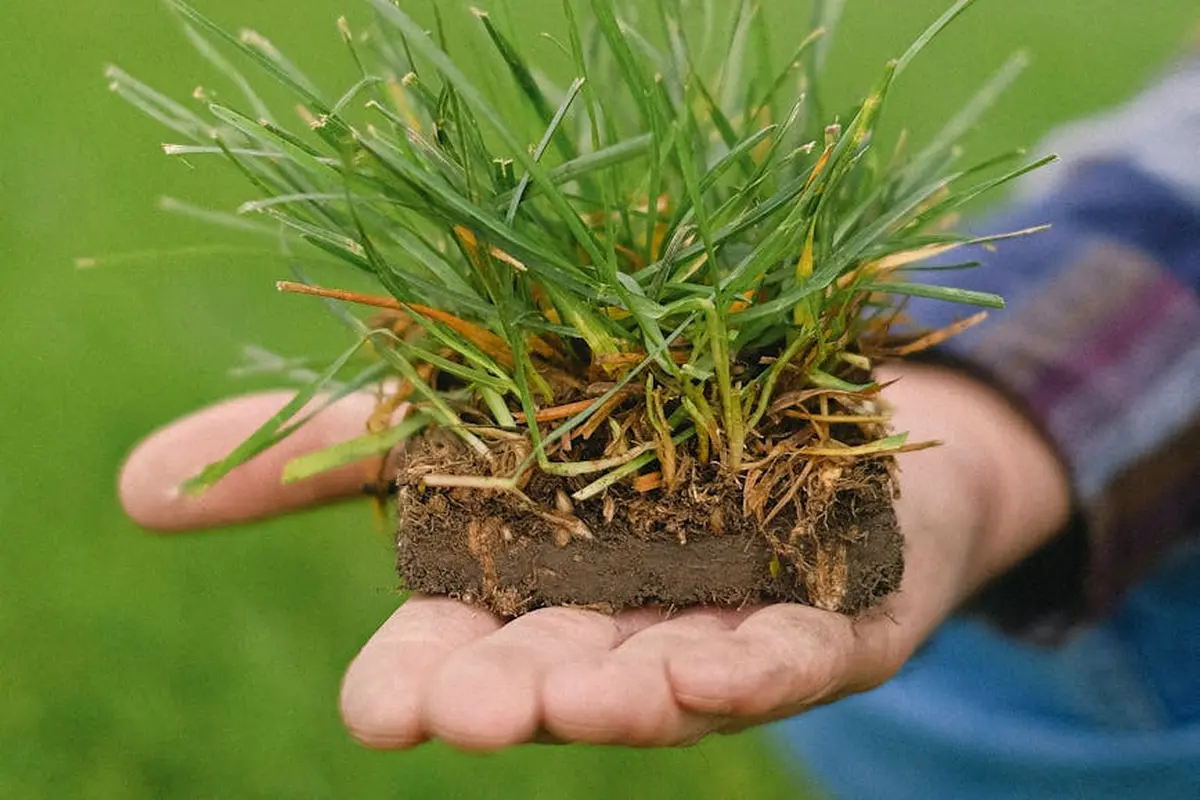
The math on paper is clean. Your real lawn is not. It has dips, shadows, and spots where the dog always runs. That basic seed calculation needs a reality check for the seed mix.
You will almost always need more seed than a perfect square footage formula suggests. Here’s why and where to add it.
Where Your Lawn Demands Extra Seed
Think of your lawn like a patchwork quilt. Some squares are easy to sew. Others are tricky. For the tricky spots, you overseed. This means putting down extra seed on top of your base rate to ensure it fills in.
Plan to buy 25-30% more seed for these common trouble areas:
- Shady Areas: My spot, Patch, taught me this. Grass needs sun. In shade, germination is slower and thinner. You compensate with more seed.
- Slopes: Water runs downhill, taking lightweight seed with it. A heavier seeding rate helps ensure enough stays put to root.
- Poor or Compacted Soil: If your soil is hard like a parking lot or sandy like a bunker, seeds struggle. More seed increases the odds some find a good home.
- High Traffic Zones: The path to the shed, the kids’ soccer goal area. These spots get worn. Seeding them thicker from the start builds a more durable lawn.
Special Case: Seeding Around a Gum Tree (or Any Tree)
I see this question a lot, especially about gum trees. It’s a triple threat: deep shade, thirsty surface roots, and a canopy that blocks rain. Your standard grass mix will fail here.
You need a two-part strategy. First, pick the right seed. Look for a shade-tolerant mix. Fine fescues are a great choice for dry shade under trees. They don’t demand as much sun or water.
Second, you must adjust your quantity. For an area under a mature tree, I’d use at least 40% more seed than the bag’s normal rate. You’re fighting against nature, so you need all the help you can get. Clear away leaf litter so seed hits soil, water lightly but more frequently to compensate for the roots, and accept that it might always be a bit thinner.
The Golden Rule: Always Buy Extra
Here’s my non-negotiable tip from years of spilled bags and hungry birds. After you do all your math-after you add for slopes and Patch and the gum tree-add one more bag, or increase your total order by 10-15%.
This buffer covers three real-world problems:
- Spillage: You will drop some. The wind will take some. It happens.
- Thin Spots: Two weeks after seeding, you’ll see a bare spot you missed. That extra seed is for touch-ups.
- Bird & Pest Loss: Birds love seed. A light layer of peat moss can help, but they’ll still get some.
It’s far better to have a little left over for fall touch-ups than to run out when you’re three-quarters done. I always round up.
How to Buy the Right Amount (Without Wasting Money)
You’ve done the math. You know your square footage. Now you’re standing in the aisle at the garden center staring at a wall of seed bags. This is where a plan saves your wallet. Let’s talk bag sizes.
You’ll typically find grass seed in bags of 1 lb, 3 lbs, 5 lbs, 7 lbs, 20 lbs, and 50 lbs. The small bags are convenient, but you pay a premium per pound. The big bulk bags are far more cost-effective, but they’re a commitment. I think of it like this: if your entire project needs 15 lbs of seed, buying three 5 lb bags is like giving the store extra money for the privilege of more plastic. A single 20 lb bag is the smarter buy.
The real choice comes down to your lawn’s size and your storage space. If your garage looks like mine, with Max the mower and a shelf for Sunny’s irrigation parts, a giant 50 lb bag that sits for a year can attract moisture and pests. For a small to medium lawn (under 5,000 sq ft), a couple of the mid-sized bags often makes sense. For a big project, the bulk bag is your friend, but be ready to store it properly in a cool, dry place, sealed tight.
Why a Little Extra Seed is a Smart Investment
Here’s my rule of thumb: always buy about 10-15% more seed than your math says you need. Why? Two reasons. First, measuring your lawn isn’t perfect. Those curves around flower beds and that weird triangle by the driveway eat up more seed than you think. Second, and more important, you will need it later for patching and maintaining a healthy lawn.
Even with perfect preparation, some areas might germinate poorly. Birds will take some. A sudden dry spell might affect a patch. Having that extra half-bag in the garage means you can spot-seed those thin areas in a few weeks without buying a whole new bag for a 10-square-foot patch. I’ve saved so many weekend projects from frustration because I had leftover seed for Patch, my problem corner. Buying a $20 bag now to fix a $5 problem later is just bad lawn economics.
Reading the Bag: Your Seed Quality Cheat Sheet
Don’t just grab the prettiest bag. Flip it over and look for the analysis label, usually in a small box. This is where you see what you’re really buying. Two numbers matter most.
Look for the Germination Rate. This tells you what percentage of the seeds are actually alive and expected to grow. 90% or higher is excellent. Anything below 80% means you’re paying for a lot of dead, useless seeds.
Next, find the Weed Seed percentage. You want this number to be as close to 0.0% as possible. I won’t buy a bag with more than 0.1%. Why would you intentionally pay to plant weeds in your freshly prepared soil? It’s like buying a bag of flour that’s 5% sawdust. A quality seed blend might cost a few dollars more, but you’re paying for pure grass, not future problems.
Spend that extra minute reading the label. It’s the simplest way to ensure your hard work and careful calculation pays off with a thick, healthy lawn, not a weedy disappointment.
What to Do After You Know Your Number
You have your bag count. Good. Now forget about it for a minute.
Hitting a perfect pounds-per-square-foot number means nothing if you drop that seed onto hard, compacted dirt. I learned this the hard way with Patch, my stubborn shady corner. I threw seed at it for two seasons with barely any results. The math was right, but the method was wrong.
Preparing your soil is the single most important step to make your seed investment pay off.
Your Seed Needs a Home, Not Just a Landing Strip
Think of soil like a bed for your new grass. You wouldn’t want to sleep on a concrete slab. Grass seed doesn’t either.
Start by clearing the stage. Remove any debris, dead grass, or thick thatch. For smaller areas, a stiff garden rake works. For bigger projects, I’ve rented a dethatcher for Max to pull behind the mower. It’s loud, but it works.
Next, loosen the top inch or two of soil. This breaks up the crust so tender new roots can push through easily. You can use a rake, a core aerator, or a garden tiller for very damaged spots. The goal is a loose, crumbly surface.
The Magic of Seed-to-Soil Contact
This is the secret. Every single seed needs to be nestled gently into the soil, not sitting on top like a tiny island.
After spreading your seed, go back over the area. Don’t bury it deep. Just rake the soil lightly to cover most seeds. Some will still be visible, and that’s okay. For large lawns, a lawn roller half-filled with water does this job perfectly. It presses the seed down just enough.
Without good contact, seeds wash away, dry out, or become bird food, and your careful calculation is wasted.
Water is the On Switch (Sunny’s Time to Shine)
Watering starts the germination engine. But you must be gentle. A powerful blast from a hose will create puddles and wash your neatly placed seed into piles.
You want a fine, misty spray that keeps the top inch of soil consistently damp, like a wrung-out sponge. This is where my drip system, Sunny, is a hero. Set on a timer, it provides a slow, steady soak without any disturbance.
If you’re hand-watering, do it lightly two or three times a day, especially if it’s sunny and warm. The key is consistency. Letting the seedbed dry out kills the baby grass.
The One Thing to Avoid: Most Weed Killers
This is critical. If you plan to seed, you must stop using most standard pre-emergent herbicides. Products like Prodiamine or Dithiopyr work by creating a barrier in the soil that stops seeds-all seeds-from sprouting. That includes your expensive new grass seed.
There is one specific exception for when you are seeding: mesotrione (sold as Tenacity or others). It can suppress some weeds while allowing grass seed to germinate. It’s a specialized tool, not a general weed killer. If you’re unsure, the safest rule is to simply avoid any weed control product on the seedbed unless the label explicitly says it’s safe for seeding.
First Steps for New Grass
Once you see green fuzz, keep up the gentle watering. Don’t mow until the grass is about one-third taller than your desired mowing height. When you do mow, make sure your mower blade is razor-sharp. A dull blade shreds tender seedlings.
Go easy on the new area. No foot traffic, no pets, no soccer games for at least a few weeks. Let those young roots get a firm grip on their new home.
Your Grass Seed Questions, Answered
I did the math, but how do I handle weird areas like steep slopes?
For slopes, bump up your seed amount by 25-30% on top of your base calculation using the seed calculator. The extra seed compensates for wash-out and ensures a thick, erosion-fighting stand of grass.
Is it worth buying a bigger bag of seed than I need?
Absolutely. Always buy 10-15% more than your math says. Having that extra half-bag in the garage lets you fix thin spots later without a whole new purchase.
What’s the trick for seeding under a big gum tree?
Use a shade-tolerant fine fescue mix and apply 40% more seed than the bag rate. You’re battling dry shade and roots, so give those seeds a fighting chance.
Should I just sod it instead? Is seed really cheaper?
For large areas, seed is almost always the money-smart choice. Sod gives instant gratification, but seeding costs a fraction and offers more variety for your specific conditions. When you weigh grass seed vs sod by cost, time, and effort, the choice becomes clearer. Seed takes longer to establish but costs less; sod yields quicker results with higher upfront costs.
I saw people on Reddit in Victoria struggling with lawn seed under gum trees. Any specific advice?
The Reddit wisdom is right-it’s tough. Follow the two-part strategy: choose the right shade blend and significantly increase the seeding rate. Local forums are great for finding which specific varieties perform best in your micro-climate.
Let’s Get Seeding and Grow That Lawn
Get your square footage and do the math. Focus on prepping your soil well, because great seed in poor ground is just a waste of your weekend. That’s the real win.
From my spot to yours, remember a healthy lawn is part of a bigger picture. Choose seed mixes that support pollinators and use any fertilizers responsibly, keeping pets and local waterways in mind. The best lawns come from learning a little more each season and working with what you’ve got.
References & External Links
- Grass Seed Calculator
- How Much Grass Seed Do I Need Per Square Foot? | D & L Supply
- How Much Grass Seed Do I Need? A Practical Guide for Pennsylvania Lawns
- Yard Calculator
- How to Calculate Grass Seed Per Acre for a Perfect Lawn
- How Much Grass Seed Are You Really Getting in That Bag? • GreenView
Written by Ria Carrington. Ria is an avid lawn care enthusiast and advisor. No lawn is unsalvagable when Ria is at work. She has helped countless homeowners breath new life into their dying lawns. She has a B.Sc in Agriculture and brings practical advice combined with knowledge of plant science and her decade worth of hands on experience.