
Why Won’t My Lawn Mower Start? Your Straightforward Fix-It Guide
That sinking feeling when your mower just clicks or sputters is all too real. Let’s turn that frustration into a quick, cheap fix you can do yourself.
This article will walk you through the usual suspects, starting with bad gasoline, a tired spark plug, a choked air filter, and simple safety locks.
I’ve sorted this exact problem more times than I can count on my own mower, Max, saving hundreds on mechanic visits.
At a Glance: Quick Checks Before You Dive Deep
Before you get frustrated and start taking things apart, run through this list. I do this with Max every single spring. It takes about 60 seconds and solves the problem 80% of the time.
- Check the Gas Tank. It sounds obvious, but it’s the number one reason a mower won’t start. Don’t just look at it. Slosh the mower a little and listen. If it’s low, fill it with fresh fuel, not the gas that’s been in your can since last fall.
- Find the Spark Plug Wire. Trace the thick rubber wire from the engine. It should be firmly snapped onto the top of the spark plug. Sometimes it gets bumped loose during storage or cleaning. Push it on until you hear or feel a solid click.
- Is the Blade Engagement Lever Disengaged? Most mowers have a safety feature. If the lever that engages the blades is pulled, the engine won’t start. Make sure it’s in the ‘off’ position.
- Check the Choke or Throttle. For a cold start, the choke should usually be on. If your engine is warm from a recent try, it should be off. Setting it wrong floods the engine or starves it of fuel.
- Prime It Three Times. If your mower has a primer bulb (a small, soft rubber button), press it firmly three times. You’re just giving the engine a little extra fuel to get the party started.
Start with these five checks. If your mower still refuses to cough to life, then we move on to the deeper, tool-required fixes. Even my reliable Max has had his spark plug wire pop off after a bumpy ride back to the shed.
Tools You’ll Need for This Job
You don’t need a fancy toolbox. These are the basics I keep in a small bucket in my garage just for mower season. Having them ready turns a headache into a 20-minute fix.
- Fresh Fuel & Fuel Stabilizer: Old gas turns to varnish and clogs everything. Fresh gas is your mower’s best friend. A bottle of stabilizer keeps it fresh in the can for months.
- Spark Plug Wrench/Socket: This is usually just a deep socket that came with your mower. It fits perfectly over the spark plug so you can remove it to check or replace it. If you lost yours, any socket set will have one that fits.
- New Spark Plug: These are cheap and wear out. Having a spare on hand is smarter than making a last-minute trip to the store.
- Basic Multimeter or Battery Charger: For electric-start mowers. A multimeter checks if the battery is dead. A simple trickle charger can bring a weak battery back to life overnight.
- Safety Glasses & Work Gloves: Not just for show. Glasses keep dirt and debris out of your eyes when you’re peering at the engine. Gloves keep your hands clean and protect them from hot metal and sharp edges.
- A Small Wire Brush or piece of Sandpaper: Useful for cleaning corrosion off battery terminals or the end of a spark plug. Think of it like scrubbing tarnish off an old penny to make it shiny again.
The Engine Won’t Turn Over or Just Clicks: Fuel and Basic Mechanics
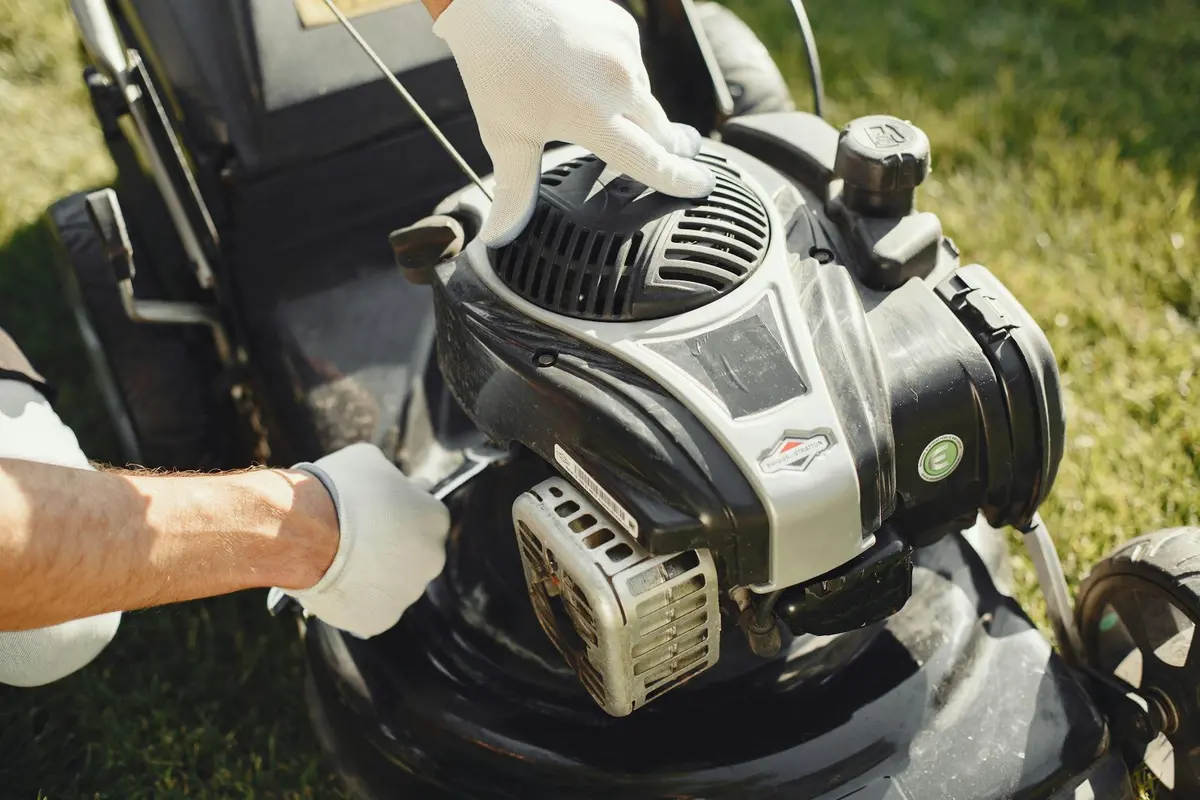
You turn the key or pull the cord, and you get a single, sad click. Or maybe it cranks once and then goes silent. Max, my trusty zero-turn, taught me this lesson the hard way one April after a long winter nap. This almost always points to a fuel issue or a basic mechanical block.
Nine times out of ten, a mower that won’t start after winter is sitting on a tank of bad gas. Gasoline starts to break down and turn gummy in as little as 30 days. It smells sour, like old varnish. Your engine can’t use it. Start by checking the fuel tank. That’s why having a lawn mower maintenance schedule is essential. A quick seasonal checklist keeps fuel fresh and the engine ready to start.
- Look inside. Is there gas? You’d be surprised.
- If there is, smell it. Fresh gas has a sharp, clean odor. Stale gas smells flat and nasty.
If it’s stale, you need to drain it.
- Disconnect the spark plug wire for safety.
- Place a fuel-safe container under the carburetor’s fuel bowl or the tank’s drain line.
- Use a wrench to open the drain screw on the bowl, or carefully siphon the tank.
- Once empty, add fresh, ethanol-free gas if you can find it, or regular gas treated with a fuel stabilizer from the start. I treat every gallon that goes into my cans.
Next, use the choke. A cold engine needs a richer fuel mix to start. If your mower won’t start just clicks on a cool morning, you probably forgot the choke. Set the lever to “Choke” or “Start” before your first pull. Once the engine sputters to life, move it to “Run” halfway through. If it dies, go back to choke and try again. It’s a dance. Different mower types have their own starting quirks. We’ll cover how to start and operate various lawn mower types in the next steps.
Now, check the oil. Too little oil can trigger a safety switch that prevents starting, protecting your engine from a costly meltdown. Find the dipstick, wipe it clean, screw it back in, and pull it out to check. Top it up to the full line with the oil type recommended in your manual. Don’t overfill it, that can cause its own smoky problems.
Finally, do the rock test. Sometimes a stick or clump of grass jams the blade, locking the engine. With the spark plug wire disconnected, carefully tip the mower on its side (air filter up). Give the blade a gentle rock with a gloved hand. If it’s stuck, clear the debris. If it spins freely, the problem is elsewhere. Regular maintenance, like cleaning the air filter and inspecting the spark plug, can prevent these issues from recurring. For more on fix lawn mower problems and basic maintenance, see the next steps.
Is Your Fuel Line Clogged or Your Carburetor Gummy?
Sometimes the tank has fresh gas, but it’s not reaching the engine. If your mower starts but then sputters and dies, or if it won’t start when hot, you might have a clog in the fuel pump or fuel line.
First, trace the fuel line from the tank to the carburetor. It’s a small, black rubber hose. Squeeze it. You should feel fuel inside. Look for cracks, kinks, or a filter (a small plastic or metal cylinder in the line) that’s dark brown and clogged. A clogged filter is a five-dollar fix.
If gas isn’t flowing, the culprit is often a gummed-up carburetor, which is the heart of your mower’s fuel system. That stale gas varnish I mentioned? It hardens inside the carb’s tiny jets and passages, like syrup hardening in a straw. You can try a fuel additive designed to clean it, but for a mower that’s been sitting for years, a physical cleaning is often needed.
I consider a carb clean a last DIY step before calling a pro. It involves taking the carb off, dismantling it, and cleaning every port with carb cleaner and a thin wire. It’s satisfying, but if you’re not comfortable, a small engine shop can do it reasonably.
What to Do If You Turned the Mower On Its Side
We’ve all done it to clean the deck or unclog a blade. Then you right it, pull the cord, and… nothing. A mower won’t start after turning on its side because oil and gas can flood places they shouldn’t be, especially if it has been stored for a while.
When you tip it wrong (air filter down), oil can flow into the piston cylinder and air box, while gas soaks the air filter. The engine can’t compress a liquid or get clean air.
Here’s the fix. Always, always disconnect the spark plug wire before doing any of this.
- Remove the air filter cover and take out the filter. If it’s soaked with gas or oil, replace it. A foam filter can sometimes be washed and dried.
- Use a socket wrench to remove the spark plug.
- With the plug out, pull the starter cord 5-10 times. This will pump any excess oil or fuel out of the cylinder through the open hole. Point the plug hole away from you.
- Clean off the spark plug with a little brake cleaner and a wire brush, let it dry, or just put in a new one.
- Reinstall the spark plug and reconnect its wire. Reinstall the clean, dry air filter.
- Try starting again. It might smoke a bit at first as it burns off the residual oil.
It Cranks But Won’t Fire Up: Spark and Air
Now we’re to the second major category. The engine spins when you pull the cord, but it just won’t catch and roar to life. Max is cranking, but he’s not firing. This is a classic sign of an ignition or air problem. We’ve ruled out fuel, so let’s look for spark.
When a mower cranks but won’t start, the spark plug is the very first thing you should check. If your mower starts and then stops, this quick check is still a good first step. You may also want to inspect the fuel and air delivery. Locate it on the side of the engine cylinder. It has a thick, rubbery wire attached to it.
Disconnect that wire, then use a spark plug socket to unscrew the plug. Look at the business end. A good plug has a light tan or gray insulator and electrodes that aren’t melted. A bad plug is fouled with black, wet carbon, has burnt or eroded electrodes, or the ceramic is cracked. If it looks nasty, replace it. They cost about five dollars.
You can also test for spark. Reconnect the plug wire to the removed plug. Hold the plug’s metal body against a clean, unpainted part of the engine block. Have a helper pull the starter cord (or turn the key). You should see a bright, snapping blue spark jump across the gap. No spark? You have an ignition problem. A weak yellow spark means trouble too.
If the plug is good but you get no spark, the issue could be the ignition coil, which generates the electrical charge. This is less common, but testing it usually requires a special tool. If you’ve confirmed no spark with a known-good plug, the coil is the likely suspect.
Is Your Engine Getting Air?
An engine needs three things: fuel, spark, and air. We often forget about air. A clogged air filter is like trying to run a marathon while breathing through a coffee stirrer.
Find the air filter housing, usually a black plastic box near the carburetor. Unlatch or unscrew the cover. Inside is either a pleated paper filter or a foam filter.
A dirty air filter starves your engine of oxygen, making it run rough or not start at all, and it’s the simplest fix in your shed. For a foam filter, wash it in warm, soapy water, rinse, let it dry completely, and lightly re-oil it if the manual says to. For a paper filter, tap it gently on a hard surface to dislodge loose dirt. Don’t wash a paper filter.
If it’s caked with grime and dust, just replace it. A new filter is cheap insurance for easy starts and a longer engine life. I check mine every few months during heavy mowing season.
Electrical Gremlins: Batteries, Solenoids, and Safety Switches
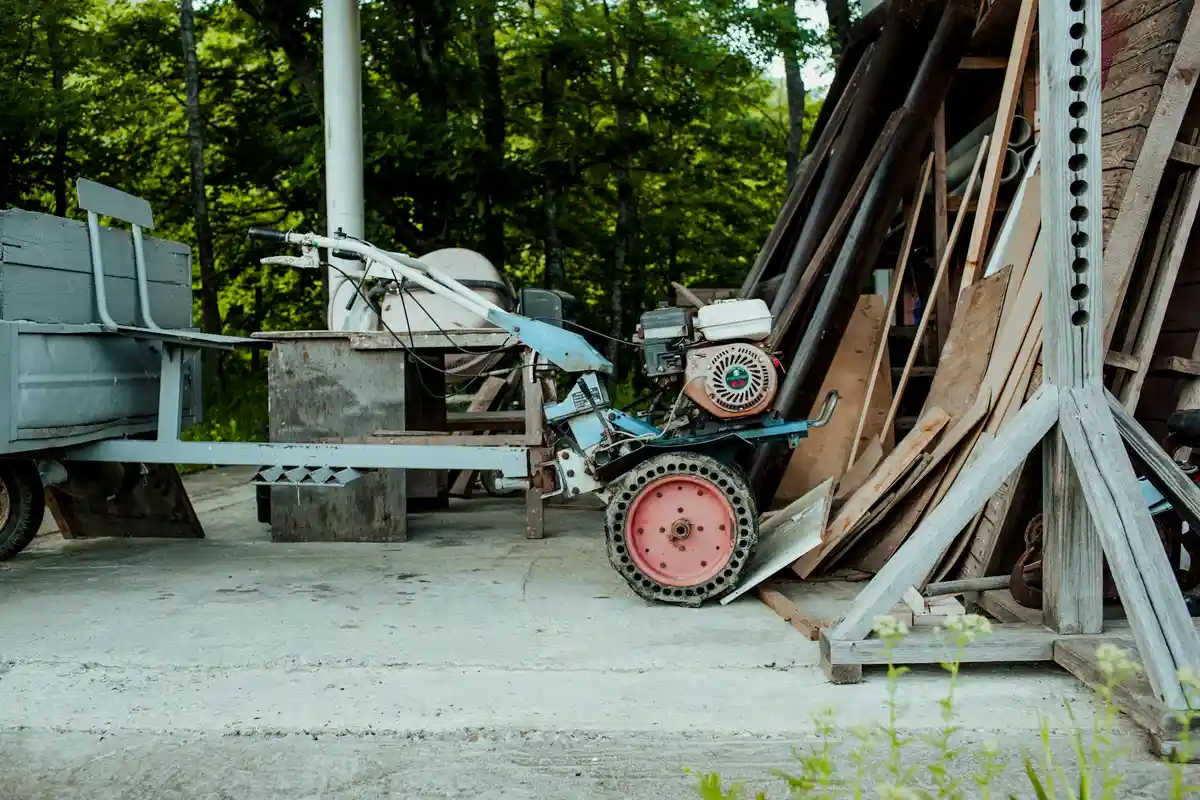
If your engine isn’t cranking at all, the issue is almost always electrical. This is true for my riding mower, Max, and for electric-start push mowers. Let’s break down the usual suspects.
The Battery: Your Mower’s Heartbeat
Think of your battery like the heart of the starting system. It needs to be strong and connected. A “dead” battery is the most common culprit.
First, check the connections. Are the terminals tight? Look for that white, crusty powder (corrosion). If you see it, disconnect the battery (negative cable first) and clean the terminals with a wire brush and a paste of baking soda and water. Rinse and dry completely before reconnecting.
To know for sure, test the battery voltage with a multimeter. Set it to DC Volts (the V with a straight line). Touch the red probe to the positive (+) terminal and the black to the negative (-). A fully charged 12-volt battery should read about 12.6 to 12.8 volts. If it’s reading 12.0 or lower, it needs a charge.
Here’s a quirk I’ve learned: a mower won’t start in cold weather even with a new battery sometimes. Cold temperatures sap a battery’s available power. If your battery is marginal, a chilly spring morning can be enough to stop it from turning the engine over. A trickle charger kept on it in the garage during winter solves this.
The Mysterious Solenoid: That Single “Click”
You turn the key and hear one solid “CLICK,” but nothing else happens. That’s often the starter solenoid. Its job is to be a high-power switch, connecting the battery directly to the starter motor. A bad solenoid clicks but doesn’t pass the juice.
There’s a way to test it, but you must be extremely careful. This is the screwdriver jump method.
- Ensure the mower is on a flat surface, the parking brake is set, and the transmission is in neutral. Disconnect the spark plug wire for extra safety.
- Locate the solenoid. It’s a small cylinder usually mounted near the battery or starter. It will have two large copper posts.
- Using a large, insulated screwdriver, carefully bridge the gap between those two large posts. Do not touch any other metal part.
If the engine suddenly cranks when you bridge the posts, the solenoid is bad and needs replacing. If nothing happens, the issue is likely the starter motor itself or the battery doesn’t have enough power. Wear gloves and eye protection, and keep your hands clear.
The Silent Watchdogs: Safety Switches
Modern mowers have several safety switches that must be “satisfied” for the engine to crank. Their job is to prevent the mower from starting in an unsafe condition. If one fails or isn’t engaged, it acts like a broken wire.
On a rider like Max, check these three:
- Seat Switch: You must be sitting in the seat. Try applying some weight and wiggling. A faulty switch won’t know you’re there.
- Brake/Clutch Pedal Switch: The brake pedal must be fully depressed. Sometimes the switch adjustment gets out of whack.
- Blade Engagement (PTO) Switch: The blade clutch must be fully disengaged (turned off). Make sure the lever is completely in the “off” position.
The best way to check a switch is with a multimeter set to test continuity, but a visual inspection for loose wires or obvious damage is a good first step.
When to Seek Professional Help
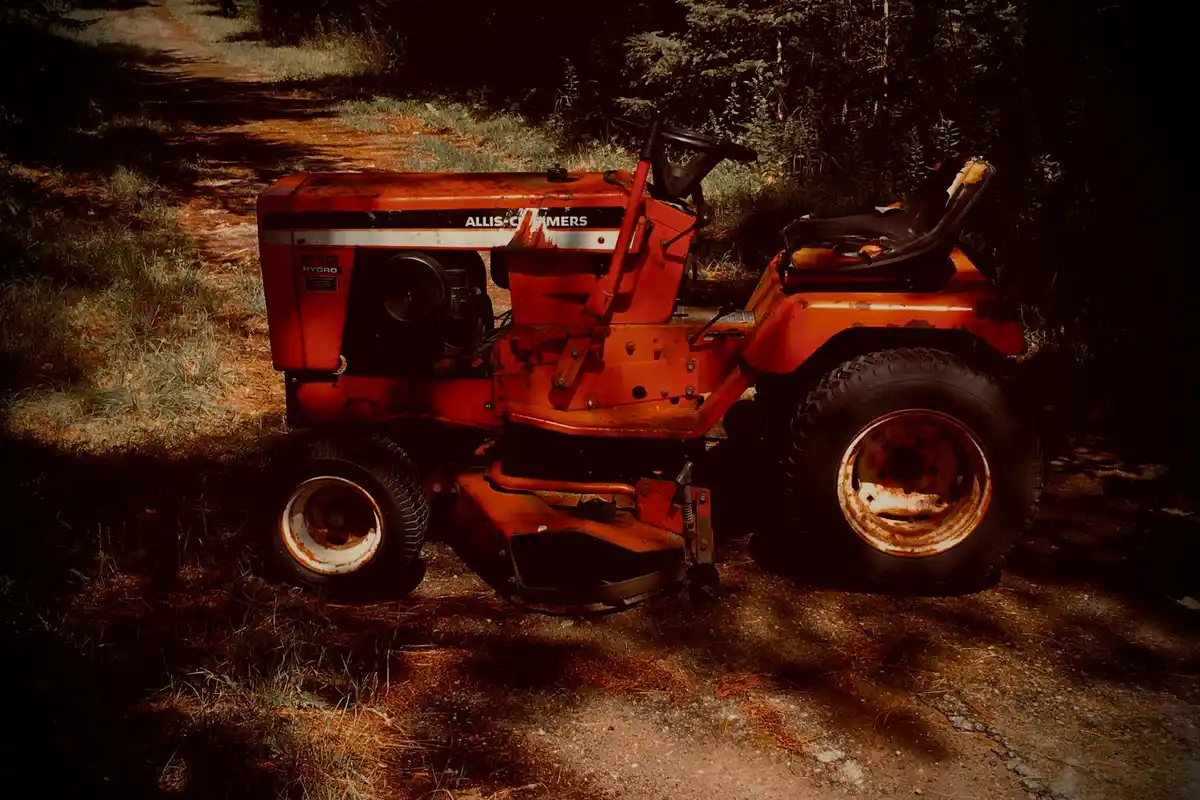
You’ve checked the gas, the spark, and all the electrical connections. You’ve cleaned the carburetor bowl and tested the battery. Sometimes, the problem is bigger than a weekend project.
Knowing when to call a pro is a sign of a smart homeowner, not a defeated one. It saves you time, frustration, and can prevent you from causing more expensive damage. Sometimes, Max needs a doctor, not just his owner.
Here are clear signs the problem is beyond basic DIY:
- You hear a loud grinding, knocking, or screeching sound when you try to start it. This points to serious internal engine damage.
- You change the oil and find metal shavings or glitter in it. This is a telltale sign of worn internal components.
- You’ve methodically checked every single item in a troubleshooting guide and the mower still refuses to start or run.
- You see signs of a blown head gasket (milky oil, white smoke, coolant loss) on a liquid-cooled engine.
Finally, consider cost versus value. If your mower is 15 years old, needs a engine rebuild costing $600, and a key deck spindle is also rusted out, pouring money into it might not make sense. A reputable small engine shop can give you an honest diagnosis and help you weigh a repair against investing in newer, more reliable equipment.
FAQs: Your Quick-Start Questions, Answered

My mower sat all winter. What’s the first thing I should check?
Check for bad gas. Old fuel turns to varnish and clogs the carburetor. Drain the tank and fill it with fresh, stabilized gasoline to get that engine greedy for green again.
I turn the key and just hear a single “click.” What’s happening?
That single click usually points to the starter solenoid or a weak battery connection. First, clean and tighten your battery terminals, then give that solenoid a firm tap with the handle of a screwdriver-it can sometimes free a stuck connection.
Why does my mower start cold but then die when it gets hot?
This is often a classic sign of a failing ignition coil. The coil can fail once it heats up, killing the spark. Let the engine cool completely; if it starts again only to die when hot, the coil is your likely culprit.
I installed a new battery, but it still struggles in cold weather. Why?
Cold weather saps a battery’s power, and thick oil makes the engine harder to turn. Keep the battery on a trickle charger in your garage and use the manufacturer’s recommended oil weight for the season to make cold starts a breeze.
Is there a good video resource if I’m a visual learner?
Absolutely. Search for “[Your Mower Brand and Model] won’t start” on any video platform. Seeing someone check the spark plug or carburetor on a similar engine can turn a confusing manual step into a simple, five-minute fix.
Final Thoughts on a Reliable Start

The most reliable fix is often the simplest one. Start every season with fresh fuel and a clean spark plug, and you’ll avoid most starting headaches before they even begin.
Taking care of your equipment is part of taking care of your green space. A well-maintained mower runs cleaner, lasts longer, and lets you get back to the important work of growing a healthy, pet-safe lawn you can enjoy. A quick service tune-up for your lawn mower can help you maintain these benefits. Regular maintenance keeps starts easy, cuts clean, and reduces the chance of unexpected breakdowns.
Deep Dive: Further Reading
- Fixing A Lawn Mower That Won’t Start | Sea Foam
- What do you do when your lawn mower won’t start? – Quora
- Why won’t my lawn mower turn over or crank when I try to start it? – Quora
Written by Ria Carrington. Ria is an avid lawn care enthusiast and advisor. No lawn is unsalvagable when Ria is at work. She has helped countless homeowners breath new life into their dying lawns. She has a B.Sc in Agriculture and brings practical advice combined with knowledge of plant science and her decade worth of hands on experience.