
How Long and When Should You Water Your Lawn for a Lush, Thick Green?
If you’re staring at a high water bill or patchy grass, you can stop guessing about your lawn’s thirst.
We’ll cover the smartest time of day to water, how to calculate the perfect duration for your soil, simple checks to avoid overwatering, and eco-friendly habits that save money.
I’ve spent years perfecting this with Sunny, my drip irrigation, to get deep roots and a healthy lawn without waste.
At a Glance: Your Lawn Watering Cheat Sheet
Forget everything you think you know about lawn sprinklers. The most important rule is simple. You want to water less often, but for a longer time each session. Think of it like a good drink of water versus tiny sips all day long. Those deep drinks encourage your grass roots to grow down into the soil, searching for moisture. That builds a tougher, more drought-tolerant lawn. Following a seasonal lawn watering schedule helps you time those deep soaks. It lets you adjust duration and frequency as spring, summer, and fall change moisture needs.
This rule, however, has three big influencers. Your specific lawn’s needs hinge on:
- Grass Type: Is it a cool-season grass like Kentucky Bluegrass or a warm-season grass like Bermuda?
- Soil Type: Does your yard have sandy soil that drains fast, or heavy clay that holds water?
- Current Weather: Is it a cool, rainy week or a hot, dry blast from the sun?
This table shows how these factors play out in real life.
| Factor | Sandy Soil | Clay Soil |
| Water Holding | Like a sieve or coffee filter. Drains very quickly. | Like a dense sponge. Holds water tightly and drains slowly. |
| Watering Strategy | Shorter, more frequent watering sessions to prevent runoff. | Longer, slower soaks to let water penetrate without puddling. |
| Factor | Cool-Season Grass | Warm-Season Grass |
| Peak Thirst | Spring and Fall, when temps are mild. | Peak Summer, when growth is most active. |
| Dormancy | May go brown and dormant in summer heat to conserve water. | Goes brown and dormant in winter cold. |
Don’t let this overwhelm you. Getting it right is about observation and one simple test. I learned this with my own setup, Sunny the drip system, and it changed everything.
The Golden Rule: How Long Should You Water Your Lawn?
Your weekly mission is to deliver about 1 to 1.5 inches of water to your lawn. That total includes any rainfall. This weekly total is your north star for keeping an established lawn healthy through the season.
But how do you know what 1 inch of water from your sprinkler looks like? You run the “Tuna Can Test.” It’s the single best thing you can do this weekend.
- Grab a few empty, straight-sided tuna cans or cat food cans.
- Place them around your lawn in the zones your sprinklers cover.
- Turn your sprinklers on for 30 minutes.
- Measure the water in each can with a ruler and find the average depth.
Let’s say your cans collected an average of 0.25 inches of water in 30 minutes. Now we do the simple math to answer the big question. If you need 1 inch per week, and your system puts down 0.25 inches in 30 minutes, you need to water for 2 hours total that week (1 inch / 0.25 inches per 30 min = 4 sessions of 30 minutes).
How you split that time depends entirely on your soil, which is why the Tuna Can Test is so critical. For my sandy areas, I split that 2 hours into three shorter sessions to avoid waste. For the clay parts, I might do one deep, 2-hour soak very early on a Saturday morning, letting the water seep in slowly without sun evaporation. If you water too fast on clay, you’ll just watch it run down the driveway.
Special Case: Watering New Grass Seed and Sod
Everything we just talked about goes out the window when you’re starting from seed. A new lawn is a baby, and it needs constant care. The goal here is not deep roots yet, but constant surface moisture.
So, how long do you water new grass seed? You water very lightly, but very frequently. You’re not trying to soak the soil, just keep the top half-inch consistently damp. For most sprinklers, that might mean 5 to 10 minutes, maybe even just 2 or 3 times a day during peak sun.
This leads to the next question: do you have to water grass seed every day? For the first two weeks, yes, you absolutely do. You cannot let those tiny seeds dry out. Here is a clear schedule I’ve used to nurse many bare patches back to life:
- Weeks 1 & 2 (Germination): Water lightly 2-3 times per day to keep the seedbed moist. Think of a morning, midday, and late afternoon sprinkle if it’s hot and dry.
- Weeks 3 & 4 (Seedling Stage): Reduce frequency to once per day. Apply enough water to moisten the soil deeper, about an inch down, to encourage those new roots to go deeper.
- Week 5 Onward (Establishment): You can start transitioning to the “less frequent, deeper watering” pattern for established lawns. Water every other day, then stretch to twice a week, aiming for that 1-inch total.
This brings us to the risk. How long can grass seed go without water? In hot, sunny conditions, germinating seeds on the surface can dry out and die in less than a day. That damp, loamy smell you get after watering is what you need to maintain. If you miss a day at the start, you might see patchy germination or need to start over in those areas. I learned patience with Patch, my stubborn shady corner, by being relentless with the hose in those first few weeks.
New sod is different. It has soil and roots already, but they’re shallow and stressed from harvest. Water new sod deeply once or twice a day for the first week to prevent the seams from drying out and pulling apart. After a week or two, you can begin to taper off towards a normal schedule. The key is to never let the underlying soil dry completely while those roots knit into your native soil.
The Best Time of Day to Water Your Grass
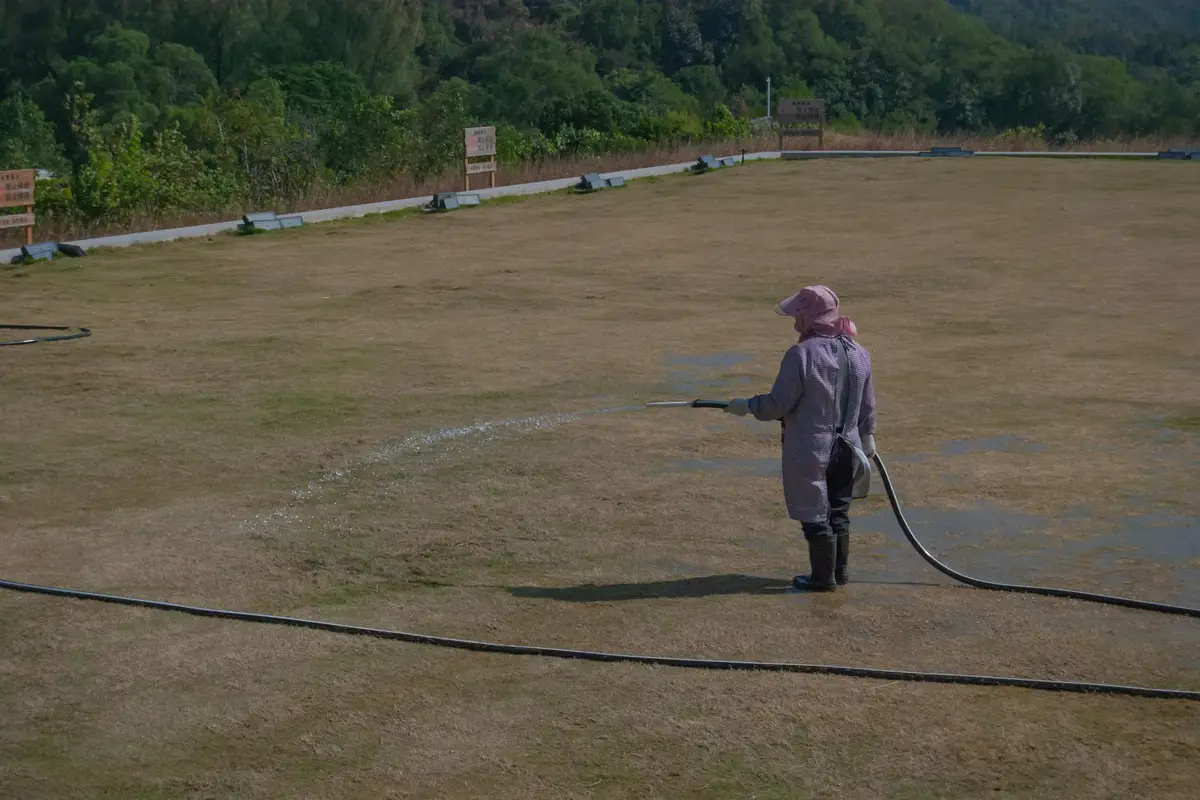
When should you water your lawn? I get asked this all the time. The simple, no-nonsense rule is to do it in the early morning. It’s especially crucial to water your lawn at the right time of day to maximize absorption and avoid evaporation.
I’m talking about that quiet window just before sunrise, when the world is still cool and calm. This is when my system, Sunny, gets to work. Watering at this time gives your grass a huge head start. The sun isn’t strong enough yet to steal your water through evaporation, so more of it soaks down to the roots where it’s needed.
More importantly, morning watering gives the grass blades time to dry off completely during the day, which is your best defense against fungal diseases. Think about how soggy your shoes get if you walk through dew. Leaving grass wet all night is like inviting fungus to a dinner party you never wanted to host.
Why Evening Watering is a Risky Move
I know the evening seems convenient. The sun’s down, you’re home from work, it feels like the right time. But it’s a gamble. Those long, damp, dark hours are perfect for diseases like brown patch to take hold. It’s the number one reason I see lawns struggle in the humid parts of the season.
Life isn’t perfect, though. If your schedule only allows for evening watering, you can still make it work with some smart adjustments. The goal is to get the grass as dry as possible before full dark.
- Water as early in the evening as you possibly can.
- Cut your watering time a bit shorter to avoid puddles and runoff.
- Make sure your lawn has good air circulation. Trim back overhanging shrubs or dense plants that block the breeze.
The Midday Mistake
Watering in the blazing afternoon heat is the worst choice you can make. I see neighbors do it sometimes, and it makes me cringe. You’re basically paying to water the air.
Up to half of your water can be lost to evaporation before it even touches the soil, making it incredibly wasteful and expensive. Those water droplets can also act like tiny magnifying glasses on the grass blades in the hot sun, potentially causing scorch marks. It’s a lose-lose situation. Trust me, let Max the mower have the midday shift, and let Sunny handle the dawn patrol.
Reading Your Lawn’s Thirst Cues
Your lawn talks to you. You just need to learn its language. The best sprinkler schedule in the world is useless if you don’t know how to look and listen. Forget complicated charts for a minute. Start with the basics right in front of you.
I learned this lesson from Patch, my stubborn shady spot. On hot afternoons, it’s the first place to show me it’s thirsty.
The Signs Your Grass is Thirsty
Look for these three clear signals before you even think about turning on Sunny, my drip system.
- Folding Blades: Healthy grass blades stand up. Thirsty grass blades fold lengthwise, like a closed book. This is the lawn’s way of reducing sun exposure to save water.
- The Blue-Gray Tint: A well-watered lawn has a rich, emerald green color. The first sign of drought stress is a loss of that luster. The green fades to a dull, blueish-gray.
- Footprint Test: Walk across your lawn in the late afternoon. If your footprints stay visible in the grass for more than a few seconds, the blades lack the water pressure to spring back. It’s like pressing on a dry sponge.
When you see these signs, your lawn is telling you it’s time for a deep, thorough drink.
The Signs Your Grass is Drowning
Yes, you can love your lawn to death with water. Overwatering is a silent killer. It creates weak roots and invites every disease and pest in the neighborhood. It’s important to know the difference between overwatering and underwatering to keep your lawn healthy and vibrant.
- Spongy Feel: The soil should feel firm, not squishy. If the ground feels soft and spongy underfoot hours after watering, you’re adding too much water too often.
- Algae or Moss: These aren’t just shade problems. They’re signs of constant surface moisture. Algae is a red flag that your soil is staying wet for days on end.
- Constant Fungus: Diseases like dollar spot or brown patch thrive in wet, humid conditions. If you’re always fighting fungus, your watering routine is likely the main cause.
Constant moisture invites root rot and disease, creating far more work than a slightly thirsty lawn ever will.
How Long Can a Lawn Go Without Water?
This is the big question, and the answer depends entirely on your grass type and the weather. There’s no single number, but here’s a practical guide.
Cool-season grasses, like Kentucky bluegrass or fescue, are built for cooler temps. In a heatwave with no water, they’ll start showing those thirst cues in 3-5 days. They can enter a dormant, brown state for about 3-4 weeks in summer heat before the crown (the plant’s heart) is at serious risk of dying.
Warm-season grasses, like Bermuda or Zoysia, are desert tough. They handle drought better. They may go 7-10 days without showing major stress and can survive dormancy for longer periods. But even they have limits. For Bermuda grass, proper fertilization can boost growth and recovery. Timing and product choice matter for a lush, resilient turf.
The real goal is to avoid dormancy if you can. A dormant lawn is surviving, not thriving. It stops growing, turns brown, and becomes vulnerable. Deep, infrequent watering is your best strategy to build roots that can search for water and survive dry spells.
The Simple Screwdriver Test: Your Best Tool
Forget guessing. This is my go-to method, and it costs nothing. After you water, or before you think you need to, grab a long screwdriver.
- Push the screwdriver straight down into your lawn soil.
- Apply steady, firm pressure. Don’t force it.
- If it slides in easily to a depth of 6 inches, your soil moisture is perfect.
- If it gets hard to push after just 2-3 inches, the soil is dry, and your grass roots are thirsty.
- If the soil is so wet it muddies the screwdriver before you even push 6 inches, you need to wait.
It’s that simple. This test tells you what’s happening in the root zone, which is all that matters. A damp surface is worthless. We need moisture deep down. This one-minute check is more accurate than any app or calendar reminder. It’s how I keep Patch and the rest of the lawn honest, and it never steers me wrong.
Common Watering Mistakes and How to Avoid Them
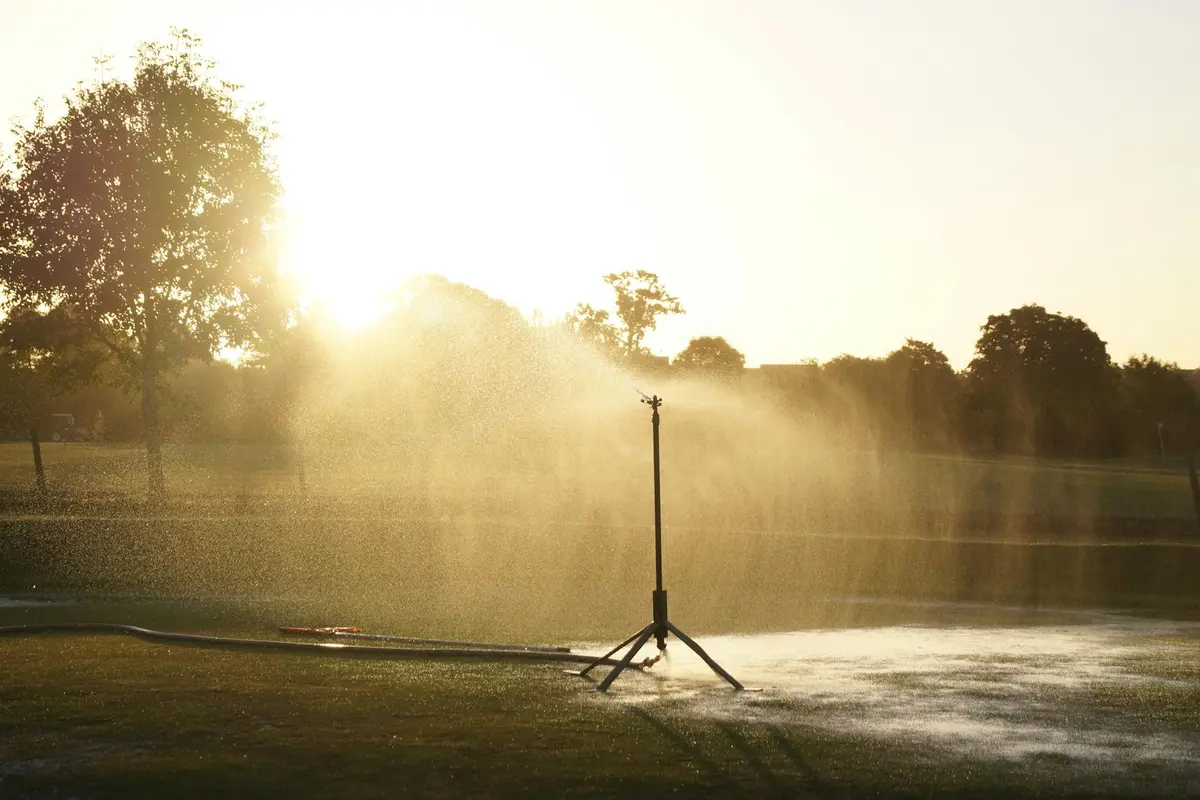
I’ve seen a lot of lawns over the years, and watering mistakes are the most common cause of thin, weedy, or sickly grass. The good news is they’re also the easiest to fix. Let’s walk through the top five.
1. Daily Light Watering
This is the biggest habit to break. Giving your lawn a quick sprinkle every morning seems right, but it trains your grass to be lazy. The roots stay shallow, right at the surface where the water is. That makes your lawn weak and panics at the first sign of heat.
Deep, infrequent watering encourages roots to grow down deep into the soil, creating a drought-tolerant and resilient lawn.
The fix is simple. Instead of ten minutes every day, water for longer, but only once or twice a week. Your goal is to soak the soil down to about six inches deep. Put an empty tuna can on the lawn; when it’s full, you’re usually in the right zone.
2. Watering in the Evening
This schedule feels convenient, but it’s an invitation for fungus. When you water at night, the grass blades stay wet for 12 hours or more. That’s a long, damp party for diseases like brown patch to move in.
Watering in the early morning, just before or as the sun comes up, is the absolute best time.
The grass gets the moisture it needs for the day, and the morning sun quickly dries the blades, shutting down that fungal party before it starts. Set your timer for sunrise, and you’ll see a difference.
3. Ignoring Your Soil Type
Not all dirt is the same. Your soil acts like a sponge, and its texture dictates everything. Heavy clay holds water tightly but absorbs it slowly. Sandy soil drains fast, like a sieve. If you water both the same way, one will drown and the other will thirst.
Do the screwdriver test. A day after watering, push a long screwdriver into the ground. If it slides in easily to about 6 inches, you’re good. If it’s rock hard, you need to water longer. If it’s soggy, you’re overdoing it.
Patch, my stubborn shady corner, is a perfect example. The soil there stays damp longer, so it needs half the water the sunny areas get. Adjust your zones if you can, or just be mindful with a hose in problem spots.
4. Accepting Uneven Coverage
If your sprinklers spray the sidewalk more than the lawn, you’re wasting water and creating weak spots. Dry areas become thin, letting weeds march right in. You can hear it sometimes-the sputter of a clogged head or the *psst psst* of a misaligned spray.
Run your system during the day and watch it. Look for dry circles, overspray, and heads that aren’t popping up all the way. Adjust or clean sprinkler heads so they overlap, creating an even blanket of water across the lawn. This one afternoon of inspection saves gallons and grief all season.
5. Watering Right After a Feeding
This is a critical timing question I get a lot. Whether it’s fertilizer or weed killer, the product needs time to work. Watering too soon can wash it away or dilute it before it does its job, wasting your time and money.
You need to know how long after lawn treatment can i water. The rule isn’t universal, so you must read the product label. For most weed-and-feed or liquid herbicides, you often need to wait at least 24 hours. Granular fertilizers usually need a good watering *in* to activate them. The label is your bible here-follow its instructions for the best results. It’s especially important when watering after herbicides and pesticides.
The fix is to plan your lawn care around the weather or your schedule. If rain is coming, don’t apply product. If you apply it, protect that investment by holding off on irrigation until the label says it’s safe.
Setting Up Your Watering System for Success
Think of your sprinklers as your grass’s personal bartender. Their job isn’t to flood the place, but to serve consistent, even drinks to every part of the lawn. Picking the right tool for the job makes all the difference.
Choosing Your Sprinkler: From Simple to Sophisticated
You don’t need a fancy system to water well, but you do need the right fit. Here’s how common methods stack up.
- Oscillating Sprinkler: This is the classic metal or plastic one that sweeps back and forth like a wiper blade. It’s great for rectangular areas but often wastes water on sidewalks and has inconsistent coverage at the edges. I use one for a small front strip, but I have to move it twice to avoid dry lines.
- Impact Sprinkler (The “Pulsating” Kind): You know the one with the distinct *chk-chk-chk* sound. These are workhorses for larger, odd-shaped areas. They throw water far and can be adjusted. The downside? On a windy day, that long throw gets blown off target.
- Drip Lines & Soaker Hoses (Like Sunny): This is targeted hydration. I ran drip lines (my setup named Sunny) along my foundation plantings and in a tight side yard. They deliver water right to the soil with almost zero evaporation or runoff. They won’t water a whole lawn, but for beds, gardens, and those tricky narrow spaces, they’re water-saving champions.
- In-Ground Irrigation System: The ultimate in convenience and even coverage when set up correctly. The big things to watch are overlapping the spray patterns and making sure heads aren’t blocked by grass. A broken or misaligned head can create a Sahara desert patch in a week.
The Golden Rule: Even Coverage is Everything
An uneven drink stresses your grass. The over-watered spots get soggy and weak, the under-watered spots turn into thin, weedy invitations.
To check your coverage, run the “tuna can test.” Place a few empty, straight-sided tuna cans or cat food tins around your lawn in different zones. Run your sprinklers for a set time, like 15 minutes. Then measure the water in each can. If they all have roughly the same amount (say, half an inch), you’re golden. If one has a quarter-inch and another has an inch, you’ve found your problem area.
Walk your lawn an hour after watering. Look for dry, crunchy spots or areas where water is pooling. Often, fixing coverage is as simple as adjusting a sprinkler head, clearing a clog, or adding a second portable sprinkler to cover a dead zone.
Automate the Morning Watering
The best time to water is early morning, between 4 AM and 8 AM. The air is cool, wind is low, and water has time to soak deep into the soil before the sun evaporates it. But who wants to get up that early to turn on a hose?
A simple, inexpensive mechanical timer is a game-changer. Screw it onto your spigot, set the dial for when you want it to start and for how long, and forget it. It removes the human error of forgetting or watering at the wrong time. I set mine on Sunday night for the week and let it do the work. It’s one of the easiest upgrades for a healthier lawn.
Conserving Water Just Makes Sense
Water is a resource, and a healthy lawn shouldn’t waste it. Deep, infrequent watering trains roots to grow down, searching for moisture, which makes your lawn more drought-tolerant. Using the best lawn watering methods ensures efficient use of water.
Get a rain gauge. It’s a simple plastic tube that measures rainfall. If you get a solid half-inch of rain, you can skip your next watering cycle. Your grass got its drink for free. In the spring and fall, you might water much less than in the peak summer heat. Let the weather and the soil, not the calendar, tell you when to water.
Your Seasonal Lawn Watering Checklist
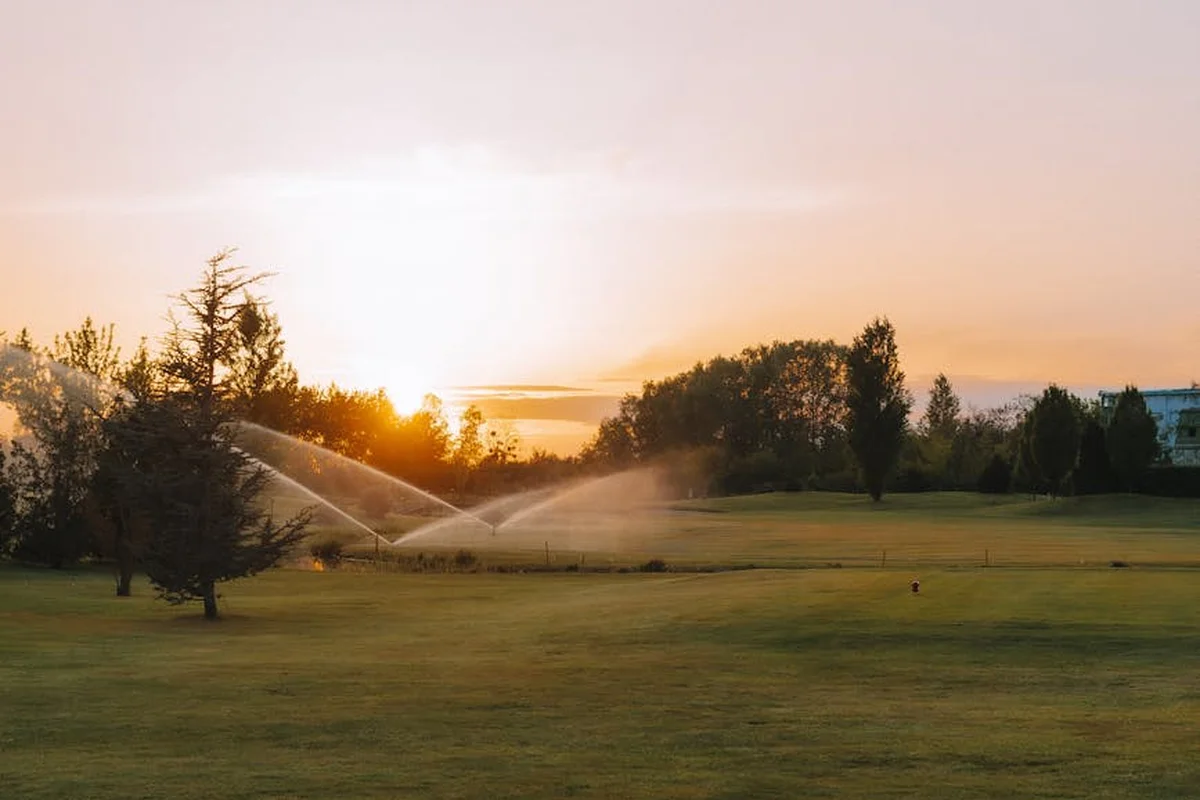
The right amount of water changes with the seasons. Think of it like this: you drink more lemonade in July than you do hot cocoa in January. Your lawn has similar needs. This checklist walks you through what to do and when.
Spring Wake-Up & Summer Stress
Spring is a gentle transition. Your grass is waking up, and the spring rains often do a lot of the work. My job is to help my irrigation system, Sunny, ease into the heavy lifting of summer.
Start by checking your soil moisture with a simple screwdriver test-if it sinks in 6 inches easily, you can wait to water. As temperatures consistently climb above 70°F, begin shifting from the occasional supplemental sprinkle to your core deep-watering routine.
- Wait as long as possible between waterings, letting the soil dry some.
- When you do water, run each zone long enough to put down 1/2 to 3/4 of an inch. Use empty tuna cans to measure.
- This encourages roots to chase the moisture down, building a deeper, drought-resistant system.
- Aim for 1 to 1.5 inches of total water per week from you and the sky combined by late spring.
Summer turns up the heat. This is when watering feels most critical, and often, most restricted.
During a heatwave, the best move is to water deeply right before the peak heat hits, typically very early in the morning. This gives the grass a full reservoir to draw from as it cools itself. Never water in the afternoon; you’ll lose half of it to evaporation before it even hits the soil.
If your town has watering restrictions, follow them. A healthy lawn can handle some stress. The protocol changes to watering on your assigned days, but still applying that deep, infrequent amount. It’s better to give the lawn a full drink on Tuesday and nothing until Saturday than to give it a daily sprinkle. This approach supports drought conservation by reducing overall water use. It encourages deeper roots and better resilience during dry spells.
Now, let’s talk about dormancy. If you have cool-season grasses like Kentucky Bluegrass or Fescue, don’t panic when they turn brown in a hot, dry summer. Dormancy is a survival tactic, not a death sentence; the crown of the plant is still alive, conserving energy and waiting for cooler, wetter weather.
If you choose not to water through a drought, let it go fully dormant. The worst thing you can do is water it just enough to keep it green-ish, which exhausts the plant. I learned this with Patch, my stubborn shady spot. When I tried to keep it green during a dry spell, it thinned out badly. When I let it go brown and sleep, it bounced back faster in the fall.
Fall Recovery & Winter Wind-Down
Fall is your lawn’s second wind. The heat breaks, but the soil is still warm-perfect for root growth. This is the most important time to water for long-term health.
Deep watering in the fall directly builds the root mass that will sustain your lawn through the next summer. This is absolutely critical if you aerate and overseed, which I do every other year.
New grass seed needs consistent moisture to germinate. Here is my fall routine after overseeding:
- Water lightly but frequently (2-3 times a day for 5-10 minutes) just to keep the top 1/2 inch of soil moist for the first 7-10 days.
- Once you see good germination, shift back to deep, infrequent watering to train those new roots.
- Continue providing about 1 inch of water per week right up until the ground freezes.
Winter isn’t a total shutdown. For warm-season grasses like Bermudagrass or Zoysia that go dormant, you generally don’t water. But for all grass types, watch for dry, cold spells-what we call “false springs” or extended winter droughts.
If you have a warm, dry, windy stretch in winter with no snow cover for over 3 weeks, a single deep watering on a day when temperatures are above 40°F can prevent severe dehydration damage.
The goal is to prevent the crown and roots from drying out and dying. Do this at midday so the water has time to soak in before a potential overnight freeze. One watering is usually enough to carry the lawn through until natural precipitation returns.
Tailoring the Plan for Your Grass Type
Think of your grass like a person. Some folks thrive in cool, breezy weather, while others love the blazing sun. Your lawn is the same. The core rule-one inch of water per week-still stands, but when your grass wants that water changes everything.
The Cool-Season Crew (Fescue, Kentucky Bluegrass, Ryegrass)
These are the grasses of the north and the transition zones. They wake up in the cool, damp springs and have a second wind in the fall. Their growth, and thirst, peaks when temperatures are mild.
I see it with my own cool-season lawn. In spring, Max the mower gets a workout every five days. The grass is growing fast, fueled by rain and those perfect 60-degree days. It’s actively drinking.
Your one simple adjustment: Shift your focus to spring and fall, and let nature help in summer. During the peak seasons, you’ll likely need to supplement rainfall to hit that weekly inch. But in the scorching summer heat, these grasses slow down. They might even go semi-dormant, looking a little tan. Don’t panic and drown them. Deep, infrequent watering (that one-inch goal) is enough to keep the roots alive until the cool weather returns.
The Warm-Season Bunch (Bermuda, Zoysia, St. Augustine)
These grasses love the heat. They come alive in the summer, spreading and greening up as the soil gets warm. This is their party time, and they need plenty to drink.
While my experience is with cool-season grass, the principle is clear from watching neighbors. A St. Augustine lawn in July is a sponge, baking in the sun and growing aggressively to fill in every gap. It’s just one example of how warm-season grasses thrive in the right climate.
Your one simple adjustment: Your main watering season is summer, and you can mostly turn the tap off in winter. When temperatures climb, these grasses are in high gear. This is when you must be most diligent about providing that consistent, deep weekly watering. Come late fall and winter, they go fully dormant and brown. You can stop watering altogether unless there’s an extreme, bone-dry winter drought. Giving them water then is just wasting it.
Greedy Grass FAQ: Watering for a Thick, Healthy Lawn
1. How often should I run my sprinklers each week?
For an established lawn, aim for 1 to 2 deep watering sessions per week to reach that 1-inch total goal. Deep watering promotes deeper root growth, helping the lawn stay green during hot weather. Your lawn’s thirst isn’t on a calendar—always check soil moisture with the screwdriver test before you water.
2. Is it really that bad to water my lawn at night?
Yes, it’s a major risk. Watering at night has been debunked because it leaves grass blades wet for 12+ hours, which is like rolling out a red carpet for fungal diseases. Stick to the early morning to let the sun dry the blades fast and keep your lawn healthy.
3. My lawn has both sun and shade. Should I water it all the same?
Absolutely not. Shady areas dry out much slower and need far less water than baking sunny spots. Water these zones separately if you can, or give the shady patches a shorter drink to avoid drowning them and causing moss or fungus.
4. How do I water my lawn on a slope without all the water running away?
You need to “cycle and soak.” Water in short, 5-10 minute bursts, allowing 30-60 minutes for the water to soak in between cycles. This prevents runoff and ensures the water penetrates deep to the roots instead of just washing down the driveway.
5. I just fertilized. When is it safe to water again?
Always check the product label first, as it’s your ultimate guide. For most granular fertilizers, you should water it in right away to activate it, but for many weed controls, you need to wait 24-48 hours to avoid washing the treatment away before it works.
Your Path to a Thirstier, Healthier Lawn
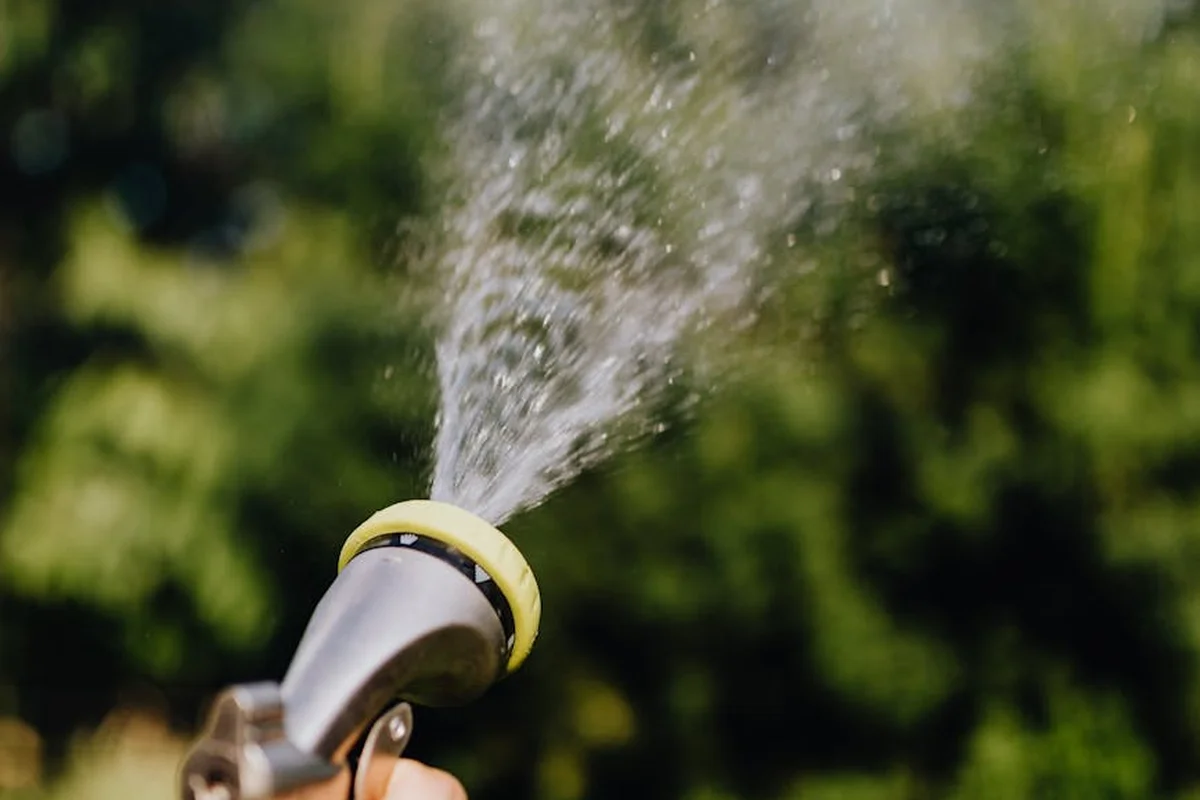
Stick with the golden rule: water deeply and less often. Giving your grass a long, slow drink encourages roots to grow down, building a lawn that can handle dry spells and heat. That single change does more for your lawn’s strength than any gadget or schedule.
Watch the weather, adjust your sprinklers with the seasons, and always aim to use just the water your grass truly needs. Taking care of your patch means being a good steward for your whole little ecosystem, and that’s something you can feel good about every time you step outside.
Industry References
- Lawn Watering Tips | ScottsMiracle-Gro US
- How long and how frequent do you water your lawn? : r/lawncare
- Best Time to Water Grass – Lawn Watering Tips | Gilmour
Written by Ria Carrington. Ria is an avid lawn care enthusiast and advisor. No lawn is unsalvagable when Ria is at work. She has helped countless homeowners breath new life into their dying lawns. She has a B.Sc in Agriculture and brings practical advice combined with knowledge of plant science and her decade worth of hands on experience.