
How Do You Water Your Lawn in a Drought and Save Money?
Watching your grass thirst during a dry spell is stressful, but you can keep it healthy without guzzling water or money.
We will cover finding the perfect watering time, using deep-soaking techniques, and setting up simple, water-smart tools.
I’ve kept my lawn thick through many summers using these exact methods, with my drip system Sunny quietly doing most of the work.
Key Takeaways: Smart Watering in a Pinch
When the rain stops and the heat climbs, your watering strategy needs to shift from routine to tactical. The core rule hasn’t changed: deep, infrequent watering is your best defense.
Think of your lawn’s root system like a sponge. A quick daily sprinkle only dampens the top. A long, slow soak encourages roots to grow deeper, searching for that moisture and becoming more resilient.
Stick to these non-negotiable rules to make every drop count.
- Water early in the morning, before 10 AM. This gives the blades time to dry before nightfall, preventing fungus, and minimizes loss to evaporation from the sun and wind.
- Let the soil dry between sessions. Constantly wet soil invites disease and keeps roots shallow. A dry period tells the grass to send roots down further.
- Always follow local water restrictions. These rules exist for a reason, and your lawn plan must work within them.
A brown lawn isn’t always a dead lawn; for cool-season grasses like Kentucky bluegrass or fescue, going dormant is a smart survival tactic to conserve water. Letting it sleep through a dry spell is often better than struggling to keep it green with minimal water.
How to Check If Your Lawn Actually Needs Water
Your lawn will tell you when it’s thirsty, but you have to know how to listen. The biggest mistake is watering on a schedule instead of by need.
The simplest and most reliable method is the “screwdriver test.” Grab a long, standard screwdriver from your garage and try to push it into the soil. If it slides in easily to about 6 inches, your soil still has good moisture. If you meet firm resistance, it’s time to water.
Your eyes are good tools, too. Look for a dull, blue-gray cast to the grass blades instead of a vibrant green. Walk across the lawn and look back. If your footprints stay visible for several minutes, the grass lacks the water pressure to spring back up.
Different grasses send different signals. Cool-season grasses (fescue, bluegrass) will wilt and show that blue-gray hue. Warm-season grasses (Bermuda, Zoysia) are tougher, often just slowing growth and browning off more uniformly when stressed. In different climates, cool-season and warm-season grasses respond differently. Cool-season grasses thrive in cooler temperatures, while warm-season grasses prefer warmth.
Check your problem areas first, like my shady “Patch.” Dry spots often show up there before the main lawn, giving you an early warning to adjust your plan.
Signs Your Grass is Thirsty (Not Just Dormant)
It’s easy to confuse drought stress with seasonal dormancy. The difference is in the details. A dormant cool-season lawn in a summer drought will turn uniformly brown or tan and feel dry and brittle underfoot. It’s in a protective sleep.
Drought stress in a lawn you’re trying to water looks patchy. You’ll see areas of wilted, grayish-blue grass right next to healthier spots. The blades will feel limp and rubbery, not crisp and brittle. If you water a dormant lawn, it won’t green up quickly. If you water a stressed lawn, it should perk up within hours. That’s why knowing the best time to water and the right water level for the lawn season matters. These timing and level adjustments help prevent stress and encourage quick recovery.
My advice is to let cool-season lawns go dormant during a serious drought to save a huge amount of water. A deep watering every 3-4 weeks is enough to keep the crowns alive until cooler, wetter weather returns.
Simple Tools to Measure Soil Moisture
You don’t need fancy gear. Your finger is a decent tool. Dig down a couple of inches. If the soil feels cool and slightly damp, you’re probably okay. If it’s dry and crumbly, it’s time to check deeper with another method.
For about twenty dollars, a basic soil moisture probe is a great investment. You push it into the ground and get a reading on a scale. It takes the guesswork out. The screwdriver test gives you a physical feel for the soil’s condition, while a probe gives you a number to track over time.
I use both: the probe for a quick scan of moisture levels, and the screwdriver test to confirm how deep that moisture really goes before I decide to turn Sunny, my drip system, on for the garden beds.
The Best Way to Water When Every Drop Counts
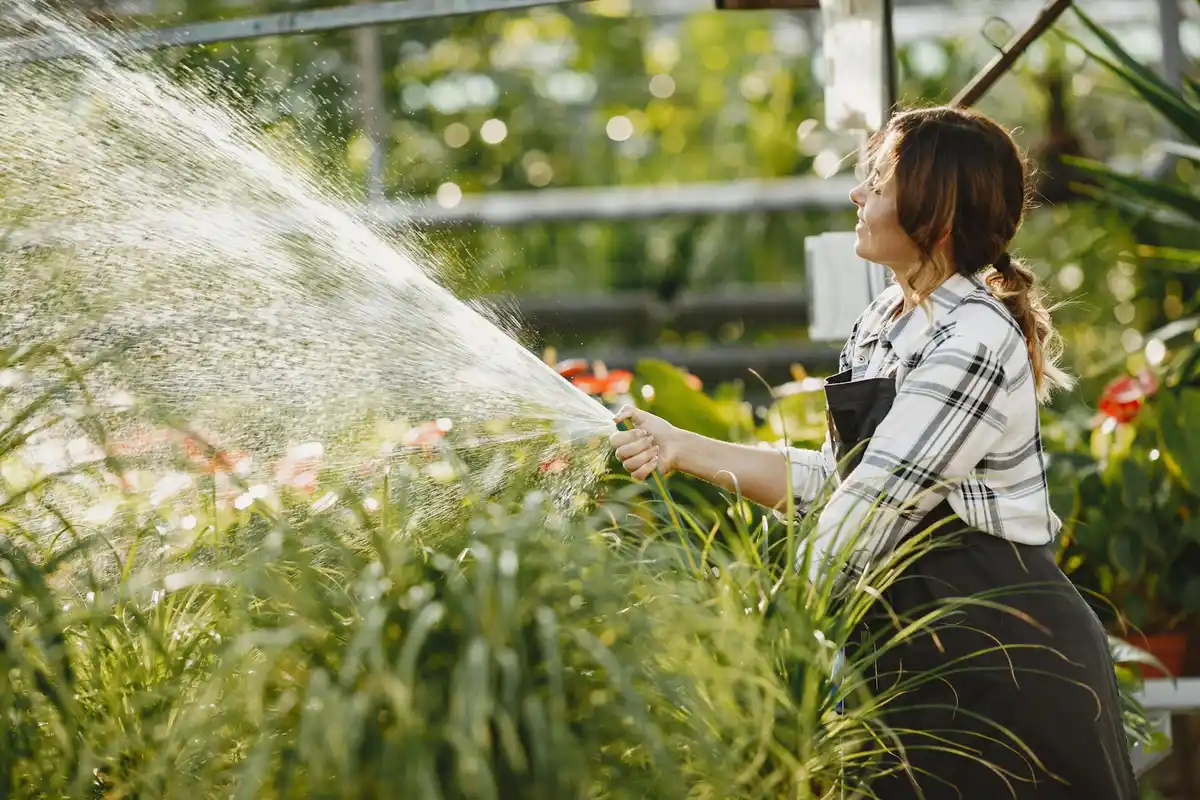
When the rain stops and the grass looks thirsty, the biggest question is always the same: how much water does my lawn actually need? Forget complicated schedules. Let’s get practical.
The “one inch per week” rule is your starting point, but your soil type tells you how to apply it. Think of your soil like a sponge. Clay soil is a dense, slow-drinking sponge. Sandy soil is a fast-draining coffee filter. This changes everything.
- For Clay Soil: Water deeply but less often. Your goal is to get that inch of water down in one or two weekly sessions. Clay holds water well, so you need to soak it slowly to avoid runoff.
- For Sandy Soil: You might need to split that inch into two or three shorter waterings per week. Sandy soil drains fast, so more frequent drinks prevent the roots from drying out completely.
How to Calibrate Your Sprinkler
You need to know how long it takes “Sunny,” my drip system, or your sprinkler to deliver that inch. Here’s my Saturday morning method:
- Place several empty, flat containers (tuna cans are perfect) around your lawn in a sprinkler zone.
- Turn that zone on for 15 minutes.
- Measure the water depth in each can with a ruler and find the average.
Now you know your rate. If your cans collected an average of a quarter inch in 15 minutes, you need to run that zone for 60 minutes total per week to hit your inch. But here’s the key: never water until you see runoff. If water starts pooling or running down the driveway after 20 minutes, you must stop.
Use a cycle-and-soak approach. Run the zone for those 20 minutes, let it soak in for an hour, then run it again. This pushes water deep into the soil profile where roots will chase it.
Timing Is Everything: When to Water for Maximum Absorption
This one is non-negotiable for me. The absolute best time to water is early morning, between 4 AM and 8 AM. The air is cool, the wind is usually calm, and the sun isn’t strong enough to steal your water through evaporation.
I set my controller for 5 AM. The grass blades are wet for the shortest time, which is good. Watering in the evening is a mistake. It leaves the lawn damp all night, which is an open invitation for fungus and disease to move in. You’re saving water but potentially creating a bigger, mushier problem. That’s exactly why the best time of day to water your lawn matters, along with a simple daily schedule. Following a consistent day schedule helps keep roots dry and the lawn healthier.
Equipment That Saves Water (and Your Wallet)
Not all sprinklers are created equal, especially when conservation is the goal.
- Oscillating Sprinklers: The classic metal ones are fine for small, square areas, but they lose a lot of water to evaporation and wind. I find them inefficient for large lawns in a drought.
- Rotor Heads (Impact or Gear-Driven): These are the workhorses for larger areas. They throw water in a slow, heavy stream that fights wind and sinks in better. This is what most in-ground systems use for a reason.
- Soaker Hoses: Fantastic for garden beds, vegetable plots, or that narrow strip by the fence. They weep water directly at the soil line with zero waste.
This is where “Sunny,” my drip irrigation, shines. For flower beds, shrubs, and trees, drip lines or soaker hoses are unbeatable. They put every single drop right at the root zone. Using drip in your beds means you’re not wasting lawn sprinkler water on plants that don’t need it. When you compare sprinkler systems to drip irrigation, the efficiency difference is clear. Drip irrigation delivers water where it’s needed, not where it isn’t.
Smart controllers are a great tool. They connect to local weather data and skip watering if rain is coming. They are an investment, but for someone serious about efficiency, they pay off by eliminating guesswork and waste.
Common Watering Mistakes That Waste Your Effort
I’ve made most of these mistakes myself. Avoiding them is how you win during a dry spell.
- Watering Daily for 10 Minutes: This is the number one error. It only moistens the top half-inch of soil. Roots have no reason to grow deep, creating a weak, thirsty lawn.
- Mowing Too Short: Cutting your grass low might look neat, but it exposes soil to sun, increases evaporation, and stresses the plant. Raise your mower blade.
- Ignoring Shade Patterns: The area under your big oak tree (“Patch” taught me this) needs far less water than the full-sun center of your yard. Water these zones differently if you can.
- Watering the Sidewalk or Driveway: Align your sprinklers. A quick adjustment can save hundreds of gallons.
- Watering at 2 PM: It feels like you’re helping, but up to 50% of that water can evaporate before it even touches the soil. It’s a total waste.
Frequent, shallow watering trains your grass to be lazy and vulnerable. You want deep, resilient roots that can search for moisture when times get tough. Deep, infrequent watering builds that system.
Overwatering: Yes, It’s a Problem in Drought Too
It sounds wrong, but you can absolutely overwater during a drought. Soggy, saturated soil has no air pockets. Roots need oxygen as much as they need water, and without it, they effectively drown and rot. This weakens the entire plant, wastes your precious resource, and attracts pests like grubs that love moist conditions.
Overwatering also speeds up thatch buildup. The grass is stressed and the microbial activity in the soil changes, leading to a spongy layer of dead material on the soil surface. That means you’ll be dealing with more aeration later, another job you didn’t need.
If your soil squishes underfoot hours after watering, or if you see mushrooms popping up, you’re giving it too much. Let the soil dry out a bit between waterings. Your grass will thank you for the tough love.
Thinking Beyond the Sprinkler: Long-Term Drought Strategies

Changing how you water during a dry spell is smart, but it’s a short-term fix. I’ve learned the hard way that a truly drought-proof lawn starts from the ground up. Your goal isn’t just to survive the next dry week, it’s to build a turf so tough it barely notices.
This means focusing on three things: letting water in, holding it better, and planting the right grass. It’s like upgrading your lawn’s entire plumbing system. Max the mower and I have seen the difference it makes in that scrappy Patch corner of my yard.
The most effective drought strategy begins months before the skies dry up, by building a lawn with deep roots and healthy soil.
Building Drought-Resilient Soil
Your soil is your lawn’s water bank. Compacted, tired soil is like a concrete slab, it just lets water run off. Healthy soil acts more like a sponge, soaking up moisture and holding it for the roots.
Core aeration is the single best thing you can do for compacted ground. It punches little holes in the earth, letting air, water, and nutrients reach the roots. I do this every fall. You’ll see the plugs of soil left on the surface. It looks messy for a day, but the results are worth it. Proper core aeration technique ensures the best results.
Water soaks straight down those holes instead of pooling and running into the street, which means every drop from Sunny the irrigation system goes further.
After aerating, top-dress with a thin layer of compost. This isn’t about dumping dirt on your grass. Think of it as adding a supercharged, organic blanket. The compost settles into the holes and works its way down, feeding the soil life and dramatically improving water retention.
A simple way to see the difference is to think of sandy soil as a coffee filter (water runs right through) and clay as a plastic bag (water pools on top). Good compost turns your soil into that perfect sponge in the middle.
Alternative Lawn Options for Dry Times
Sometimes, the best way to save water is to rethink what a “lawn” is. If you’re facing constant water restrictions, these options can save your sanity.
Microclover mixes are my favorite alternative. I’ve overseeded it into my own turf. Clover stays green with less water, feeds itself with nitrogen from the air, and is soft underfoot and safe for pets. Bees love the tiny flowers, so it’s a win for pollinators too.
Native grass mixes are another brilliant choice. These are grasses that evolved for your local climate. They might go dormant and brown in summer heat, but they bounce back with fall rains. They require almost no fertilizer and very little water once established.
You can also simply shrink your lawn. Replace thirsty turf in tricky spots with mulch beds filled with drought-tolerant native plants. It adds texture to your yard and creates habitat. This is what finally worked for my problem area, Patch.
Synthetic turf saves water, that’s true. But it gets incredibly hot in the sun, offers nothing for bees or butterflies, and doesn’t improve your soil. For a family with pets and a conscience for pollinators, it’s often a last resort.
Whatever path you choose, selecting a pet-safe and pollinator-friendly option ensures your yard stays a living part of the local ecosystem, not just a green carpet.
Your Drought-Watering Questions, Answered
Is it bad to let my lawn go brown and dormant in a drought?
No, it’s a smart survival tactic! For cool-season grasses, dormancy conserves water and keeps the crown alive until rain returns.
How short should I mow during a dry spell to help my grass?
Raise your mower blade! Taller grass (3 inches or more) shades the soil, reduces evaporation, and encourages deeper, greedier roots.
Can I water at night if I can’t do it early in the morning?
It’s a last resort. Evening watering leaves blades wet all night, inviting fungus-if you must, water just after sunset and only at the soil line.
My town has strict water restrictions. What should I water first?
Prioritize trees and shrubs-they’re expensive to replace. Let a cool-season lawn sleep, and give a deep drink to young plants or your prized garden beds.
Should I plant new grass seed during a drought to fill in bare spots?
Absolutely not. Seed needs constant moisture to germinate, which you can’t spare. Wait for the cool, wet fall season for seeding success.
Keeping Your Lawn Resilient Through Dry Spells
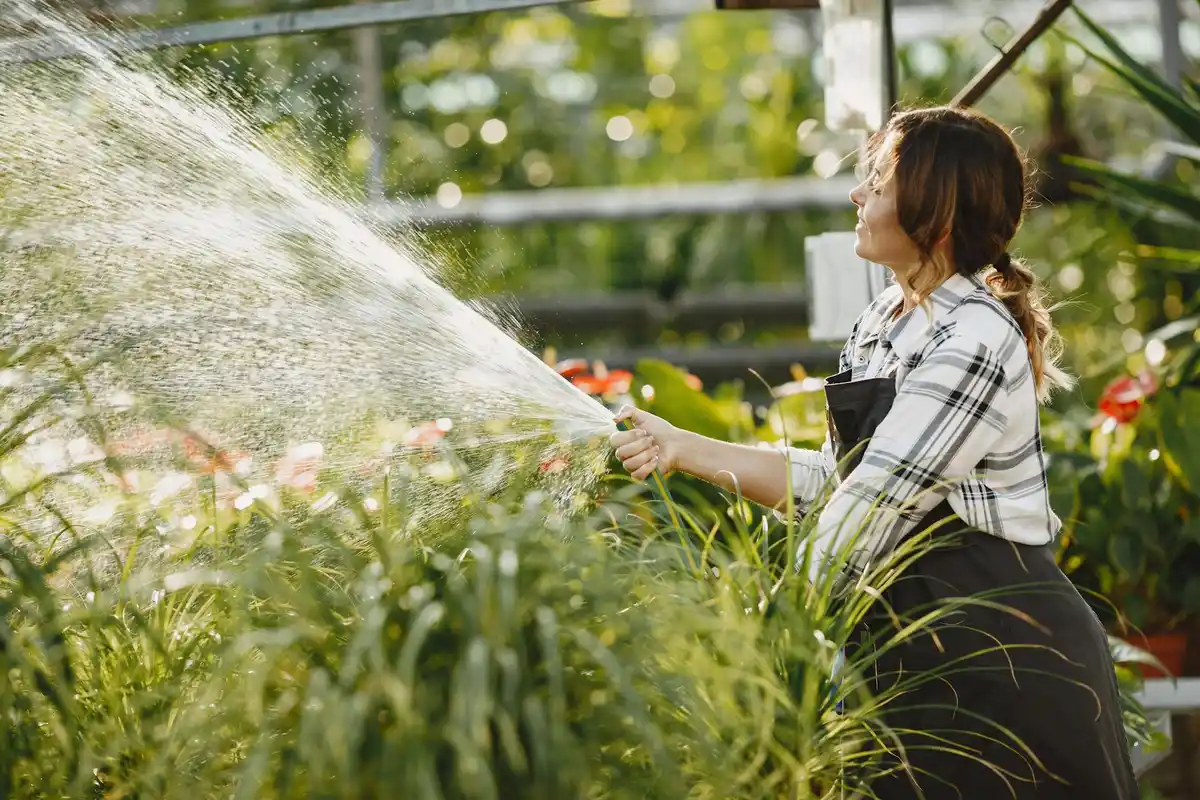
If you only remember one thing, make it this: water deeply and less often. Teaching your grass to grow deep roots is the single best defense against heat and drought you can give it. That consistent, thorough soak is what builds a lawn that can handle stress.
Being a good lawn owner means working with nature, not against it. I keep learning from my own lawn, from Patch’s stubborn lessons to Sunny’s quiet efficiency, and I encourage you to do the same—always favoring methods that are safe for pets, pollinators, and our local environment.
Citations and Authoritative Sources
- Water-saving strategies for home lawns | UMN Extension
- Drought Lawn Watering Tips
- How do I keep my lawn alive in a drought? – UNH Extension
Written by Ria Carrington. Ria is an avid lawn care enthusiast and advisor. No lawn is unsalvagable when Ria is at work. She has helped countless homeowners breath new life into their dying lawns. She has a B.Sc in Agriculture and brings practical advice combined with knowledge of plant science and her decade worth of hands on experience.