
Is Nighttime Watering Really Bad for Your Lawn?
You’ve probably heard the old rule to never water your grass at night, but the truth is more forgiving than you think.
We will cover the real problem with the “never water at night” rule, what actually causes lawn disease, and whether morning watering is always the clear winner.
My advice comes from years of adjusting sprinklers and watching what works, saving both my green grass and my green cash.
At a Glance: Key Factors for Watering Time
Forget the one-size-fits-all rule. The best time to water your lawn depends on three things working together.
First, your local climate and humidity. This is the biggest player. In a dry, windy area, watering in the morning is smart to beat the midday sun. But if you live somewhere with high humidity and cool nights, morning watering might leave blades damp for too long.
Second, your soil type. Think of clay soil like a dense sponge. It holds water tightly but absorbs it slowly. Sandy soil drains like a sieve, taking water down fast. Knowing your soil tells you how long and how often to run your sprinklers, which matters more than the exact hour you start.
Third, your lawn’s current health. A thick, well-aerated lawn with deep roots is a champion at using water efficiently. A thin, stressed lawn is more vulnerable no matter when you water.
Your goal is simple: get as much water into the soil as possible while losing as little as you can to evaporation or disease.
Myth 1: Watering at Night Guarantees Fungus
Let’s tackle the big fear head on. Does watering at night cause fungus? Not necessarily. I’ve done it myself without issue.
Fungal diseases need three things to start a party: grass to infect, the right warm temperatures, and prolonged wetness on the leaf blades. Watering at night only becomes a real problem if it consistently leaves your grass wet for 14 hours or more. That’s a long, damp party invitation, especially in already humid climates.
A healthy lawn with good air flow and strong roots can resist disease far better than a weak one, regardless of when it gets water. My problem area, Patch, taught me that. It’s in deep shade with poor air circulation. If I overwater it at any time of day, it’s the first place I see issues.
The Real Fungus Culprits (It’s Not Just Timing)
Blaming fungus solely on nighttime watering misses the bigger picture. These are the real invitations for trouble:
- Over-watering. Giving your lawn too much water, too often, keeps the soil soggy. That’s the perfect home for fungus at the root level.
- Poor air circulation. A thick layer of thatch is like a wet blanket smothering your soil. It traps moisture right at the crown of the grass plant.
- Compacted soil. When soil is hard, water can’t drain down and roots can’t breathe. This creates constant stress and wet conditions.
- Mowing too short. Scalping your lawn weakens the grass and exposes the soil to more evaporation and weed pressure, making it less resilient overall.
Focus on fixing these issues first. They make a much bigger difference than shifting your watering schedule by a few hours.
Myth 2: Watering During the Day is Always Best

Is it better to water during the day? I get this question every summer. The short answer is, it depends on your climate.
Watering in the morning has a clear benefit. The sun and breeze help grass blades dry quickly. This shortens the window for fungal diseases to start. I always aim for morning waterings in damp, shady areas like Patch to keep problems in check.
But that benefit comes with a cost during peak heat. In hot, dry climates, watering under the midday sun can lose a huge amount to evaporation before a drop even soaks in. Wind makes it worse. It feels like you’re running the sprinklers for nothing.
Imagine trying to fill a cup with a small hole in the bottom. That’s daytime watering in July for a lot of us. You’re constantly losing water before it can help the roots.
So, what’s the fix? If you live in a very hot, arid region, shifting your schedule can save water. Watering in the late afternoon or early evening can be far more efficient, as long as the grass blades have 2-3 hours of light to dry before full dark. This gives water time to penetrate deep with minimal waste.
Myth 3: Night Watering Wastes Water and Harms Roots
Let’s tackle the big fears head-on. Does watering at night waste water? Can it harm grass roots? The myths are strong, but the facts are simple.
First, water waste has nothing to do with the clock. Real waste is about evaporation and runoff, not the hour you choose. At night, with no sun and calm air, evaporation is almost zero. When I set Sunny, my drip system, to run at 2 AM, I know every gallon is soaking straight down to the root zone.
Now, about those roots. The timing doesn’t hurt them. The watering habit does. Deep, infrequent watering encourages strong, deep roots, no matter when you do it. Shallow, daily sprinkles are the real problem. They teach roots to stay lazy and weak right at the surface.
Think of it like training. Giving your lawn a light spray every day is like offering frequent sips. The roots never learn to reach down. Giving it a long, deep drink once or twice a week is like a full meal. It trains the roots to grow strong and search for moisture deep in the soil.
So, a nighttime watering with the right duration isn’t wasteful or harmful. It’s a smart way to deliver a deep drink directly to the roots without losing a drop to the sun.
Common Lawn Watering Mistakes and How to Avoid Them

I see the same few mistakes on street after street. They’re easy to make, and correcting them is the fastest way to a better lawn.
Mistake 1: The Daily Sprinkle
Watering for ten minutes every morning feels responsible. You’re giving your grass a drink, right? Actually, you’re training your grass to be lazy. Those short sessions only wet the top inch of soil, so roots stay shallow and weak. When real heat hits, your lawn wilts fast.
The fix is simple: water deeply but less often. Switch to watering 2-3 times a week for 30 minutes or more at a time. Your goal is to soak the soil a full 6 inches deep. This encourages roots to chase the moisture down, building a drought-resistant lawn. This is all about deep watering the lawn much more efficiently than shallow, frequent sprinkling. Think of each session as a deep drink that reaches the root zone.
Use the screwdriver test to check your work. About 30 minutes after watering, a long screwdriver should slide into the ground easily, all the way to the handle. If it stops short, you need to water longer.
Mistake 2: Watering in the Midday Sun
It’s the hottest part of the day, and the grass looks thirsty. It’s a trap. Watering when the sun is highest wastes a huge amount to evaporation before a single drop hits the soil. It’s like trying to fill a bucket with a hole in the bottom.
Save your water bill and your sanity by avoiding the noon-to-4 PM window completely. The water simply won’t get where it needs to go.
Mistake 3: Ignoring the Rain
Your automatic timer is a helper, not a boss. I’ve seen sprinklers click on during a downpour. It’s heartbreaking. This overwatering drowns roots, washes away nutrients, and invites fungus.
Get a simple rain gauge and check it weekly, or invest in a smart controller that connects to local weather data. Turn the system off after a good rain. Your lawn might not need another drink for several days.
Mistake 4: Misting Instead of Soaking
Old sprinkler heads often produce a fine, misty spray. It looks pretty, but wind carries it away and sun burns it off. The soil gets a light shower, not a deep drink.
Look for sprinklers that produce large, heavy droplets close to the ground. You want the water to hit the turf with enough force to penetrate, not float away. I upgraded a few heads on my system, and the difference in runoff was immediate. This was especially important since I’m watering a sloped lawn.
The Greedy Grass Pro Tip: Let Your Soil Be Your Guide
Forget the rigid rules. The best time to water is when you can get the most water into the ground with the least waste and disease risk for your specific yard.
Your soil type is the real decision-maker. I learned this the hard way with Patch, my stubborn shady spot. It’s on heavy clay that holds water forever.
Run this simple “Sunny Test”: Pick a station and water it for 15 minutes first thing in the morning. Then, poke the soil every few hours.
- Is it still soggy at dusk? You have slow-draining soil (like clay). Water earlier, like 5 AM, so the blades have the entire day to dry off.
- Does it feel bone dry by afternoon? You have fast-draining soil (like sand). You can water a bit later, even in the early evening, because the moisture won’t pool on the surface for long.
For most of us with mixed soils, the sweet spot is 5 AM to 9 AM. The air is cool, the wind is usually calm, and the grass has all day to dry. This minimizes evaporation and prevents water from sitting on the blade overnight, which is the real concern behind the “nighttime watering” myth. My system, Sunny, kicks on at 5:30. By the time I’m out with Max for the first mow, the lawn is already dry and ready. Following the best time day schedule water lawn can help you replicate this efficiency. It emphasizes early morning watering to maximize absorption and minimize evaporation.
How to Water Your Lawn for Real Results
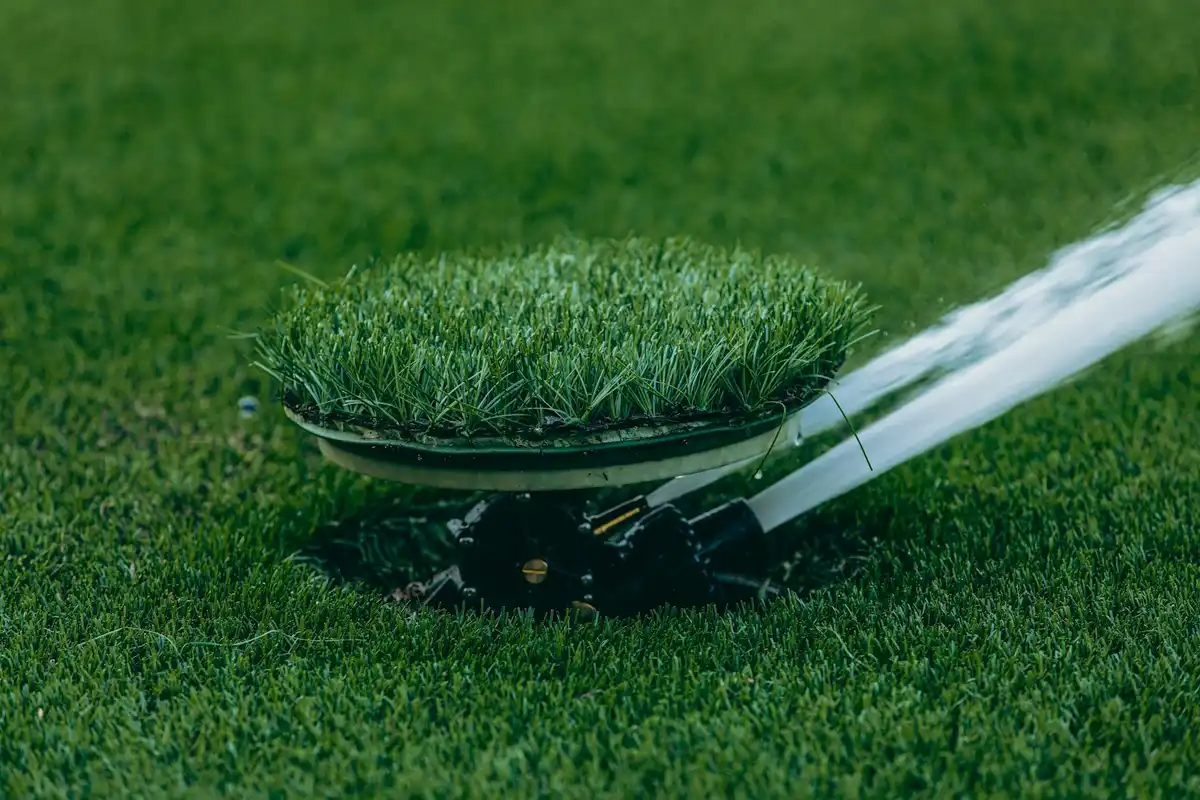
Forget the endless cycle of daily sprinkles. A healthy lawn needs a deep, thoughtful drink. I want you to think of your grass roots like a straw. Short, frequent sips keep them lazy and shallow. A long, slow drink encourages them to stretch down deep into the soil, building a resilient lawn that can handle summer heat. This three-step method is what I use every season, and you can start it this week.
The goal is to train your lawn to find its own water, making it stronger and saving you time and money in the long run.
Step 1: Find Your “Deep Drink” Duration
Your sprinkler system’s output is unique. Just because your neighbor runs theirs for 30 minutes doesn’t mean you should. You need to measure. Grab a few empty tuna cans or a simple rain gauge and place them in different zones of your lawn. Turn your sprinklers on for 15 minutes. Afterward, measure the water in each can with a ruler, find the average, and do the math.
If your cans collected 0.25 inches in 15 minutes, you’ll need 60 minutes to reach 1 inch. Simple. Shoot for 1 to 1.5 inches of water per watering session. This is the magic amount that soaks deep, encouraging those robust roots. In my sandy soil, Sunny the drip system runs longer to get that moisture down past the quick-drying top layer.
Step 2: Pick Your Prime Time Window
Now, when do you deliver that deep drink? Based on what we’ve talked about with your local climate and soil type, pick your best window.
- If you’re in a hot, dry area or have sandy soil, early morning (4 a.m. to 8 a.m.) is your golden hour. You lose almost no water to evaporation.
- If your climate is cooler and humid, or your soil is heavy clay, a late morning window (8 a.m. to 10 a.m.) can help the grass dry faster, which is good for preventing disease.
The key is consistency, not superstition. Set a timer on your phone or irrigation controller for your chosen window and stick to it for your weekly deep watering.
Step 3: Watch and Adjust
Your lawn will talk to you. You just have to learn the signs. A thirsty lawn has grass blades that fold in half lengthwise, and your footprints will stay visible in the grass long after you walk. That’s your cue.
On the flip side, overwatering has its own warnings. If the soil feels constantly squishy underfoot, you see mushrooms popping up (like in my damp, shady Patch), or you notice a slimy layer, you’re giving it too much.
Adjust your watering frequency with the seasons, but keep the “deep drink” duration the same. In the peak of summer, you might water twice a week. In the cool fall, once every 10 days could be plenty. Let the grass’s cues and the weather guide you, not the calendar.
Your Night Watering Questions, Answered
Is nighttime watering bad for lawns?
No, the timing itself isn’t bad. It becomes a problem only if your lawn stays wet for 14+ hours, which is a real risk in humid climates. For everyone else, it can be an efficient way to water. A lawn watering run time calculator can tailor the duration to your yard. It accounts for sprinkler flow, soil type, and climate to estimate the right watering time.
Does watering at night cause fungal diseases?
It can contribute, but it’s rarely the sole cause. The real culprits are usually over-watering, thick thatch, and compacted soil-fix those first for a disease-resistant lawn.
Is it better to water during the day?
Morning is often best to balance drying time and efficiency. But in hot, dry climates, midday watering wastes a huge amount to evaporation before it even hits the roots.
Does watering at night waste water?
Actually, it’s one of the most efficient times! With no sun and little wind, evaporation is almost zero, so more water soaks directly into the soil where your greedy grass roots can drink it up.
Can watering at night harm grass roots?
Not at all. What harms roots is shallow, frequent watering-day or night. A deep, infrequent soak at night encourages strong, deep roots just as well as a morning drink does.
The Real Secret to Smart Watering
The best time to water is when your lawn needs it and you can do it consistently. Forget the rigid rules and focus on giving your grass a good, deep drink that reaches the roots, whether that happens in the early morning or a calm evening. Find out more about when and how long to water your lawn.
Being a good lawn owner means working with nature, not against it. Pay attention to the weather, conserve water where you can, and don’t be afraid to adjust your routine as you learn what makes your own patch of grass thrive. Small choices in mowing, fertilizer, and pest management carry environmental impacts. Understanding these effects helps you keep a healthy lawn while protecting soil, water, and wildlife.
Further Reading & Sources
- Why to Never Water Your Grass at Night | Myth Debunked – Commercial Lawn Irrigation
- Busted: Why Watering Grass at Night Is a Myth, and When to Water Instead – Irrigation and Landscape Lighting Services in Western Ontario
- Should you water the lawn at night? Lawn care experts advise | Homes and Gardens
- I’m starting to think not watering at night is some myth | Lawn Care Forum
Written by Ria Carrington. Ria is an avid lawn care enthusiast and advisor. No lawn is unsalvagable when Ria is at work. She has helped countless homeowners breath new life into their dying lawns. She has a B.Sc in Agriculture and brings practical advice combined with knowledge of plant science and her decade worth of hands on experience.